
Meeting of Trump, Xi Jinping, and Putin: Hopes for Global Peace
-
News
-
7 minutes ago
This article was translated by AI. Read the original article on Kompas.com. See Original
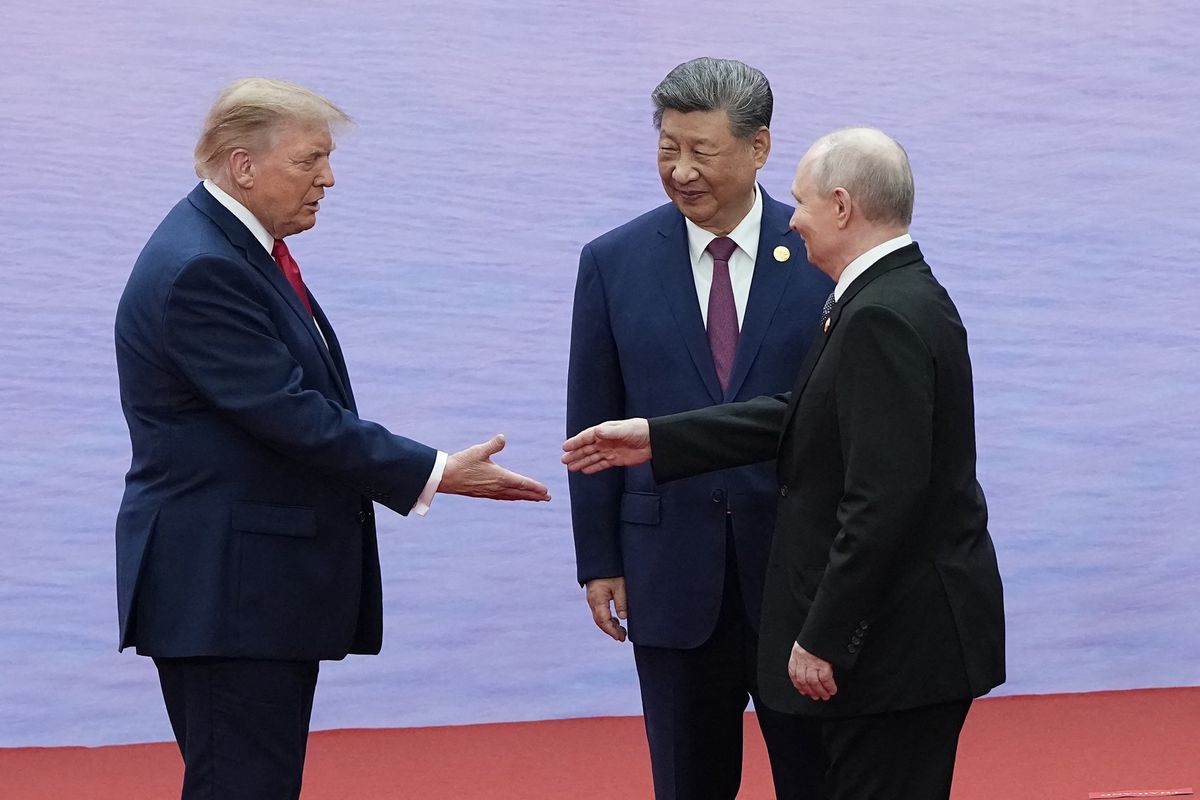
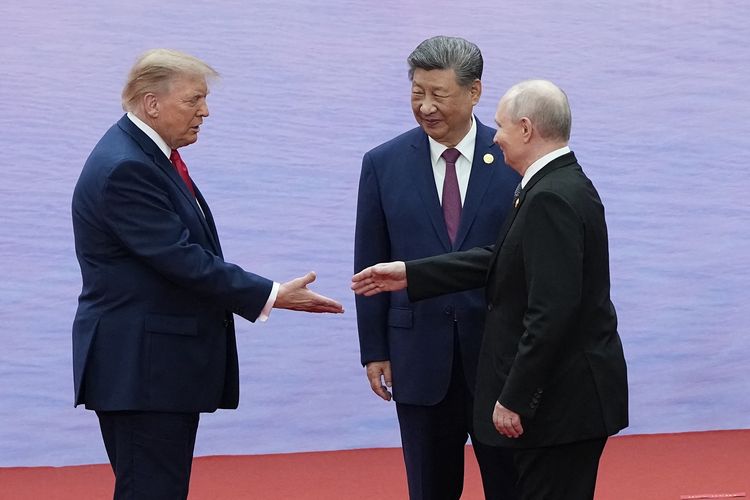
Trump expressed his wish to discuss nuclear disarmament and the Iran conflict.
Meanwhile, the complexities surrounding Ukraine include Russia’s position, European security interests, and Ukraine's right to determine its future.
Thus, we must remember an important principle: peace negotiated without involving the parties directly experiencing conflict risks producing fragile agreements.
The future of Ukraine should not be determined solely by negotiations among great powers, without Ukraine itself being involved.
Similarly, the resolution of the Iran conflict must respect state sovereignty, civilian safety, and regional security interests.
Therefore, the meeting of the three leaders should not evolve into a form of world influence division based on an exclusive agreement among great powers.
True peace is not the result of compromises made to divide spheres of influence but rather an agreement to forge a fair international order.
Current global geopolitical shifts indicate a growing tendency towards a multipolar order.
Dominance by a single power no longer entirely explains the dynamics of international relations. The United States, China, Russia, the European Union, India, and other middle powers have increasingly diverse interests and capabilities.
However, multipolarity does not automatically lead to peace.
Multiple centers of power can complicate competition if not accompanied by shared rules, strategic communication, and respect for international law.
History teaches that peace does not always arise when great powers achieve a balance of arms.
World War I and World War II demonstrated how power rivalries, extreme nationalism, struggles for resources, and diplomatic failures can plunge humanity into destruction.
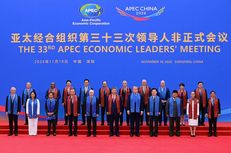
These experiences should serve as lessons to the world’s leaders in Shenzhen.
Diplomacy must not become merely an instrument for gaining short-term geopolitical advantage while humanitarian issues and international community safety fall behind strategic state interests.
In this context, APEC also has a broader significance beyond a mere trade and economic cooperation forum. Political and security stability is a prerequisite for the sustainability of trade, investment, connectivity, and economic growth in the Asia-Pacific region.
As geopolitical tensions rise, global supply chains are disrupted, shipping routes face risks, energy prices fluctuate, and developing nations often bear consequences they did not create.
Nevertheless, it should not be overlooked that the competition between the United States and China plays out across multiple fronts, from trade tariffs, semiconductors, artificial intelligence, strategic minerals, to the domination of future technologies.
Therefore, understandings among these three leaders will have implications that extend beyond military and security issues.
The world needs an international order that does not make small and medium nations victims of great power conflicts.
The sovereignty of each nation must be respected. No country should be coerced into choosing sides due to economic, political, or military pressures.
This reflects the true meaning of just peace: a world order that allows nations of differing powers to coexist, cooperate, and resolve disputes through diplomatic mechanisms.
For Indonesia, the Shenzhen meeting carries a geopolitical message that should not be neglected. Indonesia's position lies at a strategic crossroads between the Indian and Pacific Oceans.
This geographical location places Indonesia as an archipelagic nation with direct interests in regional stability, the security of international shipping lanes, and the balance of relations among major powers.
As the United States, China, and Russia build strategic communications, Indonesia must interpret these developments based on national interests, not solely political proximity to any one nation.
At the same time, Indonesia should strengthen ASEAN's role as the foundation of regional diplomacy.