

Learning from the Raffi Ahmad Controversy, It's Time for the Government to Be More Sensitive in Budget Formulation
-
News
-
3 minutes ago
This article was translated by AI. Read the original article on Kompas.com. See Original
THERE ARE moments in world history that reveal a significance far greater than the events taking place before our eyes.
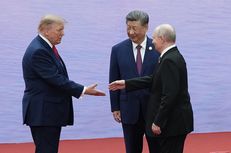
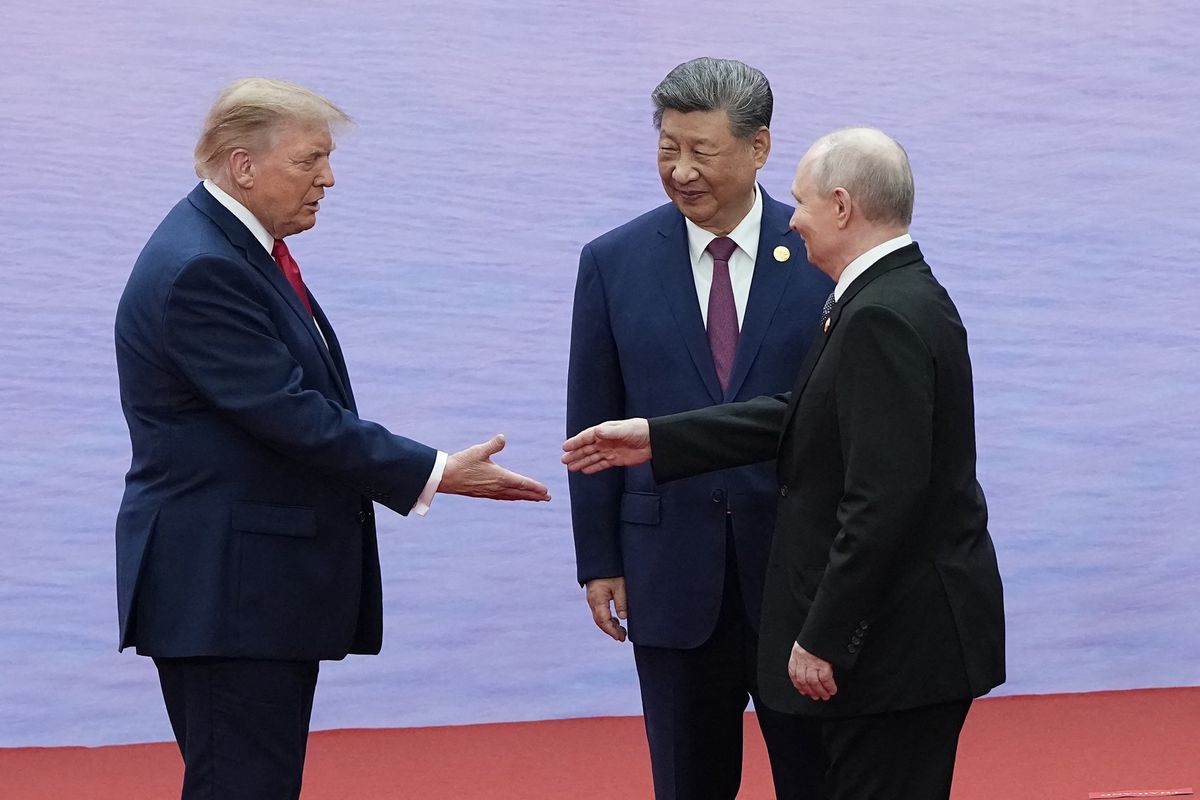
Three leaders of major nations, wielding immense political, economic, military power, and strategic influence, stand together in one meeting room.
Donald Trump from the United States, Xi Jinping from China, and Vladimir Putin from Russia.
They are not merely heads of state representing their respective national interests; they are figures whose policies and political decisions can steer the world's trajectory.
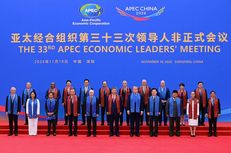
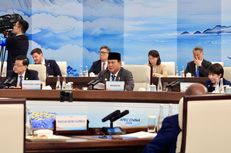
Their meeting in Shenzhen, China, during the Asia-Pacific Economic Cooperation (APEC) Summit 2026, presents an intriguing picture amid a world embroiled in geopolitical uncertainty.
They appeared to greet each other in a relatively warm atmosphere at the welcoming event for APEC leaders on November 18, 2026.
This moment garnered international attention as it occurred just a day before their first official trilateral meeting scheduled for November 19.
Behind the handshakes and diplomatic pleasantries lie significant unresolved issues.
The Russia-Ukraine war, the conflict in Iran, the nuclear arms race, trade tensions, technological rivalries, and the struggle for influence across various regions all indicate that the international order is undergoing fundamental changes.
Thus, the Shenzhen meeting should be seen as a diplomatic milestone with strategic implications for the future of world peace.
Peace cannot merely be established through meetings among powerful state leaders.
This requires a willingness to acknowledge sovereign equality, respect international law, end arbitrary use of force, and prioritize humanity's safety over ambitions for power.
The meeting of Trump, Xi Jinping, and Putin holds significant meaning as it brings together three countries with decisive capacities in shaping international strategic equilibrium.
The United States remains a primary power in the global security system, while China emerges as a growing economic and technological force.
Meanwhile, Russia retains strategic leverage, particularly through its military power and nuclear capabilities.
Each of them harbors national interests that do not always align.
Washington seeks to maintain its strategic influence, Beijing aims to solidify its position as a global power, while Moscow strives to uphold its influence and security interests, especially concerning Europe and Ukraine.
The Shenzhen meeting is particularly crucial as it occurs at a time when nuclear arms control mechanisms face severe challenges.
The New START treaty between the United States and Russia expired in February 2026, ushering in a new period of uncertainty regarding control over the world’s two largest nuclear arsenals.
Trump is keen on discussing nuclear disarmament involving China as well.
However, Beijing has its own considerations, as its nuclear arsenal is still significantly smaller than those of the United States and Russia.
Here lies the fundamental aspect of global peace.
The world must not only avoid open war.
It needs mechanisms to prevent military miscalculations, limit escalation of conflicts, and rebuild trust among nations that possess the capacity to destroy human civilization.
The issues involving Iran and Ukraine reveal that diplomacy among great powers never occurs in a vacuum.
Every nation brings its interests, threat perceptions, historical relationships, and security calculations to the table.
Trump expressed his wish to discuss nuclear disarmament and the Iran conflict.
Meanwhile, the complexities surrounding Ukraine include Russia’s position, European security interests, and Ukraine's right to determine its future.
Thus, we must remember an important principle: peace negotiated without involving the parties directly experiencing conflict risks producing fragile agreements.
The future of Ukraine should not be determined solely by negotiations among great powers, without Ukraine itself being involved.
Similarly, the resolution of the Iran conflict must respect state sovereignty, civilian safety, and regional security interests.
Therefore, the meeting of the three leaders should not evolve into a form of world influence division based on an exclusive agreement among great powers.
True peace is not the result of compromises made to divide spheres of influence but rather an agreement to forge a fair international order.
Current global geopolitical shifts indicate a growing tendency towards a multipolar order.
Dominance by a single power no longer entirely explains the dynamics of international relations. The United States, China, Russia, the European Union, India, and other middle powers have increasingly diverse interests and capabilities.
However, multipolarity does not automatically lead to peace.
Multiple centers of power can complicate competition if not accompanied by shared rules, strategic communication, and respect for international law.
History teaches that peace does not always arise when great powers achieve a balance of arms.
World War I and World War II demonstrated how power rivalries, extreme nationalism, struggles for resources, and diplomatic failures can plunge humanity into destruction.
These experiences should serve as lessons to the world’s leaders in Shenzhen.
Diplomacy must not become merely an instrument for gaining short-term geopolitical advantage while humanitarian issues and international community safety fall behind strategic state interests.
In this context, APEC also has a broader significance beyond a mere trade and economic cooperation forum. Political and security stability is a prerequisite for the sustainability of trade, investment, connectivity, and economic growth in the Asia-Pacific region.
As geopolitical tensions rise, global supply chains are disrupted, shipping routes face risks, energy prices fluctuate, and developing nations often bear consequences they did not create.
Nevertheless, it should not be overlooked that the competition between the United States and China plays out across multiple fronts, from trade tariffs, semiconductors, artificial intelligence, strategic minerals, to the domination of future technologies.
Therefore, understandings among these three leaders will have implications that extend beyond military and security issues.
The world needs an international order that does not make small and medium nations victims of great power conflicts.
The sovereignty of each nation must be respected. No country should be coerced into choosing sides due to economic, political, or military pressures.
This reflects the true meaning of just peace: a world order that allows nations of differing powers to coexist, cooperate, and resolve disputes through diplomatic mechanisms.
For Indonesia, the Shenzhen meeting carries a geopolitical message that should not be neglected. Indonesia's position lies at a strategic crossroads between the Indian and Pacific Oceans.
This geographical location places Indonesia as an archipelagic nation with direct interests in regional stability, the security of international shipping lanes, and the balance of relations among major powers.
As the United States, China, and Russia build strategic communications, Indonesia must interpret these developments based on national interests, not solely political proximity to any one nation.
At the same time, Indonesia should strengthen ASEAN's role as the foundation of regional diplomacy.
This alignment should help Southeast Asian nations foster dialogue, prevent conflicts, and ensure the region does not become a battleground for great power rivalry.
In this context, the ASEAN Outlook on the Indo-Pacific (AOIP) carries strategic relevance. This approach emphasizes openness, inclusivity, dialogue, maritime cooperation, connectivity, and respect for international law.
Indonesia must continue to advocate for the Indo-Pacific to be a zone of cooperation, not confrontation.
Thus, the meeting of Trump, Xi Jinping, and Putin in Shenzhen must also be viewed through a more foundational question: are the world’s great powers willing to transform competition into cooperation for the safety of humanity?
This question is crucial because peace is never something that arrives on its own.
It must be fought for through political courage, diplomatic wisdom, respect for sovereignty, and a willingness to restrain ambitions for power.
This momentum should provide Indonesia with an opportunity to reaffirm its national geopolitical identity.
A foreign policy of active neutrality is not merely a historical legacy but a strategic guideline for navigating an increasingly complex world.
Thus, Indonesia must build constructive relationships with the United States, China, Russia, and other powers without sacrificing its independence in formulating national policies.
Economic partnerships, defense cooperation, technology investments, and international diplomacy must be framed within the long-term national interests.
Simultaneously, Indonesia must strengthen multilateral diplomacy through ASEAN, the United Nations, the G20, BRICS, and various other international forums.
Participation in these forums is not a contradiction to an active neutrality policy. Rather, it is through various diplomatic channels that Indonesia can expand its sphere of influence and advocate for the interests of developing nations.
From a Pancasila perspective, world peace is also a consequence of commitment to humanity and social justice.
The Second Principle, a Just and Civilized Humanity, teaches that every individual has dignity that must be respected.
This value aligns with the mandate of the 1945 Constitution's preamble to contribute to the establishment of a world order based on independence, eternal peace, and social justice.
Amidst shifting global geopolitics, Indonesia, therefore, must translate this constitutional mandate into concrete diplomacy.
Not merely issuing statements about peace but actively building cooperative mechanisms that prevent conflicts, strengthen trust, and protect the interests of weaker nations.
The meeting in Shenzhen may not necessarily yield substantial agreements. The agendas of the three nations still contain different interests, and the likelihood of reaching concrete agreements concerning nuclear arms control is seen as slim.
However, the opportunity for communication among these three nuclear powers remains a diplomatic chance that should be valued.
We should not place our hopes too quickly, but we should also not lose faith in diplomacy.
The world requires more spaces for meeting than for conflict, more wisdom than power's arrogance, and more cooperation than military threats.
Indonesia must stand firm amidst these changes. Not drawn into the rivalries of great powers, not losing direction in determining national interests, and not neglecting its historical responsibility to contribute to world peace.
Indonesia's geopolitical strength lies not only in its vast territory, rich natural resources, strategic position, or defense capabilities.
Indonesia's strength also resides in its consistency to uphold an active-neutral foreign policy, its ability to foster friendships among nations, and its courage to fight for a more just and civilized world order.
This is the path of Indonesia's geopolitics: preserving sovereignty, enhancing national resilience, building international friendships, and dedicating the strength of the nation to achieving world peace.