

Learning from the Raffi Ahmad Controversy, It's Time for the Government to Be More Sensitive in Budget Formulation
-
News
-
3 minutes ago
This article was translated by AI. Read the original article on Kompas.com. See Original
THERE ARE moments in world history that reveal a significance far greater than the events taking place before our eyes.
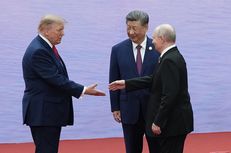
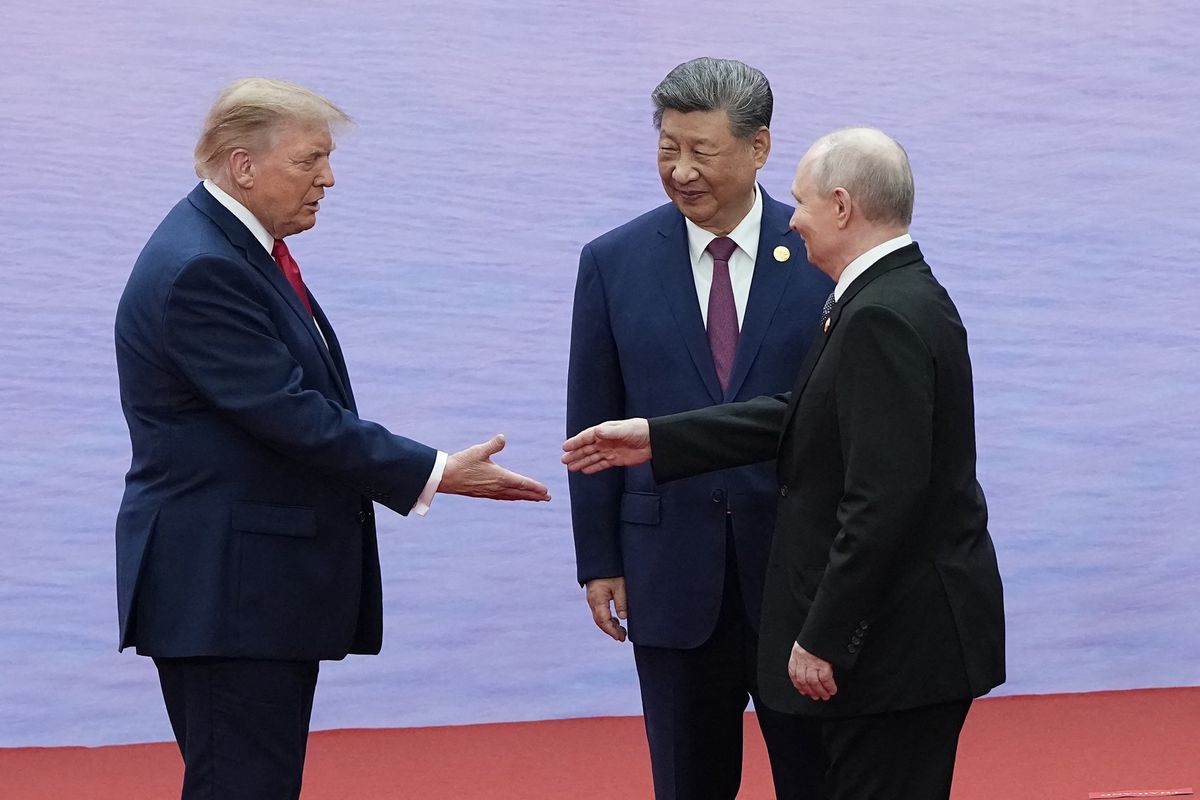
Three leaders of major nations, wielding immense political, economic, military power, and strategic influence, stand together in one meeting room.
Donald Trump from the United States, Xi Jinping from China, and Vladimir Putin from Russia.
They are not merely heads of state representing their respective national interests; they are figures whose policies and political decisions can steer the world's trajectory.
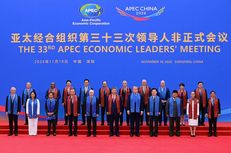
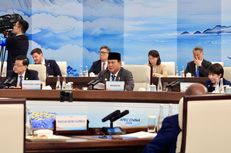
Their meeting in Shenzhen, China, during the Asia-Pacific Economic Cooperation (APEC) Summit 2026, presents an intriguing picture amid a world embroiled in geopolitical uncertainty.
They appeared to greet each other in a relatively warm atmosphere at the welcoming event for APEC leaders on November 18, 2026.
This moment garnered international attention as it occurred just a day before their first official trilateral meeting scheduled for November 19.
Behind the handshakes and diplomatic pleasantries lie significant unresolved issues.
The Russia-Ukraine war, the conflict in Iran, the nuclear arms race, trade tensions, technological rivalries, and the struggle for influence across various regions all indicate that the international order is undergoing fundamental changes.
Thus, the Shenzhen meeting should be seen as a diplomatic milestone with strategic implications for the future of world peace.
Peace cannot merely be established through meetings among powerful state leaders.
This requires a willingness to acknowledge sovereign equality, respect international law, end arbitrary use of force, and prioritize humanity's safety over ambitions for power.
The meeting of Trump, Xi Jinping, and Putin holds significant meaning as it brings together three countries with decisive capacities in shaping international strategic equilibrium.
The United States remains a primary power in the global security system, while China emerges as a growing economic and technological force.
Meanwhile, Russia retains strategic leverage, particularly through its military power and nuclear capabilities.
Each of them harbors national interests that do not always align.
Washington seeks to maintain its strategic influence, Beijing aims to solidify its position as a global power, while Moscow strives to uphold its influence and security interests, especially concerning Europe and Ukraine.
The Shenzhen meeting is particularly crucial as it occurs at a time when nuclear arms control mechanisms face severe challenges.
The New START treaty between the United States and Russia expired in February 2026, ushering in a new period of uncertainty regarding control over the world’s two largest nuclear arsenals.
Trump is keen on discussing nuclear disarmament involving China as well.
However, Beijing has its own considerations, as its nuclear arsenal is still significantly smaller than those of the United States and Russia.
Here lies the fundamental aspect of global peace.
The world must not only avoid open war.
It needs mechanisms to prevent military miscalculations, limit escalation of conflicts, and rebuild trust among nations that possess the capacity to destroy human civilization.
The issues involving Iran and Ukraine reveal that diplomacy among great powers never occurs in a vacuum.
Every nation brings its interests, threat perceptions, historical relationships, and security calculations to the table.