BREAKING NEWS! DPR Approves Asset Seizure Bill into Law
-
News
-
8 minutes ago
This article was translated by AI. Read the original article on Kompas.com. See Original

JAKARTA, KOMPAS.com - The Indonesian House of Representatives' Commission X is set to establish regulations on the equivalence of education and diplomas issued by foreign educational institutions in the Draft Law (RUU) on the National Education System (Sisdiknas).
This initiative comes in the wake of recent controversies surrounding the educational qualifications of public officials, particularly involving Gibran Rakabuming Raka.
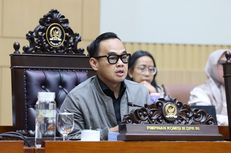
Lalu Hadrian Irfani, Deputy Chairman of Commission X, clearly stated that regulations are necessary to prevent further disputes related to administrative requirements.
"Therefore, we in Commission X advocate for clear and necessary regulations to avoid disputes with other institutions," Lalu Hadrian Irfani said recently.
So, what aspects need to be regulated in the diploma equivalency mechanism to ensure clear standards and procedures?
Education expert Indra Charismiadji stated that the RUU Sisdiknas must outline the basic principles of the equivalency mechanism.
These basic principles include the citizens' right to receive service, transparency, accountability, equal treatment, and an objection mechanism in case of errors.
At the same time, the technical requirements should be flexible enough to adapt to the evolving education systems of various countries.
"We must not let our regulations hinder citizens who genuinely possess valid foreign education qualifications," Indra told KompAS.com on Wednesday (18/11/2026).
He emphasized that the mechanism should be supported by integrity in the issuance of state documents.
According to him, integrity is a more fundamental issue than technical matters.
He stressed that degree equivalency is a process of recognizing the education qualifications obtained by an individual, not a means to create unverified qualifications.
"The state can have various mechanisms for assessing equivalency. However, every decision must have a clear basis and be accountable," he stated.
Similarly, Ubaid Matraji, National Coordinator of the Indonesian Education Monitoring Network (JPPI), highlighted that integrity remains a significant issue within the domestic diploma equivalency mechanism.
Although equivalency regulations exist, they have primarily been internal ministry regulations and not equivalent to legal products such as laws.