

Regarding the Leak in the ATR/BPN Investigation, KPK Continues Internal Review
-
News
-
11 minutes ago
This article was translated by AI. Read the original article on Kompas.com. See Original

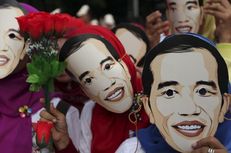
The shifts in Jokowi's political position are intertwined with PSI's future.
The party has closely aligned politically with the former president.
Arifki observes that PSI is among the parties that face consequences due to the changes in Jokowi's political landscape.
Being close to Jokowi has served as a political identity that differentiates PSI from other parties.
However, according to Arifki, a leader's popularity does not automatically convert into party votes.
In elections, electoral strength is also influenced by party organization, the strength of legislative candidates, regional outreach, and the ability to raise issues that resonate with public needs.
"Therefore, PSI must demonstrate that it possesses an identity and support base that does not entirely depend on Jokowi's figure," Arifki stated.
He mentioned that PSI's challenge lies in transforming Jokowi's popularity into an independent electoral strength for the party.
"PSI's challenge is to convert the Jokowi effect into a PSI effect. Because, the popularity of a leader and the electoral strength of a party are two distinct matters," he asserted.
Meanwhile, Ari Junaedi stated that the strength of a political party can rely on the charisma of the figure who symbolizes the party as well as on the process of political cadre development.
He cited PDI-P with Megawati Soekarnoputri, Gerindra with Prabowo Subianto, and the Democrat Party with Susilo Bambang Yudhoyono as examples.
According to Ari, PSI's birth cannot be separated from Jokowi's popularity.
Moreover, Kaesang Pangarep's position as the party chairman does not necessarily replace Jokowi's political appeal.
"PSI emerged alongside Jokowi's towering name. The presence of Jokowi's youngest son, Kaesang Pangarep, does not have the same impact due to his political inexperience," Ari remarked.
Ari believes Jokowi needs to reorganize PSI after several key party members have stepped down.
He predicts that Gibran could be placed in an important role within the party leadership.
According to Ari, Gibran's resignation from the vice presidency could generate public sympathy that can be leveraged for political consolidation within PSI.
"I am confident that Jokowi will revamp PSI by placing Gibran as its new captain, understanding the phenomenon of 'mellow public,' which utilizes public pity and sympathy over Gibran's resignation," Ari noted.