

Political Opportunism Amidst Power Turmoil
-
News
-
3 minutes ago
This article was translated by AI. Read the original article on Kompas.com. See Original

DECISION by Gibran Rakabuming Raka to resign from his position as vice president marks a new chapter in the political turmoil of Indonesia.
This decision arose as elite relationships came under scrutiny, following allegations of illegal wiretapping involving President Prabowo Subianto and several national figures.
During a meeting with Commission III of the House of Representatives, National Police Chief Suyudi Ario Seto revealed allegations concerning the role of former Police Chief Listyo Sigit Prabowo as the directive authority and ultimate recipient of the wiretapping results.
This situation adds to the political tension previously colored by debates regarding Gibran's position as vice president, including the proposal for invoking the right to express opinions in the House.
Meanwhile, the wiretapping case raises questions regarding the use of state authority, loyalty, and the potential for competing interests within the circle of power.
There is currently no evidence directly linking the two events, let alone confirming the involvement of parties outside those mentioned in the investigation.
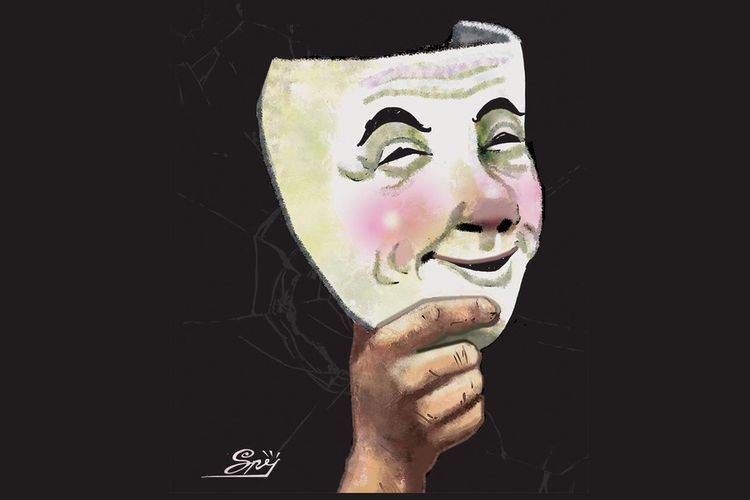
Beneath the uproar lies a more fundamental issue. Political relationships built on coalitions, electoral support, and power agreements can shift when the interests of the involved parties no longer align.
Friends turn into foes, allies transform into competitors, while the principles once advocated risk being sidelined by power calculations.
The question is whether this shift represents a natural democratic dynamic or a sign of deepening political opportunism.
Indonesia's politics seem to move from one controversy to another.
Before old issues receive adequate explanations, public attention is captured by new events. The uproar changes, but questions about accountability often get left behind.
The polemic surrounding the Constitutional Court's ruling on the age limit for presidential and vice-presidential candidates ahead of the 2024 elections serves as an example.
The Honorary Council of the Constitutional Court imposed ethical sanctions on the then-chairman.
However, questions regarding the independence of the institution and the relationship between power and political processes do not simply end.
Changes in KPU regulations and the polemic surrounding Gibran's educational qualifications further add to the debate.
Now, allegations of wiretapping bring to the forefront issues regarding the use of state authority.
Clarifications about Listyo's role must undergo independent verification. Speculation linking him to Joko Widodo or other parties cannot be considered fact without proof.
These events differ legally. However, they all highlight the importance of institutions working consistently, irrespective of shifting political relationships.
The public requires processes that can be scrutinized, rather than noise that passes without accountability.
Democracy requires compromise. Parties build coalitions, governments seek parliamentary support, and differing interests converge to facilitate policy-making.
Changing alliances do not automatically imply ethical violations.