

Regarding the Leak in the ATR/BPN Investigation, KPK Continues Internal Review
-
News
-
11 minutes ago
This article was translated by AI. Read the original article on Kompas.com. See Original
JAKARTA, KOMPAS.com - The resignation of Gibran Rakabuming Raka from his position as Vice President marks a new chapter in the political journey of Joko Widodo (Jokowi), his father and the 7th President of Indonesia.
For some time, the presence of his eldest son in the circle of government power has served as one of Jokowi's political channels after he stepped down from the presidency.
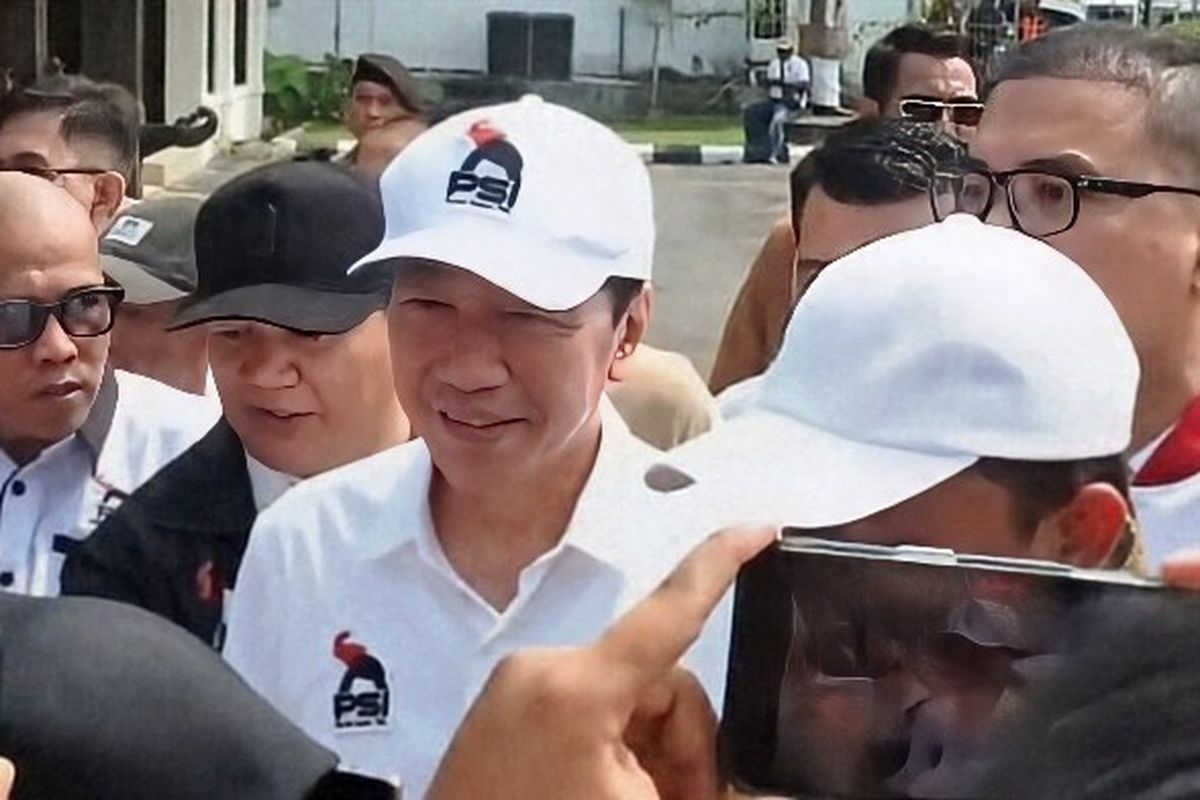
This change raises questions about the durability of Jokowi's political influence, especially concerning the Indonesian Solidarity Party (PSI), which has been closely associated with his name.
The 2029 elections will be a moment to test whether Jokowi's popularity can still translate into electoral support for the party.
However, how significantly will Jokowi's change in position affect the national political landscape and PSI's prospects in parliament?
Executive Director of Aljabar Strategic Indonesia, Arifki Chaniago, views Gibran's resignation from the vice president position as a key indicator of the shift in Jokowi's political position.
According to Arifki, Gibran's role as vice president has served as a channel linking Jokowi's political influence with Prabowo Subianto's government.
"With Gibran's resignation, that channel is essentially no longer available. This means Jokowi no longer has family representation in the vice president position, which is directly part of the executive power structure," Arifki stated to Kompas.com on Monday (16/11/2026).
Nevertheless, Arifki remarked that it does not mean Jokowi's political influence has vanished.
The former president still possesses political networks, relations with several party elites, and the popularity capital built over two terms in office.
"Hence, what's changed is not merely Jokowi's popularity, but rather his access and bargaining power within the government's power structure," he elaborated.
He noted that after Prabowo became president, the constitutional center of decision-making in the government rests in Prabowo's hands.
Over the past two years, the political relationship between Prabowo and Jokowi has shown continuity of interests.
However, Gibran's resignation alters Jokowi's standing within the government configuration.
Arifki perceives that Jokowi's influence moving forward will likely be dictated more by his ability to maintain political networks outside the government rather than through direct access to executive power.
Under these circumstances, he indicates a shift from "power-based influence" to "network-based influence".
"This is significant because political influence based on networks and elite loyalty has characteristically different traits from influence supported by access to governmental power," he stated.
Political communication expert and Director of the Nusakom Pratama Political Research Institute, Ari Junaedi, noted that Gibran's resignation prompts the public to reconsider Jokowi's political influence.
According to Ari, a politician's influence can be gauged from their access to funding sources and proximity to the government.
For figures without positions in the government or strong footing in political parties, such a situation could impact their political acceptability.
Ari reminds us that Jokowi has a track record of victories in various political contests, from the mayoral election in Solo to the DKI Jakarta gubernatorial race, as well as two presidential elections.
He also mentioned Jokowi's support for the Prabowo-Gibran pair in the 2024 presidential election, his son-in-law Bobby Nasution in North Sumatra, and several regional candidates he backed in the 2024 local elections.
According to Ari, Jokowi's influence can be seen in electoral contests in regions historically known as bases for certain political parties.
"Following Gibran's resignation and the increasing abandonment of PSI and its volunteer organizations by its leaders, this signals the early signs that Jokowi's dominance may be waning," Ari told Kompas.com on Monday.
He assesses that Gibran's resignation makes the public question whether the Jokowi effect still wields the same level of influence as before.
Ari states that Gibran's change in position in the government and the dynamics within PSI and its volunteer organizations are crucial aspects of the political developments that need to be monitored.
"The diminishing political magnitude of a figure or party can be observed through a decrease in their access to funding sources and the widening gap to the government," he stated.
He noted that financial backers, or "bohir," also have interests in establishing political relationships.
When a figure loses their power, many backers may reconsider their connections.
"Bohir operates on a short-term interest paradigm, so when Jokowi loses power, their association may be deemed complete. However, those with long-term interests or a debt of gratitude towards Jokowi might maintain their relationships," Ari added.
The shifts in Jokowi's political position are intertwined with PSI's future.
The party has closely aligned politically with the former president.
Arifki observes that PSI is among the parties that face consequences due to the changes in Jokowi's political landscape.
Being close to Jokowi has served as a political identity that differentiates PSI from other parties.
However, according to Arifki, a leader's popularity does not automatically convert into party votes.
In elections, electoral strength is also influenced by party organization, the strength of legislative candidates, regional outreach, and the ability to raise issues that resonate with public needs.
"Therefore, PSI must demonstrate that it possesses an identity and support base that does not entirely depend on Jokowi's figure," Arifki stated.
He mentioned that PSI's challenge lies in transforming Jokowi's popularity into an independent electoral strength for the party.
"PSI's challenge is to convert the Jokowi effect into a PSI effect. Because, the popularity of a leader and the electoral strength of a party are two distinct matters," he asserted.
Meanwhile, Ari Junaedi stated that the strength of a political party can rely on the charisma of the figure who symbolizes the party as well as on the process of political cadre development.
He cited PDI-P with Megawati Soekarnoputri, Gerindra with Prabowo Subianto, and the Democrat Party with Susilo Bambang Yudhoyono as examples.
According to Ari, PSI's birth cannot be separated from Jokowi's popularity.
Moreover, Kaesang Pangarep's position as the party chairman does not necessarily replace Jokowi's political appeal.
"PSI emerged alongside Jokowi's towering name. The presence of Jokowi's youngest son, Kaesang Pangarep, does not have the same impact due to his political inexperience," Ari remarked.
Ari believes Jokowi needs to reorganize PSI after several key party members have stepped down.
He predicts that Gibran could be placed in an important role within the party leadership.
According to Ari, Gibran's resignation from the vice presidency could generate public sympathy that can be leveraged for political consolidation within PSI.
"I am confident that Jokowi will revamp PSI by placing Gibran as its new captain, understanding the phenomenon of 'mellow public,' which utilizes public pity and sympathy over Gibran's resignation," Ari noted.
In addition to charismatic figures, PSI faces challenges in building organizational strength at the regional level.
Arifki points out that PSI needs to carry out two political tasks simultaneously.
First, maintain Jokowi's allure as a political magnet for the party.
Second, build institutional strength so that PSI possesses its own appeal in the eyes of voters.
He stated that national popularity alone is insufficient to take the party to parliament.
PSI must strengthen organizational consolidation in regions, build a politically consistent machine, introduce publicly recognized cadres, and offer concrete political agendas.
"Thus, PSI's challenge extends beyond whether Jokowi remains popular or not. A more fundamental question is whether PSI has achieved sufficient organizational strength and political identity to face the competition in the 2029 elections," Arifki elaborated.
Meanwhile, Ari Junaedi predicts that PSI's vote acquisition in the 2029 elections could be lower than in the 2024 elections if the party does not make improvements.
He links this prediction to several dynamics occurring within Jokowi's political circles, from Gibran's resignation to the departure of several key PSI figures and shifting support from volunteer elements.
"Looking at the series of events affecting Jokowi's group and family, including the wiretapping case related to Solo loyalists, Gibran's resignation as vice president and the departure of PSI leaders, Projo, and other pro-Jokowi volunteer groups, I predict that PSI's vote in the 2029 elections will fall below the achievement in the 2024 elections," Ari stated.
Ari also highlighted that PSI failed to cross the parliamentary threshold while Jokowi was still in office.
"Imagine when supported by bureaucratic structure and the 'cawe-cawenya' 'parcok' while Jokowi was still president, PSI was unable to even reach the parliamentary threshold, let alone in the 2029 context," he remarked.
Arifki noted that the 2029 elections will serve as a moment to evaluate whether the Jokowi effect still retains electoral strength after he is no longer president.
According to Arifki, there are three indicators to consider when measuring the sustainability of Jokowi's political influence.
First, whether Jokowi can still mobilize political support and maintain his influence among voters.
Second, whether the political networks previously close to Jokowi remain solid or experience fragmentation as power configurations change.
Third, how well PSI can convert its political closeness to Jokowi into tangible voting support.
"Thus, the 2029 elections represent not only a test for PSI but also a test of the durability of Jokowi's political influence after he no longer holds a formal position in the government," Arifki emphasized.
He asserts that PSI's future vote acquisition will become a vital indicator of how well the party's proximity to Jokowi translates into electoral support.
"Ultimately, the Jokowi effect must be tested through votes, not merely through elite statements of support or public popularity," he concluded.
Meanwhile, Ari Junaedi mentioned that the 2029 elections will serve as a benchmark for assessing Jokowi's political influence after Gibran's position change and the dynamism within PSI.
He noted that if Jokowi's political influence wanes, the appeal of supporting financial groups may also shift.
"The 2029 elections will be a decisive gauge of whether Jokowi's political fortitude remains formidable or not," Ari observed.