

Get Ready for MPR to Choose Gibran's Replacement: 2 Teams Formed, Deadline Set
-
News
-
15 minutes ago
This article was translated by AI. Read the original article on Kompas.com. See Original
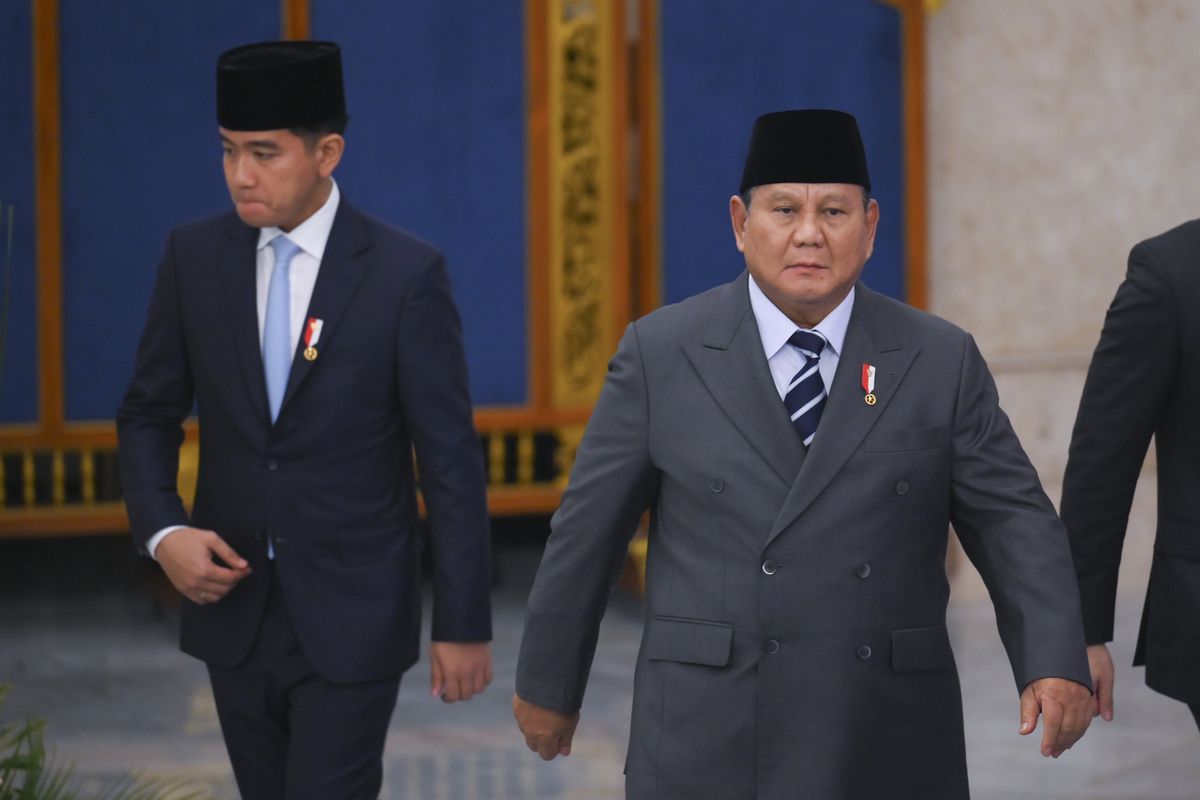
Ultimately, the issue of Gibran's replacement is not just about who will take the Vice President seat or which political power will benefit from the appointment.
A more fundamental question is how to ensure that the presidential system has effective mechanisms to limit power.
Hatta's history teaches us that a position is not always more important than principles. Sukarno's experience reveals that governance can exist without a Vice President, but that does not guarantee checks on power.
Meanwhile, Prabowo's administration underscores the importance of constitutional oversight of the executive authority in determining state policy directions.
Moreover, this event should open space for critical review of the Vice Presidential role within Indonesia's constitution.
Article 4, paragraph (2) of the 1945 Constitution explicitly states that the president is assisted by one Vice President.
However, the constitution does not detail the distribution of authority, decision-making spaces, or the supervisory functions of the Vice President in governance.
In practice, most of the Vice President's tasks and movements heavily rely on the distribution of duties and the trust granted by the president.
As a result, a gap exists between constitutional recognition of the Vice President position and the institutional capacity to perform substantial governmental functions.
If the Vice President's presence is solely mentioned in the constitution while their actual authority and functions are entirely dictated by the president, then the relevance of such provisions should be evaluated.
The constitution should not only present a position but also provide certainty regarding its functions, authorities, responsibilities, and limits of power.
Without such clarity, the Vice President risks becoming a symbolically powerful institution but functionally weak.
Therefore, a critical review of the institutional design of the Vice Presidency within the constitution is required. Such a review does not have to lead to the elimination of the Vice President's position.
The options could involve strengthening and specifying the powers so that the Vice President has clearer constitutional functions or reevaluating the necessity of maintaining the position if it does not contribute meaningfully to the balance of governance.
This debate should be framed within the context of presidential reform, not merely as a calculation of position distribution among political elites. Otherwise, the nuances of electoral politics will likely influence the constitution.
The issue of Indonesian democracy is not just about who holds power but also about how that power is limited.
We must ensure that the Vice President does not become merely a constitutional requirement without having a clear constitutional significance in governance.
Message to the editor: Please update my latest profile. Thank you.