

Get Ready for MPR to Choose Gibran's Replacement: 2 Teams Formed, Deadline Set
-
News
-
15 minutes ago
This article was translated by AI. Read the original article on Kompas.com. See Original
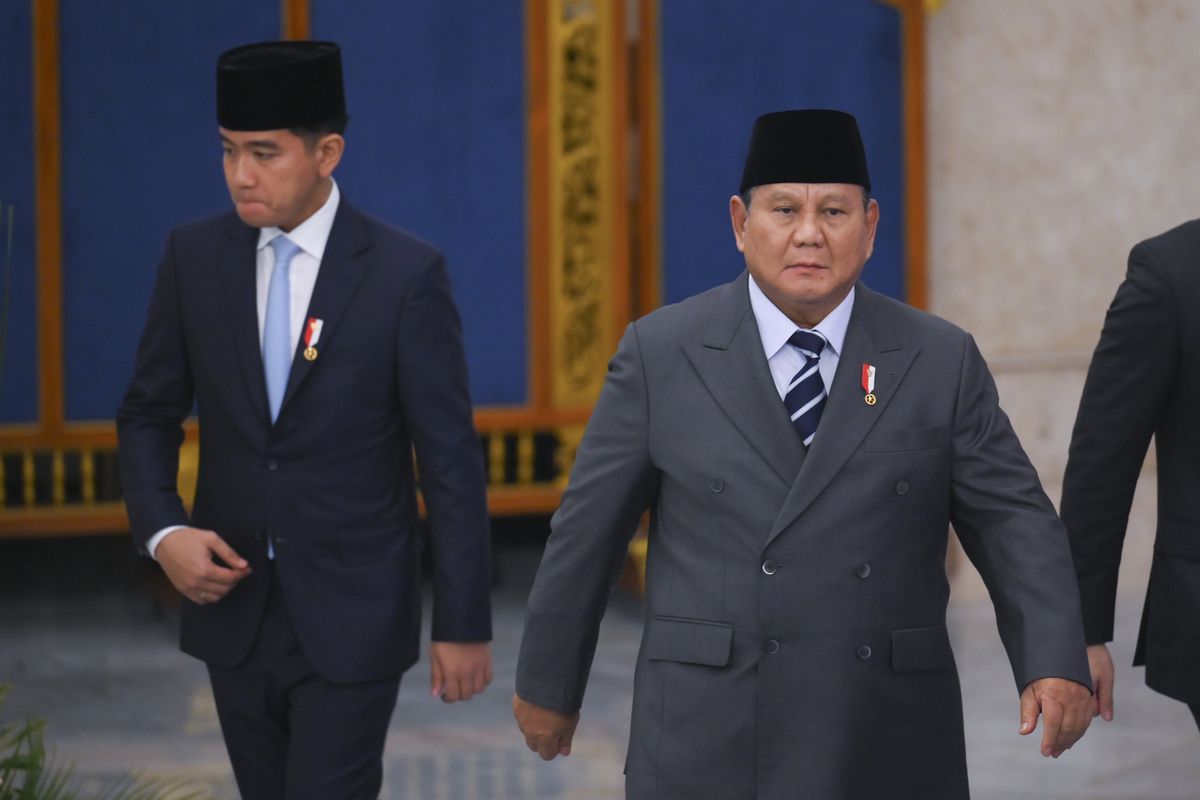
DECISION Gibran Rakabuming Raka's resignation from the position of Vice President reignites the debate over the role and significance of the Vice President within Indonesia's constitutional framework.
This question goes beyond who will replace Gibran; it addresses the importance of having a Vice President in the power configuration of the Prabowo Subianto administration, which has been in place for nearly two years.
Is filling this position a substantive need for governance, or merely a formality to meet constitutional requirements?
This incident recalls Indonesian political history when Mohammad Hatta resigned from the Vice Presidency on December 1, 1956.
However, the reasons behind their respective resignations are certainly different. Hatta made his decision after a fundamental disagreement over the direction of democracy, the governance system, and state management.
Hatta advocated for constitutional democracy with checks on power, while Sukarno increasingly pushed Indonesia towards Guided Democracy.
Hatta's resignation was not merely about leaving a position; it was a consequence of a principled disagreement over how the nation should be governed.
This decision marked the end of the synergetic unity of national leadership established during the struggle for independence.
After Hatta's departure, Sukarno governed without a Vice President until his rule ended in 1967.
This vacancy even continued into the early years of Suharto's administration until Sri Sultan Hamengkubuwono IX was elected Vice President in 1973.
This historical experience illustrates that governance can continue without a Vice President.
Similar practices can be found in several countries. Germany, France, and Italy, for example, do not have a Vice President. Instead, they have succession mechanisms through other state officials to ensure government continuity.
This means that a Vice President's existence is not the only institutional design that allows for governance to function.
However, Sukarno's experience cannot be directly interpreted as a legal precedent for Indonesia today. The amendments to the 1945 Constitution explicitly regulate the mechanism for filling a vacant Vice President position.
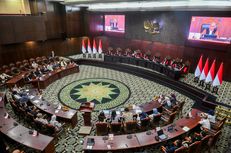
Article 8, paragraph (2) states that the MPR shall convene a session to elect a Vice President from two candidates proposed by the President within 60 days of the vacancy arising.
Thus, Gibran's resignation is not merely a political issue, but also a constitutional event that necessitates the process for filling the position.
The challenge lies in the constitutional obligation to fill the position, which does not automatically address the political and functional urgency of a Vice President.
In Indonesia's presidential system, the president and vice president are elected as a pair, but executive authority remains with the president.
Article 4, paragraph (2) of the 1945 Constitution states that the president, in carrying out their duties, is assisted by one Vice President.
The extent of the Vice President's role in governance heavily depends on the division of tasks and the trust bestowed by the president. The Vice President does not have independent executive authority equivalent to that of the president.
This scenario becomes intriguing when connected to Prabowo's government trend of positioning the president as a dominant actor in determining policy direction.
A broad interpretation of executive authority as mentioned in Article 4, paragraph (1) of the 1945 Constitution serves as the basis for translating the president's political agenda into various national programs.
The Merah Putih Village/Neighborhood Cooperation (KDMP), for instance, is accelerated through Presidential Instruction Number 9 of 2025, targeting the establishment of 80,000 cooperatives.
Meanwhile, Free Nutritious Meals (MBG) is implemented through the National Nutrition Agency as established by Presidential Regulation Number 83 of 2024 and strengthened by Presidential Regulation Number 115 of 2025.
The issue is not just about the goals of these two programs but rather how presidential authority is translated into public policy without ignoring constitutional boundaries.
KDMP raises questions about economic democracy as stated in Article 33 of the 1945 Constitution, the independence of cooperative members, and village autonomy.
Cooperative formation should rely on the initiative, agreement, and interests of members, not merely on the central government's administrative targets.
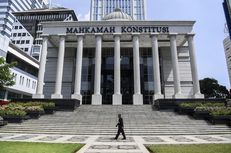
These questions are also part of constitutional scrutiny through Case Number 399/PUU-XXIV/2026 in the Constitutional Court.
Similarly, MBG incites debates on budget allocation for education as per Article 31, paragraph (4) of the 1945 Constitution.
Through Decision Number 40/PUU-XXIV/2026, the Constitutional Court mandated the separation of MBG funding, which is not a main educational component, from the education budget no later than in the 2028 State Budget.
This ruling indicates that presidential policies, despite having political legitimacy and social aims, must adhere to constitutional testing.
Executive authority cannot be interpreted without limits simply because a program is a priority for the government.
In this context, Prabowo has considerable political space to determine the direction for filling the Vice Presidential position, yet lacks constitutional authority to leave it vacant indefinitely.
The President has the authority to propose two candidate names to the MPR. If the nominated candidates are from his own party, specifically Gerindra, the question arises as to how independently the Vice President can perform their functions compared to the President.
As elite consolidation and coalition support for the government solidify, filling the position from within the same political circle may strengthen centralized control rather than create internal balance.
The Vice President is not designed to serve as an opposition to the President. However, their existence should not merely act as an extension of the President's political interests.
In a government increasingly reliant on discretion and executive interpretation, the functions of coordination, internal oversight, and policy continuity should gain clearer space.
Without substantial responsibility distribution, the Vice President's role risks becoming merely a formal complement in the power structure.
Ultimately, the issue of Gibran's replacement is not just about who will take the Vice President seat or which political power will benefit from the appointment.
A more fundamental question is how to ensure that the presidential system has effective mechanisms to limit power.
Hatta's history teaches us that a position is not always more important than principles. Sukarno's experience reveals that governance can exist without a Vice President, but that does not guarantee checks on power.
Meanwhile, Prabowo's administration underscores the importance of constitutional oversight of the executive authority in determining state policy directions.
Moreover, this event should open space for critical review of the Vice Presidential role within Indonesia's constitution.
Article 4, paragraph (2) of the 1945 Constitution explicitly states that the president is assisted by one Vice President.
However, the constitution does not detail the distribution of authority, decision-making spaces, or the supervisory functions of the Vice President in governance.
In practice, most of the Vice President's tasks and movements heavily rely on the distribution of duties and the trust granted by the president.
As a result, a gap exists between constitutional recognition of the Vice President position and the institutional capacity to perform substantial governmental functions.
If the Vice President's presence is solely mentioned in the constitution while their actual authority and functions are entirely dictated by the president, then the relevance of such provisions should be evaluated.
The constitution should not only present a position but also provide certainty regarding its functions, authorities, responsibilities, and limits of power.
Without such clarity, the Vice President risks becoming a symbolically powerful institution but functionally weak.
Therefore, a critical review of the institutional design of the Vice Presidency within the constitution is required. Such a review does not have to lead to the elimination of the Vice President's position.
The options could involve strengthening and specifying the powers so that the Vice President has clearer constitutional functions or reevaluating the necessity of maintaining the position if it does not contribute meaningfully to the balance of governance.
This debate should be framed within the context of presidential reform, not merely as a calculation of position distribution among political elites. Otherwise, the nuances of electoral politics will likely influence the constitution.
The issue of Indonesian democracy is not just about who holds power but also about how that power is limited.
We must ensure that the Vice President does not become merely a constitutional requirement without having a clear constitutional significance in governance.
Message to the editor: Please update my latest profile. Thank you.