

Building Resilience Against Forest and Land Fires
-
News
-
18 minutes ago
This article was translated by AI. Read the original article on Kompas.com. See Original
If the original diploma is subsequently submitted, its authenticity, date of issuance, educational level, and compliance with candidacy requirements must be evaluated.
That document does not automatically revive the annulled certificate but could serve as relevant evidence in the appropriate legal process.
In administrative law, the validity of government decisions relates to authority, procedures, and substance.
This criterion is reflected in Law No. 30 of 2014 on Government Administration.
Procedural errors concern the manner of issuing decisions. Authority defects occur when actions are taken by unauthorized officials.
Meanwhile, substantive defects relate to the content of decisions or factual bases that do not meet legal requirements.
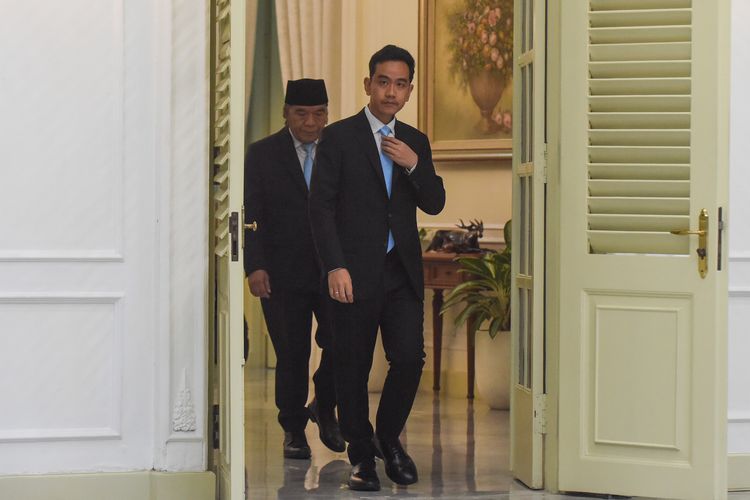
In Gibran's educational equivalency case, the issue does not stop at ordinary administrative deficiencies.
The considerations of MK and MA touched on the sufficiency of graduation evidence. This means there is a question regarding the veracity of the factual basis used to issue the decision.
However, there is a difference between the absence of convincing evidence in an examination and proving that someone does not possess the required educational qualifications at all.
This difference determines legal consequences.
An official's error in issuing a certificate may lead to obligations for revocation and administrative accountability.
On the other hand, non-fulfillment of position requirements requires proof regarding the legal status of the individual occupying that position.
The two may be related but cannot be equated without adequate examination.
Here, the principle of diligence must apply in both directions. The government must be diligent in issuing decisions. Courts and state institutions must also be diligent in determining legal consequences.
Administrative errors must not be minimized to mere formalities. However, their consequences must not be exaggerated beyond what can be proved.
The most pivotal issue lies in Article 7A of the 1945 Constitution.
The Constitution stipulates that the president and/or vice president may be dismissed if proven to violate certain laws, engage in disgraceful conduct, or are proven to no longer meet the criteria as president and/or vice president.
The phrase “no longer meets the criteria” opens a debate regarding the relationship between candidacy requirements and the continuation of office.
Grammatically, the word “no longer” implies a change in state. Requirements that were previously fulfilled may no longer be met when a person is in office.
However, what if a fact emerges post-inauguration that indicates a requirement was never met from the start?
An overly narrow interpretation could render the inauguration a protection against non-fulfillment of fundamental conditions.
Conversely, an overly broad interpretation could transform impeachment into a means to reopen every candidacy dispute.
Article 7A must be read alongside Article 6 regarding position requirements and Article 7B regarding dismissal procedures.
This systematic reading shows that the Constitution distinguishes the process of obtaining a position from the mechanism of terminating it.
In the author's view, facts originating from the candidacy period can be relevant in the examination of dismissal.
However, that relevance does not mean every defect in candidacy automatically becomes grounds for impeachment.
It must be proven that the challenged requirements are legal requirements for the position, their non-fulfillment is substantive in nature, and that such matters fall within the grounds for dismissal in Article 7A.
Even after these three factors have been examined, the interpretation of the phrase “no longer” must still be answered in a constitutional way.
Thus, the ruling to annul the certificate cannot replace the proof regarding grounds for dismissal.
Impeachment is not a mechanism for appealing against administrative disputes over candidacy.
These two rulings also raise questions regarding the limits of judicial authority.
In ruling No. 01/PHPU.PRES-XXIV/2026, the MK considered the existence of special circumstances and the principle of ius curia novit to examine issues submitted after the deadline for resolving election result disputes.
The Court then stated that objections regarding the deadline were unfounded, but still maintained the limitation of the petitioner's legal standing.