

Minister Sjafrie Calls on Defense Officials to Be Attentive and Self-Aware Amid National Dynamics
-
News
-
3 minutes ago
This article was translated by AI. Read the original article on Kompas.com. See Original
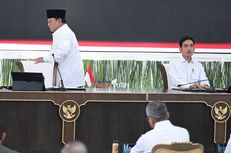
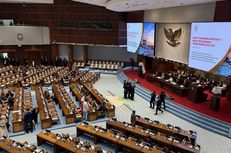
However, several indications are hard to ignore. The meeting with the President took place on the opening day of the parliamentary session, when factions were preparing to take a stance.
The President's non-rejection is also a strong signal in the language of power.
Impeachment is indeed a long road requiring support from two-thirds of the present members of parliament, judicial review at the Constitutional Court, and approval from the People's Consultative Assembly.
However, being dismissed for not meeting qualifications would leave a far heavier record than resigning voluntarily.
Another interpretation remains open. The intention to resign can be viewed as a knightly gesture to end the controversy for the sake of governmental stability.
It could also be a bargaining position, considering Gibran still wishes to pursue the administrative court route. That right deserves respect, just as the public deserves certainty.
Giovanni Capoccia and R. Daniel Kelemen (2007) describe moments like this as critical junctures, brief instances when actor choices open pathways in history that are hard to reverse.
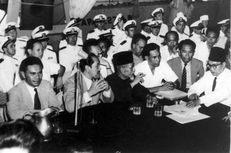
Our history has experienced several of these. Bung Hatta resigned from the Vice Presidency in 1956 due to principled differences with Bung Karno.
Soeharto chose to step down in May 1998 before pressure turned into a formal process.
Abdurrahman Wahid was dismissed by the MPR through a Special Session in 2001.
If Gibran does resign, he will become the second Vice President to do so, contrasting sharply.
Hatta left due to principle, while Gibran departs because the legal foundation of his candidacy is shaky.
The constitution has provided an exit. Article 8 paragraph (2) of the 1945 Constitution states that if a vacancy occurs for the Vice Presidency, the MPR must convene within 60 days to elect a Vice President from two candidates proposed by the President.
This process must proceed orderly, transparently, and free from transactions that taint the meaning of learning from these events.
The greatest lesson surpasses the fate of a single individual. The constitutional shortcuts that began in 2023 are now demanding their cost, for Gibran, for his family, and for the authority of the institutions that once endorsed him.
The fracture predicted by Budi Arie has indeed come sooner than 2029, but its direction has reversed.
History can be delayed, but it cannot be cheated. Will this fracture serve as a lesson for anyone tempted to take shortcuts to power?