Minister Sjafrie Calls on Defense Officials to Be Attentive and Self-Aware Amid National Dynamics
-
News
-
4 minutes ago
This article was translated by AI. Read the original article on Kompas.com. See Original
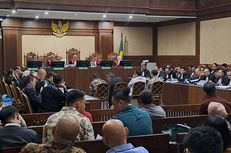
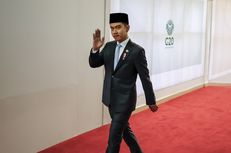
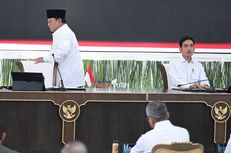
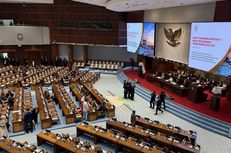
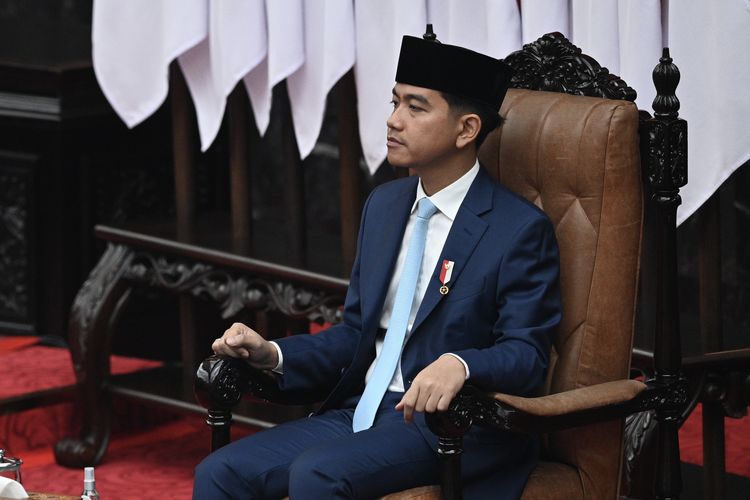 Wakil Presiden Gibran Rakabuming Raka menghadiri Sidang Tahunan MPR RI dan Sidang Bersama DPR-DPD RI Tahun 2026 di Gedung Nusantara, Kompleks Parlemen, Jakarta, Jumat (14/8/2026).
AT the end of August, before the 7th President Joko Widodo and hundreds of volunteers, Projo Chairman Budi Arie Setiadi introduced a term that sparked widespread discussion.
He spoke of a possible "historical fracture," a political acceleration that is happening sooner than 2029.
This statement was quickly condemned as divisive, leading Budi Arie to apologize later.
Three months later, this fracture seemed to manifest.
However, it wasn't the President's seat that cracked, but rather that of the Vice President occupied by Jokowi's eldest son.
Vice President Gibran Rakabuming Raka met with President Prabowo Subianto for about two and a half hours and expressed his intention to resign on Tuesday (10/11/2026).
According to State Secretary Minister Prasetyo Hadi, Gibran linked his intention to the dynamics following the Constitutional Court and Supreme Court decisions, while the President neither accepted nor rejected his request, offering several suggestions (Kompas.id, 10/11/2026).
Gibran also asked for the opportunity to validate the authenticity of his educational documents through administrative court proceedings.
Whatever the final decision, this event marks a significant historical milestone.
In geology, fractures do not occur overnight. Energy accumulates slowly beneath the surface over years, then is released in a series of tremors.
This metaphor aptly describes Gibran's position. The line of fissure had already been etched since October 2023 when Constitutional Court Decision No. 90 paved the way for his candidacy.
The Honorary Council of the Constitutional Court subsequently removed his uncle, Anwar Usman, from the position of Chief Justice due to severe ethical violations.
The electoral victory in 2024 masked that fissure on the surface, but did not erase it.
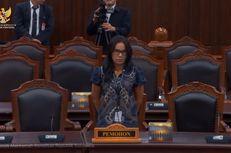
A series of tremors struck in the past month. At the beginning of October, the Constitutional Court stated it found no convincing evidence regarding the equivalency of Gibran's education, although the applications from the petitioners were not accepted.
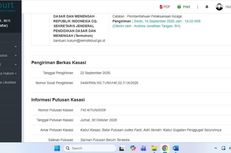
By the end of October, the Supreme Court granted a cassation and rendered the equivalency letter invalid.
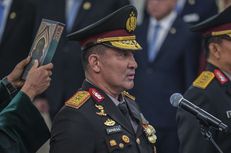
In early November, several police generals, including a former chief of police long known to be close to Jokowi, were declared suspects in a wiretapping case involving the President.
Shortly thereafter, dozens of members of parliament from six factions proposed an opinion right, while three officials from the PSI party, led by Gibran's brother, resigned from the party.
These fragments do not influence each other. For instance, the wiretapping case has no legal relation to Gibran's educational documentation, and the presumption of innocence still applies to the suspects.
However, everything erodes three key supports: legal legitimacy, protective networks, and political backing.
When these three weaken almost simultaneously, a position that appears secure can crumble faster than anyone anticipates.
The political landscape also shifted. During the first two years of administration, the closeness of Prabowo and Jokowi was often seen as a guarantee of security for Gibran's position.
Coalition parties held back, and the notion of impeachment voiced by several retired military officials since 2025 had never significantly progressed in parliament.
Now, the previously silent parties started reviewing the Supreme Court's decision, while Gerindra delayed its stance until the next session opens. In politics, a delay in positioning from allies often carries more meaning than an attack from opponents.
Max Weber reminds us that in a modern state, power derives its legitimacy from adherence to rules, not from popularity or lineage.
This is the crux of Gibran's issue. Tens of millions of votes in the 2024 elections granted him electoral legitimacy, but that legitimacy rests on legal candidacy requirements.
When those requirements are declared invalid by the judiciary, no amount of popularity can repair that breach.
This issue also concerns institutional authority.
If judgments regarding the qualifications for office are left unaddressed, the public will conclude that the law only applies to those without power.
Therefore, whatever path is chosen, whether resignation or impeachment, the resolution must be grounded in the constitution, not in closed-door lobbying.
Is Gibran aware that impeachment may be imminent? Only he knows.
However, several indications are hard to ignore. The meeting with the President took place on the opening day of the parliamentary session, when factions were preparing to take a stance.
The President's non-rejection is also a strong signal in the language of power.
Impeachment is indeed a long road requiring support from two-thirds of the present members of parliament, judicial review at the Constitutional Court, and approval from the People's Consultative Assembly.
However, being dismissed for not meeting qualifications would leave a far heavier record than resigning voluntarily.
Another interpretation remains open. The intention to resign can be viewed as a knightly gesture to end the controversy for the sake of governmental stability.
It could also be a bargaining position, considering Gibran still wishes to pursue the administrative court route. That right deserves respect, just as the public deserves certainty.
Giovanni Capoccia and R. Daniel Kelemen (2007) describe moments like this as critical junctures, brief instances when actor choices open pathways in history that are hard to reverse.
Our history has experienced several of these. Bung Hatta resigned from the Vice Presidency in 1956 due to principled differences with Bung Karno.
Soeharto chose to step down in May 1998 before pressure turned into a formal process.
Abdurrahman Wahid was dismissed by the MPR through a Special Session in 2001.
If Gibran does resign, he will become the second Vice President to do so, contrasting sharply.
Hatta left due to principle, while Gibran departs because the legal foundation of his candidacy is shaky.
The constitution has provided an exit. Article 8 paragraph (2) of the 1945 Constitution states that if a vacancy occurs for the Vice Presidency, the MPR must convene within 60 days to elect a Vice President from two candidates proposed by the President.
This process must proceed orderly, transparently, and free from transactions that taint the meaning of learning from these events.
The greatest lesson surpasses the fate of a single individual. The constitutional shortcuts that began in 2023 are now demanding their cost, for Gibran, for his family, and for the authority of the institutions that once endorsed him.
The fracture predicted by Budi Arie has indeed come sooner than 2029, but its direction has reversed.
History can be delayed, but it cannot be cheated. Will this fracture serve as a lesson for anyone tempted to take shortcuts to power?