
2 Climbers Missing on Semeru, BNPB: Do Not Recklessly Enter Disaster Areas and Mounts Under Alert Status
-
News
-
1 minute ago
This article was translated by AI. Read the original article on Kompas.com. See Original
Moreover, the development of MBG menus should consider local food diversity.
Indonesia possesses a wealth of carbohydrate sources beyond rice, such as corn, cassava, sago, and various tubers.
Optimizing local foods not only strengthens food security but also opens up markets for regional agricultural commodities and reduces dependence on consumption patterns heavily reliant on one type of food.
With this approach, the MBG can yield multiple benefits: improving the nutritional quality of the youth, expanding markets for agricultural products, strengthening SMEs, creating jobs, and invigorating rural economies.
This is referred to as the integration of food policies and economic development.
Nutrition fulfillment programs should not run separately but must be part of a broader strategy to build an inclusive national food ecosystem.
Another crucial challenge is the regeneration of farmers. Agricultural development cannot be sustainable if the younger generation continues to distance itself from the agricultural sector.
We need a new generation of farmers capable of managing agricultural businesses in a modern, innovative, and market-oriented manner.
The 2023 Agricultural Census data suggests that the number of millennial farmers aged 19-39 is around 6.18 million or 21.93 percent of all farmers.
This figure indicates potential involvement from the younger generation, but also highlights significant work required to enhance regeneration within the agricultural sector.
Young individuals must perceive agriculture as a profession with economic prospects, not as an alternative job due to not obtaining work in other sectors.
To this end, the government must establish an ecosystem that enables youths to enter the agricultural sector more easily.
Access to land, financing, technology, vocational education, agricultural business incubation, and market certainty must all be entwined in policy.
Youths must also be encouraged to become agripreneurs developing innovations from upstream to downstream, ranging from cultivation, processing, distribution, to digital marketing of food products.
Universities, research institutions, pesantren, community organizations, and the business world also need to be involved in establishing this regenerative ecosystem.
This collaboration is essential to ensure agricultural innovations do not remain confined to laboratories or academic spaces but are effectively applied to enhance farmers' productivity and income.
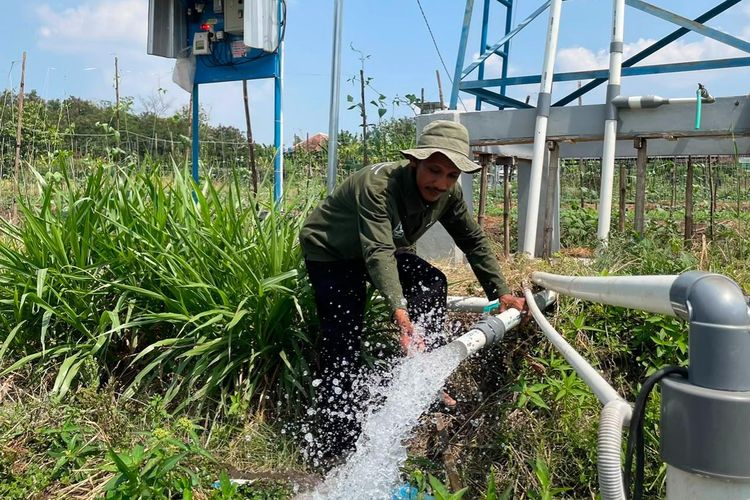
Additionally, climate change poses a challenge that needs to be anticipated. Seasonal uncertainties, droughts, floods, and plant pest attacks can threaten production sustainability.
Therefore, future agricultural development must increasingly heed sustainability aspects through the development of adaptive varieties, water management, agricultural insurance, crop diversification, and environmentally friendly farming practices.
Future food heroes will not only be those who can produce food in large quantities, but also those who can ensure the sustainability of natural resources for future generations.
Heroes Day should be a moment to reevaluate the direction of national economic development.
Independence cannot merely be understood as freedom from political colonization but must also be realized through economic independence and the nation's capacity to meet its basic needs.
In this context, food security has a close connection with national sovereignty.
A nation that can fulfill its food needs from its own production strength will have a greater capacity to withstand global economic upheavals, geopolitical conflicts, climate change, and uncertainties in international trade.
However, food sovereignty should not merely become a point of statistical pride.
Food sovereignty must be reflected in the increasingly prosperous lives of farmers, fishermen earning decent incomes, livestock breeders with market certainty, and communities that can afford nutritious food at reasonable prices.
The government has certainly positioned food self-sufficiency as a strategic agenda in national development.
Increasing rice production, bolstering food reserves, modernizing agriculture, and developing food programs are parts of those efforts.
The current challenge is ensuring that all of these policies are integrated and yield tangible benefits at the producer level.
Food policies must also avoid overly short-term achievement-oriented approaches.
Production increases through land expansion, for instance, must be accompanied by spatial planning, water availability, infrastructure readiness, and environmental sustainability.
Likewise, import policies must be placed carefully as instruments to maintain supply stability while not neglecting protection for domestic production.
Ultimately, the success of food development cannot solely be measured by how much rice is stored in warehouses, how vast the cultivated land is, or how high national production figures are.
Such success must also be assessed based on the quality of life of the farmers producing that food.
We must ensure that we do not attain food self-sufficiency while failing to build farmers’ welfare.
Let us not take pride in calling farmers food heroes while allowing them to fight alone against soaring production costs, land limitations, price uncertainties, and climate risks.
Heroes Day teaches us that independence is the result of collective struggle. The same spirit must be embodied in building national food security.
The government, the business community, universities, financial institutions, cooperatives, civil society organizations, and all national elements must participate in that struggle.
For farmers, mere recognition as food heroes is insufficient.
They need tangible support, economic protection, opportunities for growth, and assurances for a better life.
Valuing food heroes means ensuring the welfare of farmers. Strengthening farmers means fortifying food security.
And strengthening food security means safeguarding Indonesia's future independence.