2 Climbers Missing on Semeru, BNPB: Do Not Recklessly Enter Disaster Areas and Mounts Under Alert Status
-
News
-
1 minute ago
This article was translated by AI. Read the original article on Kompas.com. See Original
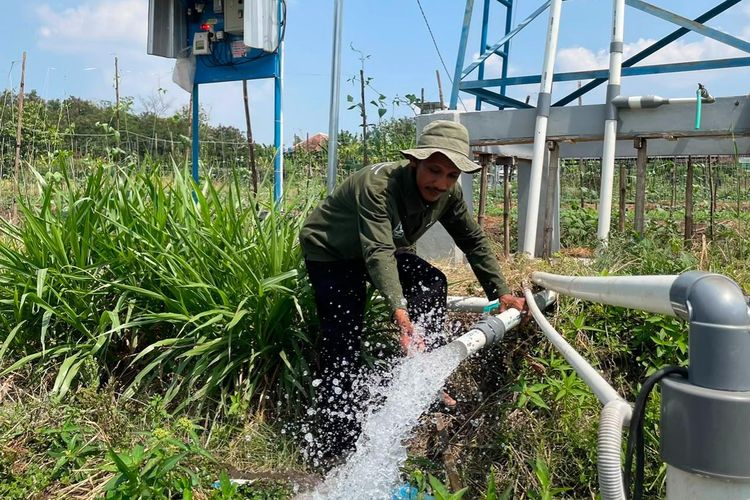 Farmers in Sobokerto Village, Boyolali, Central Java, transform barren land into productive fields using solar-powered pump technology through Pertamina's Independent Energy Village (DEB) program.
EVERY November 10, Indonesians commemorate Heroes Day as a moment to honor the sacrifices of those who fought for independence.
They fought on the battlefield, risking their lives for a noble ideal: an independent, sovereign Indonesia capable of determining its own future.
However, after more than eight decades of independence, the struggle of this nation is far from over.
While the battlegrounds have changed, the challenges facing the nation remain equally daunting.
Whereas heroes of the past fought to drive out colonizers, today, Indonesia must combat poverty, economic inequality, and food dependence, while ensuring the welfare of all its citizens.
In this context, we need to redefine heroism.
One group deserving of recognition as contemporary heroes is farmers, fishermen, livestock breeders, and all stakeholders in the food sector.
They may not bear weapons, sit atop historical stages, or always receive accolades from the state.
Yet, each day, they work to ensure that society can enjoy food on their tables.
They are the food heroes who sustain the nation’s very existence.
Ironically, those who support national food needs continue to face various welfare challenges.
We often refer to farmers as food heroes, but policies ensuring their welfare are still lacking.
Honoring farmers should not stop at slogans and ceremonies on Heroes Day.
Such recognition must be manifested through economic policies that guarantee income, access to land, financing, technology, enterprise protection, and a stronger bargaining position in the food supply chain.
Indonesia possesses vast agricultural resource potential. With rich natural resources, diverse agroecosystems, and a large population, the agricultural sector should form a cornerstone of national economic development.
Agriculture provides not only for the consumption needs of society but also serves as a livelihood for millions of households, a driver of rural economies, a supplier of raw materials for industry, and an essential instrument for maintaining social and economic stability.
However, this enormous potential has yet to translate into commensurate welfare for its stakeholders.
Structural issues in agriculture continue to overshadow farmers' lives, from land ownership limitations and uneven productivity to high production costs, restricted access to technology, and long distribution chains that result in value added mostly enjoyed by operators outside of the production level.
One fundamental issue is the relatively small and fragmented structure of agricultural land ownership.
Many farmers in Indonesia can still be classified as smallholders with very limited land.
This condition makes productivity increases not always correlate with actual income growth.
Farmers carry the burden of production risk and price volatility, while their capacity for business expansion remains extremely limited.
Another problem is the farmers' relatively weak bargaining position. During harvest periods, the prices of certain agricultural commodities can be pressurized due to increased supply alongside limited storage and processing facilities.
Conversely, when planting season arrives, farmers often face rising costs for production inputs.
This situation creates disparities in profit distribution along the food value chain.
Thus, the agricultural challenges in Indonesia extend beyond mere production increases.
The more fundamental challenge is how to ensure that increased production indeed leads to higher income and welfare for farmers.
This issue is reflected in the results of the 2023 Agricultural Census released by the Central Statistics Agency (BPS).
Of approximately 27.80 million agricultural users, 17.25 million are considered smallholders, cultivating less than 0.5 hectares.
This data reveals that approximately 62 percent of agricultural users fall within the smallholder category.
This figure underscores that land limitations persist as a serious challenge in agricultural development in Indonesia.
On the other hand, there are positive developments worthy of appreciation. The Farmers' Exchange Rate (NTP) in October 2026 reached 132.60, a 1.13 percent increase compared to September 2026.
This increase indicates that, on average, prices received by farmers are rising faster than their expenditures.
This is a positive signal for farmers' purchasing power.
However, the NTP must still be interpreted in a proportional way. An increase in this index does not automatically imply that all farmers are prosperous.
Differences in subsector, business scale, land ownership, and regions lead to varying economic conditions among farmers.
Therefore, the success of agricultural development should not merely be gauged by production increases or NTP figures.
A more substantive measure is whether farmers can enhance their real incomes, meet their family needs, educate their children, grow their businesses, and secure their agricultural activities for the future.
In recent years, food security has gained increased attention as an essential part of the national development agenda.
This focus is understandable since food is not just an economic commodity, but a basic necessity directly related to social stability, public health, and national sovereignty.
We should appreciate the increase in national food production.
BPS data indicates that Indonesia's rice production in 2025 reached 34.69 million tons, a 13.29 percent increase compared to 2024's 30.62 million tons.
This increase was supported by a rise in harvested rice area to around 11.32 million hectares. Meanwhile, rice production reached 60.21 million tons of milled dry grain (GKG).
The progress of production in 2026 should also be closely watched. According to BPS data reported in October 2026, rice production from January to August 2026 reached 43.89 million tons of GKG, remaining relatively stable with a 0.07 percent increase compared to the same period the previous year.
This figure indicates that the challenges of maintaining production momentum will require serious attention, especially regarding climate change and weather uncertainties.
The National Food Agency also projects that most of the strategic staple food needs in 2026 can be met by domestic production.
Among the ten monitoring strategic food commodities, only three still require imports.
Rice, corn, shallots, chilies, chicken meat, chicken eggs, and sugar are predicted not to require imports for consumption needs based on this food balance.
Such achievements are certainly important assets to strengthen food sovereignty.
However, we need to understand that food security cannot be reduced merely to the capacity to produce large quantities of rice or to maintain stocks in government warehouses.
Food security encompasses much broader dimensions, including availability, affordability, utilization, and stability.
Sufficient food availability does not guarantee access for the entire population if their purchasing power is low.
Similarly, increasing production does not necessarily yield welfare benefits if prices at the farm level plummet during harvest seasons.
Moreover, production surpluses do not automatically create food independence if the distribution, storage, and processing systems are not efficient.
This is where it becomes critical to position farmers as the primary subjects in food development, rather than merely as objects of production policy.
The state must not only come to the fore when production increases are needed but must also be present when farmers face difficulties selling their harvests, experience crop failures, or require protection against price volatility.
So far, the achievements in agricultural development are often measured by production indicators, harvested area, productivity, and food stocks. These indicators are indeed essential, but they need to be supplemented with measures of farmers' welfare.
Because the ultimate goal of agricultural development is not merely to generate as much food as possible, but to create a production ecosystem providing a decent life for those working within it.
First, the government needs to strengthen price guarantees and income protection for farmers.
Government purchase price policies (HPP), harvest absorption, and supply stabilization must effectively protect farmers when producer prices come under pressure.
The roles of Bulog and other food institutions should be enhanced so that they are not merely focused on reserve management but also serve as instruments to protect farmers' economies.
These policies must be accompanied by improvements in marketing structures.
As long as distribution chains remain too long and farmers' bargaining positions are weak, increases in consumer food prices may not provide commensurate benefits to producers.
Therefore, strengthening farmers' cooperatives, rural economic institutions, and fair partnerships between farmers and processing industries urgently needs to be implemented.
Second, the issue of land limitations must receive more serious attention.
The figure of 17.25 million smallholders indicates that many farmers face structural constraints in scaling up their enterprises.
Land consolidation through cooperative institutions, collective farming, and integrated farming areas can be alternatives without eliminating individual land ownership rights.
Third, agricultural modernization must be accelerated. Mechanization, digitization, use of superior seeds, modern irrigation systems, and adoption of precision agriculture should be expanded.
However, modernization must not be enjoyed solely by large-capital farmers.
Small farmers should have equal access through affordable financing, collective provision of agricultural machinery, mentorship, and training.
Fourth, agricultural downstreaming should become a primary agenda. Historically, most farmers have sold their products as raw materials with limited added value.
Meanwhile, processing agricultural products into processed food items, ready-to-eat products, and various derivative products can open new sources of income.
The development of processing industries in rural areas will also create job opportunities and boost local economies.
Thus, farmers can transition from mere suppliers of raw materials to becoming part of the food industry players.
This is the transformation that needs to be encouraged: from a primary production-based agricultural economy to a food economy that generates added value domestically.
One opportunity that should be leveraged is the Free Nutritious Meals (MBG) program.
This program should not merely be viewed as an intervention for fulfilling community nutrition, especially for children, but can also serve as an instrument to reinforce the national food economic ecosystem.
With a large coverage of beneficiaries, the MBG program has the potential to create relatively stable demand for various food commodities.
Needs for rice, eggs, chicken, fish, vegetables, fruits, and other local foodstuffs can form a promising market for farmers, breeders, fishermen, and food SMEs.
However, this opportunity does not automatically provide economic benefits to producer communities.
There is a need for policy design ensuring connectivity between the needs of nutritious food providers and local food production.
Food procurement should provide ample space for cooperatives, farmer groups, BUMDes, SMEs, and local food entrepreneurs.
We must ensure that programs designed to enhance community welfare do not create new supply chains that only benefit large distributors.
Local farmers and fishermen must be crucial participants in these supply chains.
Moreover, the development of MBG menus should consider local food diversity.
Indonesia possesses a wealth of carbohydrate sources beyond rice, such as corn, cassava, sago, and various tubers.
Optimizing local foods not only strengthens food security but also opens up markets for regional agricultural commodities and reduces dependence on consumption patterns heavily reliant on one type of food.
With this approach, the MBG can yield multiple benefits: improving the nutritional quality of the youth, expanding markets for agricultural products, strengthening SMEs, creating jobs, and invigorating rural economies.
This is referred to as the integration of food policies and economic development.
Nutrition fulfillment programs should not run separately but must be part of a broader strategy to build an inclusive national food ecosystem.
Another crucial challenge is the regeneration of farmers. Agricultural development cannot be sustainable if the younger generation continues to distance itself from the agricultural sector.
We need a new generation of farmers capable of managing agricultural businesses in a modern, innovative, and market-oriented manner.
The 2023 Agricultural Census data suggests that the number of millennial farmers aged 19-39 is around 6.18 million or 21.93 percent of all farmers.
This figure indicates potential involvement from the younger generation, but also highlights significant work required to enhance regeneration within the agricultural sector.
Young individuals must perceive agriculture as a profession with economic prospects, not as an alternative job due to not obtaining work in other sectors.
To this end, the government must establish an ecosystem that enables youths to enter the agricultural sector more easily.
Access to land, financing, technology, vocational education, agricultural business incubation, and market certainty must all be entwined in policy.
Youths must also be encouraged to become agripreneurs developing innovations from upstream to downstream, ranging from cultivation, processing, distribution, to digital marketing of food products.
Universities, research institutions, pesantren, community organizations, and the business world also need to be involved in establishing this regenerative ecosystem.
This collaboration is essential to ensure agricultural innovations do not remain confined to laboratories or academic spaces but are effectively applied to enhance farmers' productivity and income.
Additionally, climate change poses a challenge that needs to be anticipated. Seasonal uncertainties, droughts, floods, and plant pest attacks can threaten production sustainability.
Therefore, future agricultural development must increasingly heed sustainability aspects through the development of adaptive varieties, water management, agricultural insurance, crop diversification, and environmentally friendly farming practices.
Future food heroes will not only be those who can produce food in large quantities, but also those who can ensure the sustainability of natural resources for future generations.
Heroes Day should be a moment to reevaluate the direction of national economic development.
Independence cannot merely be understood as freedom from political colonization but must also be realized through economic independence and the nation's capacity to meet its basic needs.
In this context, food security has a close connection with national sovereignty.
A nation that can fulfill its food needs from its own production strength will have a greater capacity to withstand global economic upheavals, geopolitical conflicts, climate change, and uncertainties in international trade.
However, food sovereignty should not merely become a point of statistical pride.
Food sovereignty must be reflected in the increasingly prosperous lives of farmers, fishermen earning decent incomes, livestock breeders with market certainty, and communities that can afford nutritious food at reasonable prices.
The government has certainly positioned food self-sufficiency as a strategic agenda in national development.
Increasing rice production, bolstering food reserves, modernizing agriculture, and developing food programs are parts of those efforts.
The current challenge is ensuring that all of these policies are integrated and yield tangible benefits at the producer level.
Food policies must also avoid overly short-term achievement-oriented approaches.
Production increases through land expansion, for instance, must be accompanied by spatial planning, water availability, infrastructure readiness, and environmental sustainability.
Likewise, import policies must be placed carefully as instruments to maintain supply stability while not neglecting protection for domestic production.
Ultimately, the success of food development cannot solely be measured by how much rice is stored in warehouses, how vast the cultivated land is, or how high national production figures are.
Such success must also be assessed based on the quality of life of the farmers producing that food.
We must ensure that we do not attain food self-sufficiency while failing to build farmers’ welfare.
Let us not take pride in calling farmers food heroes while allowing them to fight alone against soaring production costs, land limitations, price uncertainties, and climate risks.
Heroes Day teaches us that independence is the result of collective struggle. The same spirit must be embodied in building national food security.
The government, the business community, universities, financial institutions, cooperatives, civil society organizations, and all national elements must participate in that struggle.
For farmers, mere recognition as food heroes is insufficient.
They need tangible support, economic protection, opportunities for growth, and assurances for a better life.
Valuing food heroes means ensuring the welfare of farmers. Strengthening farmers means fortifying food security.
And strengthening food security means safeguarding Indonesia's future independence.