

Golkar: Gibran Should Publicly Announce His Resignation if He Wishes to Step Down
-
News
-
3 minutes ago
This article was translated by AI. Read the original article on Kompas.com. See Original
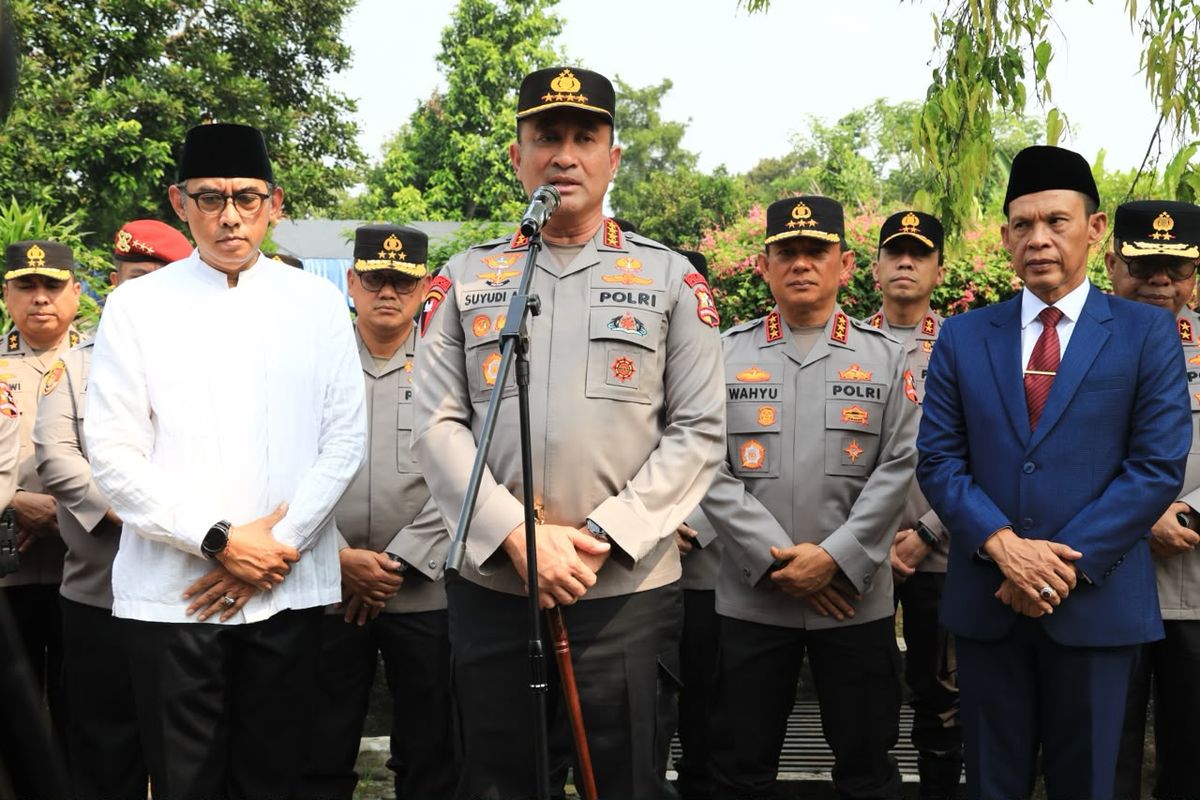
JAKARTA, KOMPAS.com - The change in leadership within the National Police has reopened discussions regarding the direction of police reform.
Amid public expectations for internal improvements, the recommendations from the National Police Reform Acceleration Commission (KPRP), submitted to President Prabowo Subianto, have regained attention.
Former KPRP Chair Jimly Asshiddiqie has even met with National Police Chief General Suyudi Ario Seto to discuss the follow-up on these recommendations.
The meeting, held on November 7, 2026, aimed to ensure that the aspirations collected by KPRP do not go overlooked.
So, should National Police Chief General Suyudi revisit the KPRP recommendations as a guide for the second phase of police reform?
Previously, KPRP submitted a comprehensive report of its findings to President Prabowo Subianto on May 5, 2026.
The report consists of 10 volumes, totaling around 3,000 pages.
Among these, there are six main recommendations that set the direction for police institutional reform.
First, maintaining the position of the National Police under the direct responsibility of the President.
KPRP does not propose the establishment of a new ministry specifically overseeing the police.
Second, strengthening the National Police Commission (Kompolnas) by transforming it into an independent external supervisory body.
Its membership will no longer be ex-officio, while its authority will expand to include oversight of governance, operations, and investigations of police ethics.
The third recommendation relates to the appointment mechanism for the National Police Chief, which must still involve the approval of the DPR (House of Representatives), but should include a more transparent and clear career path arrangement.
Fourth, limiting the assignment of police members outside the police organizational structure through more stringent regulations.
Fifth, improving institutional and managerial aspects by implementing principles of good governance.
This includes enhancing professionalism, strengthening criminal investigation functions, and digitizing public services.
Sixth, encouraging the revision of Law No. 2 of 2002 on the National Police and its subordinate regulations.
The regulatory adjustments cover approximately eight police regulations (perpol) and 24 police chief regulations (perkap), with a target for gradual reform implementation until 2029.