

Prohibition on Withholding Employee Diplomas: Is There a Need for Derivative Regulations and Stricter Oversight?
-
News
-
Just now
This article was translated by AI. Read the original article on Kompas.com. See Original
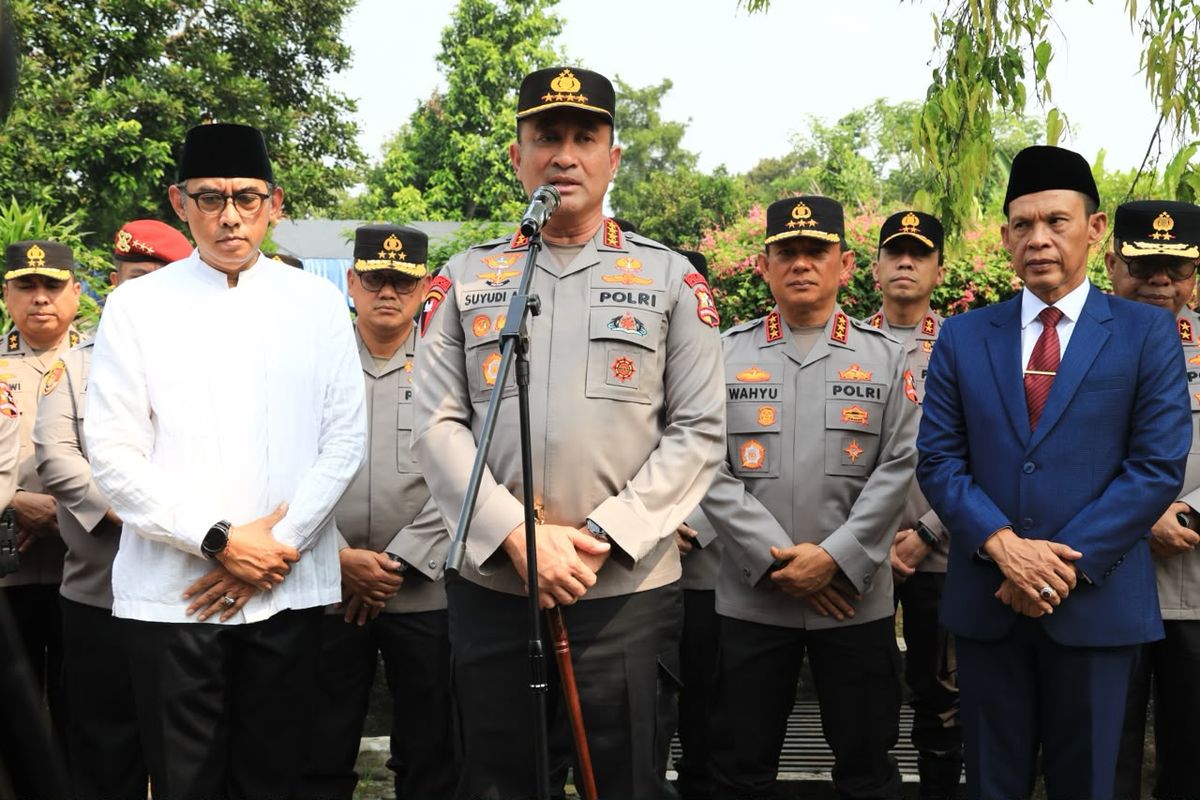
JAKARTA, KOMPAS.com - The change in leadership within the National Police has reopened discussions regarding the direction of police reform.
Amid public expectations for internal improvements, the recommendations from the National Police Reform Acceleration Commission (KPRP), submitted to President Prabowo Subianto, have regained attention.
Former KPRP Chair Jimly Asshiddiqie has even met with National Police Chief General Suyudi Ario Seto to discuss the follow-up on these recommendations.
The meeting, held on November 7, 2026, aimed to ensure that the aspirations collected by KPRP do not go overlooked.
So, should National Police Chief General Suyudi revisit the KPRP recommendations as a guide for the second phase of police reform?
Previously, KPRP submitted a comprehensive report of its findings to President Prabowo Subianto on May 5, 2026.
The report consists of 10 volumes, totaling around 3,000 pages.
Among these, there are six main recommendations that set the direction for police institutional reform.
First, maintaining the position of the National Police under the direct responsibility of the President.
KPRP does not propose the establishment of a new ministry specifically overseeing the police.
Second, strengthening the National Police Commission (Kompolnas) by transforming it into an independent external supervisory body.
Its membership will no longer be ex-officio, while its authority will expand to include oversight of governance, operations, and investigations of police ethics.
The third recommendation relates to the appointment mechanism for the National Police Chief, which must still involve the approval of the DPR (House of Representatives), but should include a more transparent and clear career path arrangement.
Fourth, limiting the assignment of police members outside the police organizational structure through more stringent regulations.
Fifth, improving institutional and managerial aspects by implementing principles of good governance.
This includes enhancing professionalism, strengthening criminal investigation functions, and digitizing public services.
Sixth, encouraging the revision of Law No. 2 of 2002 on the National Police and its subordinate regulations.
The regulatory adjustments cover approximately eight police regulations (perpol) and 24 police chief regulations (perkap), with a target for gradual reform implementation until 2029.
Police observer and former Kompolnas Commissioner Poengky Indarti believes that General Suyudi should review all the recommendations prepared by KPRP.
According to Poengky, the first step should be ensuring that the Police Transformation Acceleration Team has studied and followed up on these recommendations.
Evaluations must not stop at administrative checks of which recommendations have been implemented. The National Police must ensure that implementation reaches all units and police regions down to the grassroots level.
"Indeed. The National Police Chief must revisit the points of the KPRP recommendations and check whether the Acceleration Team has studied and executed them, as well as whether they have been implemented at lower levels, and what the outcomes are?" Poengky stated to Kompas.com on Monday (November 9, 2026).
He emphasized that the success of police reform cannot be measured solely by internal evaluations.
The public must also be aware of the changes made and feel their impact.
"Are the public informed and satisfied with the results? We cannot let the police think they have implemented changes, while the public has yet to see any effect or transformation," he asserted.
To ensure that KPRP recommendations do not remain just documentation, Poengky proposed several concrete steps for the Police Transformation Acceleration Team.
First, the KPRP report and recommendations need to be disseminated to all working units and territorial units, starting from the National Police Headquarters down to local stations.
All police members should be instructed to read and understand the recommendations to have a unified understanding of the reform direction.
Second, the Acceleration Team must map out the recommendations that have been and have not been implemented.
This mapping should align with internal assessments and evaluations conducted by the team.
Third, a clear timeframe should be established, including designating a responsible person for each recommendation.
Thus, the progress of the reform can be monitored and evaluated against predetermined targets.
Fourth, the National Police should prepare budget and activity planning to execute the recommendations in the short, medium, and long term.
Poengky also highlighted the importance of internal regulatory improvements within the police force.
The Acceleration Team, according to him, must promptly prepare revisions of police regulations as recommended by KPRP.
Moreover, harmonization of police regulations with the Criminal Code, Criminal Procedure Code, and other legislation is necessary to avoid overlapping authorities and regulations.
Equally important, the National Police need to involve civil society, academics, universities, and the media in the policy-making process.
This involvement is deemed crucial given that several civil society groups have previously voiced criticism regarding the revision of the Police Law and expressed concerns about potential overreach that may restrict freedom of expression.
On the other hand, Poengky urged comprehensive oversight of the reform implementation, involving both internal and external police monitors, the President's Special Advisor on Security and Police Reform, and the Chief Police's expert advisors.
Oversight must cover every working unit and region, particularly units that have been under public scrutiny.
"The National Police must take full advantage of this reform momentum so that the Police become even more beloved by the public," said Poengky.
The hope that KPRP recommendations will serve as a reference for the new leadership of the National Police was also expressed by Kompolnas Commissioner Choirul Anam.
Anam stated that the recommendations compiled by KPRP are expected to inspire and guide General Suyudi in carrying out the police reform agenda.
"Yes, we indeed have high hopes that KPRP recommendations become a spirit and a guide for the new National Police Chief. This hope is shared with Mr. Jimly Asshiddiqie and other colleagues," Anam told Kompas.com on Monday.
He added that this hope is also linked to the vision and mission of General Suyudi, along with explanations provided during various occasions, including interactions with Kompolnas.
According to Anam, several points are of concern in the communication between Kompolnas and police leadership, namely the establishment of a clean police institution internally, having accountable governance, and being capable of providing the best service and protection to the public.
"This has always been highlighted in various interactions, including those between Kompolnas and the Current National Police Chief and other senior police officials," he said.
Anam hopes that the spirit of improvement can progress alongside the implementation of KPRP recommendations, so that changes occur not only at the policy level but also in police service practices.
From the legislative side, Deputy Chair of Commission III of the DPR Ahmad Sahroni stated that they are open to various inputs aimed at improving the police institution.
According to Sahroni, the KPRP recommendations should be received openly by the police and followed up concretely in the field.
"As partners in Commission III, we view any positive input for the police as something that should be welcomed and accepted openly. I believe the National Police Chief shares the same perspective. It remains to be seen how we ensure these recommendations are effectively implemented in the field," Sahroni said to Kompas.com on Monday.
He assessed that the majority of the KPRP recommendations are generally aligned with the current police reform agenda.
Therefore, these recommendations need to be integrated into the improvement programs that the police have prepared.
Meanwhile, points that have not been accommodated can be followed up through the internal policies of the National Police Chief.
"Certainly, these recommendations need to be integrated with existing agendas, but I have observed that broadly, most of the recommendations align with the police reform agenda. If there are any that haven't, the National Police Chief can follow them up with appropriate internal policies," he stated.
Regarding the push for revising the Police Law, as one of the KPRP recommendations, Sahroni has also expressed support for efforts to incorporate various inputs aimed at enhancing the capacity and capabilities of the police.
"Yes, of course. The spirit is to welcome all positive contributions and ensure there is follow-up for the enhancement of the capacity and capabilities of this partner institution," Sahroni concluded.