

Two Helicopter Accidents Prompt Call for BNPB to Audit and Evaluate Safety Standards
-
News
-
10 minutes ago
This article was translated by AI. Read the original article on Kompas.com. See Original
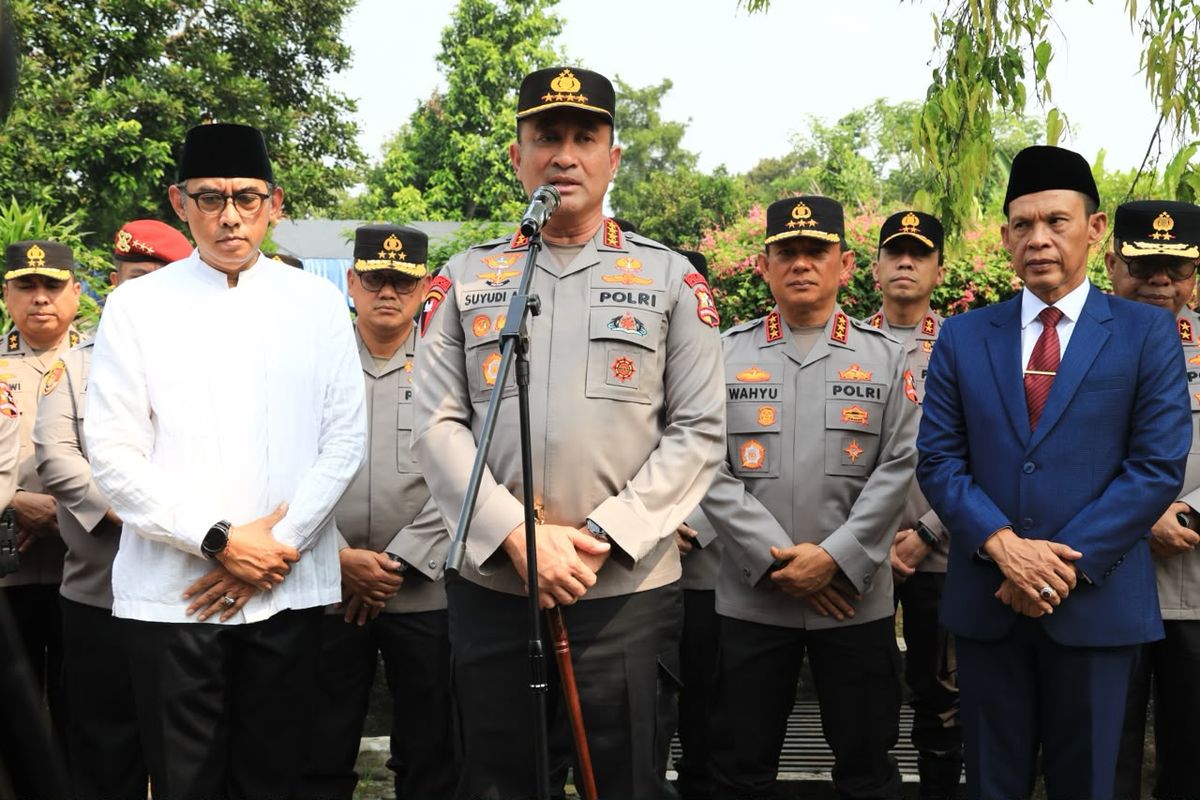
Police observer and former Kompolnas Commissioner Poengky Indarti believes that General Suyudi should review all the recommendations prepared by KPRP.
According to Poengky, the first step should be ensuring that the Police Transformation Acceleration Team has studied and followed up on these recommendations.
Evaluations must not stop at administrative checks of which recommendations have been implemented. The National Police must ensure that implementation reaches all units and police regions down to the grassroots level.
"Indeed. The National Police Chief must revisit the points of the KPRP recommendations and check whether the Acceleration Team has studied and executed them, as well as whether they have been implemented at lower levels, and what the outcomes are?" Poengky stated to Kompas.com on Monday (November 9, 2026).
He emphasized that the success of police reform cannot be measured solely by internal evaluations.
The public must also be aware of the changes made and feel their impact.
"Are the public informed and satisfied with the results? We cannot let the police think they have implemented changes, while the public has yet to see any effect or transformation," he asserted.
To ensure that KPRP recommendations do not remain just documentation, Poengky proposed several concrete steps for the Police Transformation Acceleration Team.
First, the KPRP report and recommendations need to be disseminated to all working units and territorial units, starting from the National Police Headquarters down to local stations.
All police members should be instructed to read and understand the recommendations to have a unified understanding of the reform direction.
Second, the Acceleration Team must map out the recommendations that have been and have not been implemented.
This mapping should align with internal assessments and evaluations conducted by the team.
Third, a clear timeframe should be established, including designating a responsible person for each recommendation.
Thus, the progress of the reform can be monitored and evaluated against predetermined targets.
Fourth, the National Police should prepare budget and activity planning to execute the recommendations in the short, medium, and long term.
Poengky also highlighted the importance of internal regulatory improvements within the police force.
The Acceleration Team, according to him, must promptly prepare revisions of police regulations as recommended by KPRP.
Moreover, harmonization of police regulations with the Criminal Code, Criminal Procedure Code, and other legislation is necessary to avoid overlapping authorities and regulations.
Equally important, the National Police need to involve civil society, academics, universities, and the media in the policy-making process.
This involvement is deemed crucial given that several civil society groups have previously voiced criticism regarding the revision of the Police Law and expressed concerns about potential overreach that may restrict freedom of expression.
On the other hand, Poengky urged comprehensive oversight of the reform implementation, involving both internal and external police monitors, the President's Special Advisor on Security and Police Reform, and the Chief Police's expert advisors.
Oversight must cover every working unit and region, particularly units that have been under public scrutiny.
"The National Police must take full advantage of this reform momentum so that the Police become even more beloved by the public," said Poengky.