

DKPP Hearing: KPU Denies Restrictions on Silon Access to Bawaslu
-
News
-
3 minutes ago
This article was translated by AI. Read the original article on Kompas.com. See Original

Herein lies the fragility. Legitimacy born from elections relies on a mandate, while celebrity legitimacy hinges on popularity.
A mandate lasts five years, while popularity can turn overnight.
Fans who once enjoyed Raffi as an entertainer now hold him to a much stricter standard as a public official.
They no longer ask how entertaining his content is, but rather for whom he stands.
Street himself reminds us that celebrity politics tends to reduce policies to personal brand. The public is invited to like the figure, not to weigh the programs.
During warm atmospheres, this strategy seems successful. However, when policies come under fire, that same persona becomes an easy target because they are the most visible yet have the least answers.
Raffi seems yet to fully grasp this shift. He continues to greet the public with the confident demeanor of an entertainer, as though the political stage is the same as the television stage.
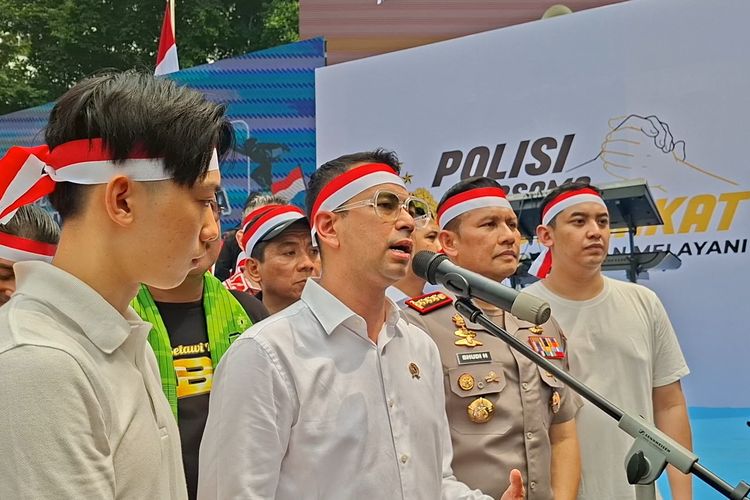
In front of students who had just protested, the presence of a official at a rival event cannot be seen as mere pleasantries.
When he claims he was merely invited, the public instead questions why a special envoy for youth does not know what event he is attending and who is present there.
The wave of boycotts shows that the younger generation is no longer easily swayed by popular faces.
In everyday language, the shortcut to positions like this is commonly referred to as “karbitan,” appearing mature on the outside but perhaps not so on the inside. This term may sound harsh, but it carries a message that deserves to be heard.
Public office requires maturity forged through processes, not measured by follower counts.
The dangers of this phenomenon extend beyond the figure of Raffi. If state positions can be attained without processes, the message to the youth is that popularity is more valuable than competence, and proximity is more determinative than track record.
Parties lose their function as political schools, while the state treats the youth as mere spectators who need entertainment rather than citizens who need to be heard.
The magnitude of a public official's business empire also requires clear boundaries between official duties and business affairs, to prevent continued erosion of public trust.
Raffi may very well continue to endure as long as power needs the face he offers.
However, the popularity lent to power always carries an expiration date.
The question now turns to the state. Until when will the government prefer to borrow popular faces to communicate with the youth rather than open its ears to students standing in the rain voicing their own concerns?