
DKPP Hearing: KPU Denies Restrictions on Silon Access to Bawaslu
-
News
-
3 minutes ago
This article was translated by AI. Read the original article on Kompas.com. See Original
THE NAME Raffi Ahmad is once again a topic of discussion. This time, it’s not due to a television show or family news.
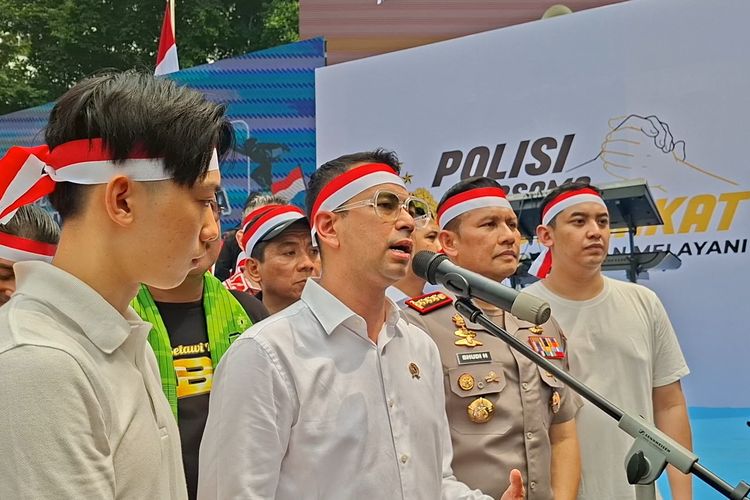
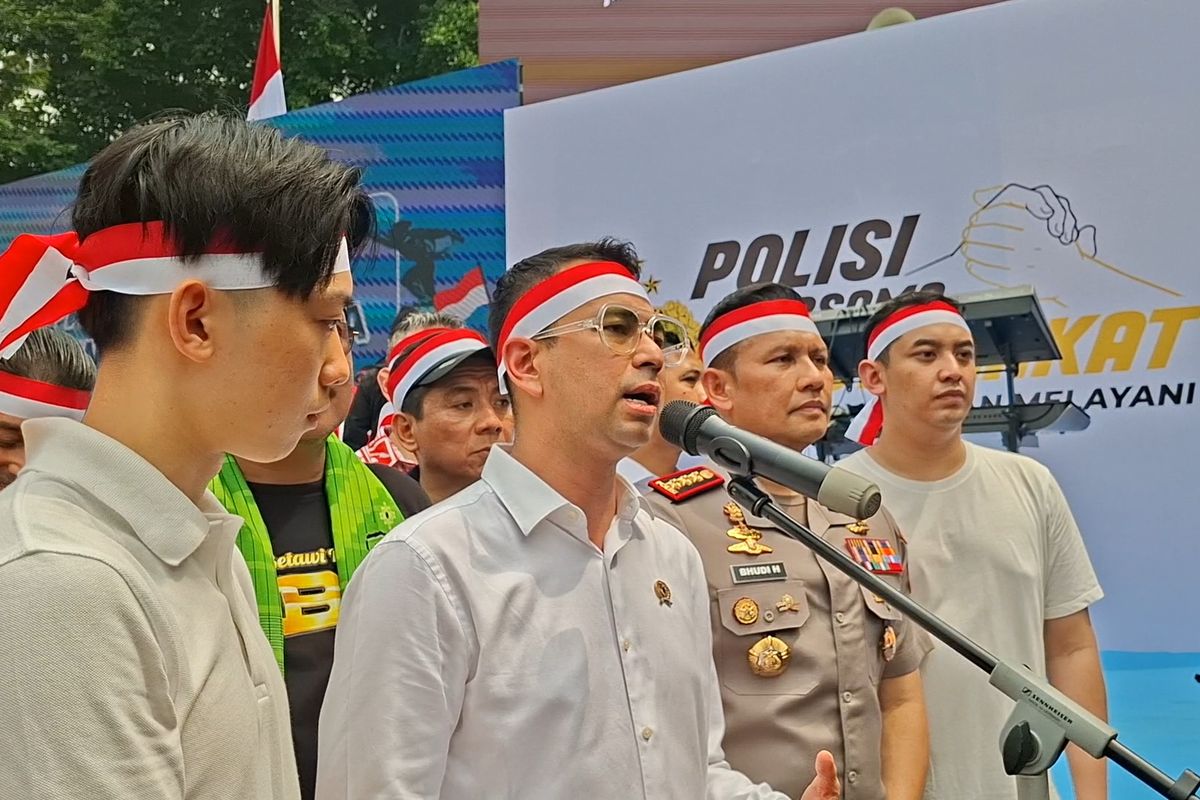
He attended the 2026 Youth Pledge Declaration at Bundaran HI, just a day after thousands of students protested at the same venue criticizing government policies.
The event was accused of attempting to divide the student movement, especially after a participant wearing a school jacket claimed to have been paid to attend.
Raffi stated that he was simply invited and was not involved in the organization of the event. However, this clarification did not quell the reactions.
Several musicians and small business owners withdrew from a festival organized by his company, and a youth forum participant raised three fingers while he was speaking.
This incident is not the first of its kind. A few months earlier, his name was mentioned in a corruption trial involving Customs, although the Corruption Eradication Commission (KPK) asserted there was no link to the case, and Raffi denied any involvement (Kompas.com, 11/6/2026).
Long before that, in early 2021, he was among the first to receive the vaccine alongside the President, only to be seen partying without a mask on the same day.
This pattern is a recurring theme. Raffi is always near the center of power, and each time he seems to stumble on the same stage.
Thus, what should be examined is not merely the figure of Raffi but the political phenomenon he represents. He embodies a new way of obtaining public office in this country.
John Street (2004) distinguishes two types of celebrity in politics.
There are politicians who utilize celebrity techniques to gain support, and there are celebrities who leverage their fame to enter the political arena.
Raffi is the most blatant example of the second type in Indonesia, with a peculiar characteristic that is often overlooked. He did not enter through elections, but rather through appointment.
Comparing him with Rano Karno clarifies this peculiarity. Rano also emerged from the entertainment world, but he transitioned into politics via a party and the voting box.
He became the deputy regent of Tangerang, then deputy governor, and governor of Banten, even sitting in the House of Representatives, and currently serves as deputy governor of Jakarta.
Every step he took was backed by an electoral mandate, complete with the risk of losing and the obligation to account for promises made to voters.
His popularity has been tested repeatedly by the voice of the people, not by viewership numbers.
Raffi, on the other hand, takes an entirely different path. From being a host who is comfortable with light gossip and family content, he jumped directly into the role of Special Presidential Envoy for Youth Empowerment and Arts.
There was no party cadre training, no campaign to test his ideas, and no voters to grant him a mandate.
His position arose from his closeness to the corridors of power across administrations.
This represents a new form of vertical political mobility, rapid, instant, and nearly devoid of challenges.
Pierre Bourdieu helps explain why such leaps can happen.
In his framework, capital can be exchanged from one arena to another.
Raffi possesses substantial economic capital, with reported wealth around IDR 1 trillion (KPK, 2025), and symbolic capital in the form of tens of millions of followers on social media.
Power requires that symbolic capital to reach the youth, while Raffi gains political capital via a state position.
This exchange appears mutually beneficial, yet it leaves fundamental issues unresolved.
The symbolic capital lent to power does not automatically transform into legitimacy.
Why does power so desperately need a face like this? The answer lies in the deepening crisis of trust.
The House of Representatives ranks at the bottom in public trust among state institutions (Indikator, January 2026), and parties are increasingly distant from the youth.
As formal political channels lose their appeal, celebrities become a shortcut to reach a generation that no longer reads speeches or watches parliamentary debates.
Celebrities are employed as bridges, not because of their ideas, but rather because of their reach.
Herein lies the fragility. Legitimacy born from elections relies on a mandate, while celebrity legitimacy hinges on popularity.
A mandate lasts five years, while popularity can turn overnight.
Fans who once enjoyed Raffi as an entertainer now hold him to a much stricter standard as a public official.
They no longer ask how entertaining his content is, but rather for whom he stands.
Street himself reminds us that celebrity politics tends to reduce policies to personal brand. The public is invited to like the figure, not to weigh the programs.
During warm atmospheres, this strategy seems successful. However, when policies come under fire, that same persona becomes an easy target because they are the most visible yet have the least answers.
Raffi seems yet to fully grasp this shift. He continues to greet the public with the confident demeanor of an entertainer, as though the political stage is the same as the television stage.
In front of students who had just protested, the presence of a official at a rival event cannot be seen as mere pleasantries.
When he claims he was merely invited, the public instead questions why a special envoy for youth does not know what event he is attending and who is present there.
The wave of boycotts shows that the younger generation is no longer easily swayed by popular faces.
In everyday language, the shortcut to positions like this is commonly referred to as “karbitan,” appearing mature on the outside but perhaps not so on the inside. This term may sound harsh, but it carries a message that deserves to be heard.
Public office requires maturity forged through processes, not measured by follower counts.
The dangers of this phenomenon extend beyond the figure of Raffi. If state positions can be attained without processes, the message to the youth is that popularity is more valuable than competence, and proximity is more determinative than track record.
Parties lose their function as political schools, while the state treats the youth as mere spectators who need entertainment rather than citizens who need to be heard.
The magnitude of a public official's business empire also requires clear boundaries between official duties and business affairs, to prevent continued erosion of public trust.
Raffi may very well continue to endure as long as power needs the face he offers.
However, the popularity lent to power always carries an expiration date.
The question now turns to the state. Until when will the government prefer to borrow popular faces to communicate with the youth rather than open its ears to students standing in the rain voicing their own concerns?