
Regarding Who Prabowo's Vice Presidential Candidate Will Be, Bahlil: Only the President and God Know
-
News
-
2 minutes ago
Writer
This article was translated by AI. Read the original article on Kompas.com. See Original
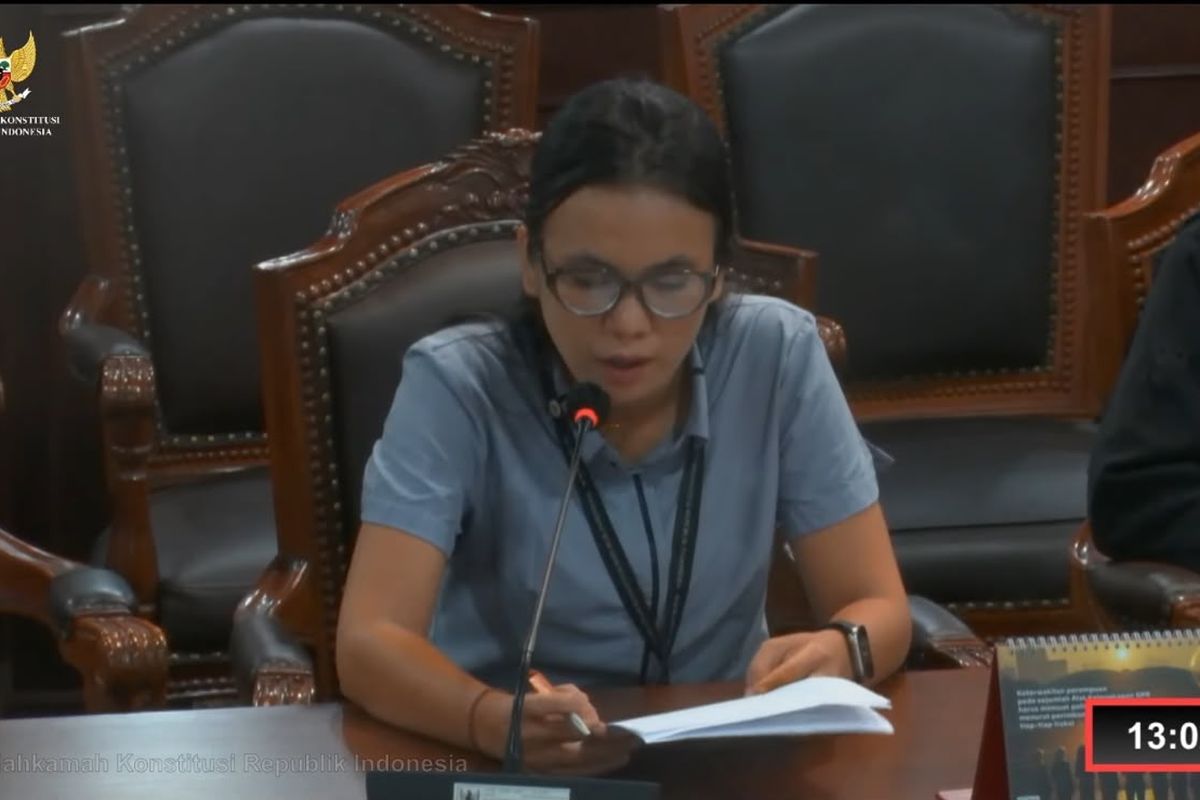
JAKARTA, KOMPAS.com - A woman named Bernita Matondang is petitioning for sanitary pads to be classified as tax-exempt basic necessities.
As part of this, she is challenging the Explanation of Article 16B paragraph (1a) letter j point 1 of Law Number 7 of 2021 concerning the Harmonization of Tax Regulations (HPP) at the Constitutional Court (MK).
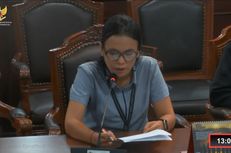
"I request that the Explanation of Article 16B paragraph (1a) letter j point 1 of Law Number 7 of 2021 concerning the Harmonization of Tax Regulations is declared inconsistent with the 1945 Constitution of the Republic of Indonesia as long as it is not interpreted to mean that 'Essential goods highly needed by the public do not only refer to the items mentioned in letters a to k and include menstrual sanitation needs or biologically-based necessities,'" Bernita stated during a hearing for case Number 406/PUU-XXIV/2026 on Monday (23/11/2026), as quoted from the MKRI's YouTube broadcast.
In a previous hearing on Tuesday (10/11/2026), Bernita raised a challenge regarding the Value Added Tax (VAT) imposed on sanitary pads.
According to her, sanitary pads are essential for women to maintain hygiene and health, which they purchase using their earnings.
"This necessity arises from a biological process that cannot be avoided, thus it is not a consumable option that can simply be omitted. Petitioners routinely buy it using their income or existing economic resources," Bernita explained during the hearing on Tuesday (10/11/2026).
Beyond economic burdens, she also claimed constitutional damages related to three guarantees outlined in the 1945 Constitution (UUD) of the Republic of Indonesia.
The first issue is about fair legal certainty, as sanitation products are not listed among basic goods in Law Number 7 of 2021 concerning the Harmonization of Tax Regulations (HPP).
"This raises questions regarding the criteria and objective basis for determining which items receive VAT facilities," Bernita said.
The second constitutional detriment is that the tax on sanitary pads potentially creates unequal impacts on women.
Women have biological conditions that require them to use pads for health and hygiene.
"Thirdly, there is an issue of substantive equality because the relevant biological needs have not been adequately considered in determining tax facilities for basic necessities," Bernita added.
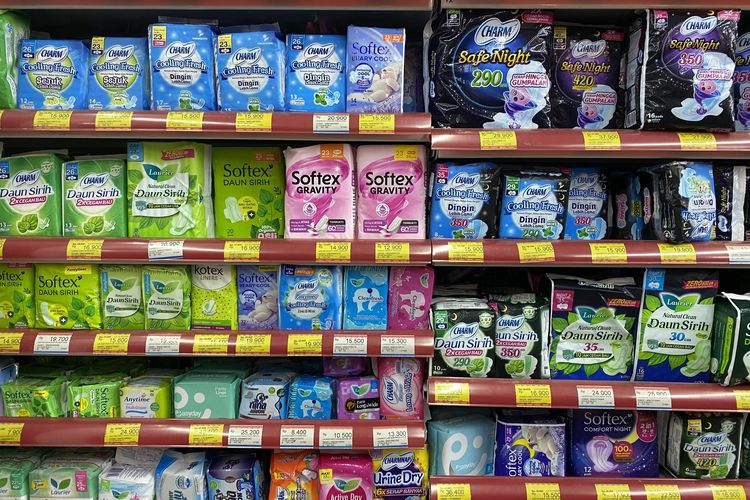 Various types and brands of sanitary pads with differing prices are displayed on the shelves of a minimarket in Depok, West Java, on Thursday (29/10/2026).
Thus, she is challenging Article 16B paragraph (1a) letter j point 1 and the Explanation of Article 16B paragraph (1a) letter j point 1 of the HPP Law, asserting they contradict the 1945 Constitution.
This article states, "j. supports the availability of certain strategic goods and services in the context of national development, among others: 1. basic goods that are highly needed by the public."
The lack of normative guarantees in this article has the potential to result in essential needs relating to human biological functions not receiving equal consideration in the determination of tax policy facilities.
She notes that this raises issues of fair legal certainty as guaranteed in Article 28D paragraph (1) of the 1945 Constitution.