
DKPP Hearing: KPU Denies Restrictions on Silon Access to Bawaslu
-
News
-
3 minutes ago
This article was translated by AI. Read the original article on Kompas.com. See Original
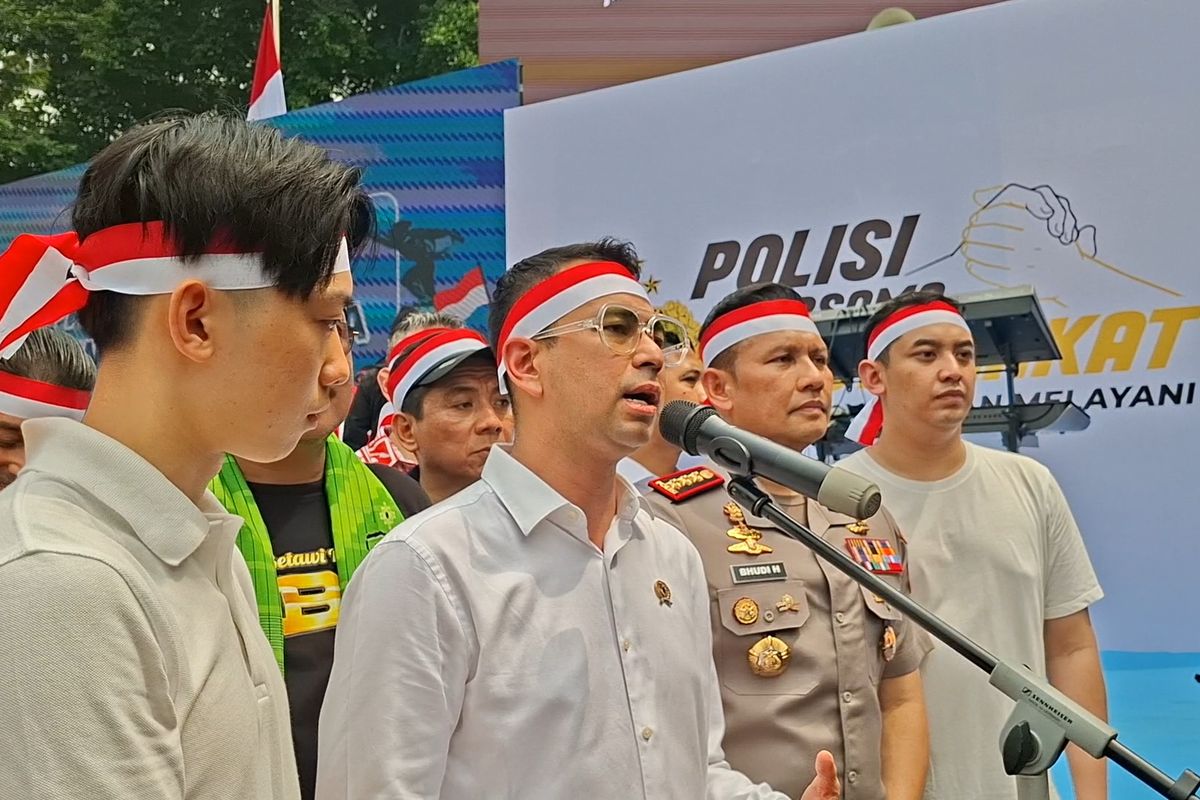
THE NAME Raffi Ahmad is once again a topic of discussion. This time, it’s not due to a television show or family news.
He attended the 2026 Youth Pledge Declaration at Bundaran HI, just a day after thousands of students protested at the same venue criticizing government policies.
The event was accused of attempting to divide the student movement, especially after a participant wearing a school jacket claimed to have been paid to attend.
Raffi stated that he was simply invited and was not involved in the organization of the event. However, this clarification did not quell the reactions.
Several musicians and small business owners withdrew from a festival organized by his company, and a youth forum participant raised three fingers while he was speaking.
This incident is not the first of its kind. A few months earlier, his name was mentioned in a corruption trial involving Customs, although the Corruption Eradication Commission (KPK) asserted there was no link to the case, and Raffi denied any involvement (Kompas.com, 11/6/2026).
Long before that, in early 2021, he was among the first to receive the vaccine alongside the President, only to be seen partying without a mask on the same day.
This pattern is a recurring theme. Raffi is always near the center of power, and each time he seems to stumble on the same stage.
Thus, what should be examined is not merely the figure of Raffi but the political phenomenon he represents. He embodies a new way of obtaining public office in this country.
John Street (2004) distinguishes two types of celebrity in politics.
There are politicians who utilize celebrity techniques to gain support, and there are celebrities who leverage their fame to enter the political arena.
Raffi is the most blatant example of the second type in Indonesia, with a peculiar characteristic that is often overlooked. He did not enter through elections, but rather through appointment.
Comparing him with Rano Karno clarifies this peculiarity. Rano also emerged from the entertainment world, but he transitioned into politics via a party and the voting box.
He became the deputy regent of Tangerang, then deputy governor, and governor of Banten, even sitting in the House of Representatives, and currently serves as deputy governor of Jakarta.
Every step he took was backed by an electoral mandate, complete with the risk of losing and the obligation to account for promises made to voters.