
Problems Arise from Flagship Programs and the President's Circle of Power
-
News
-
4 minutes ago
This article was translated by AI. Read the original article on Kompas.com. See Original
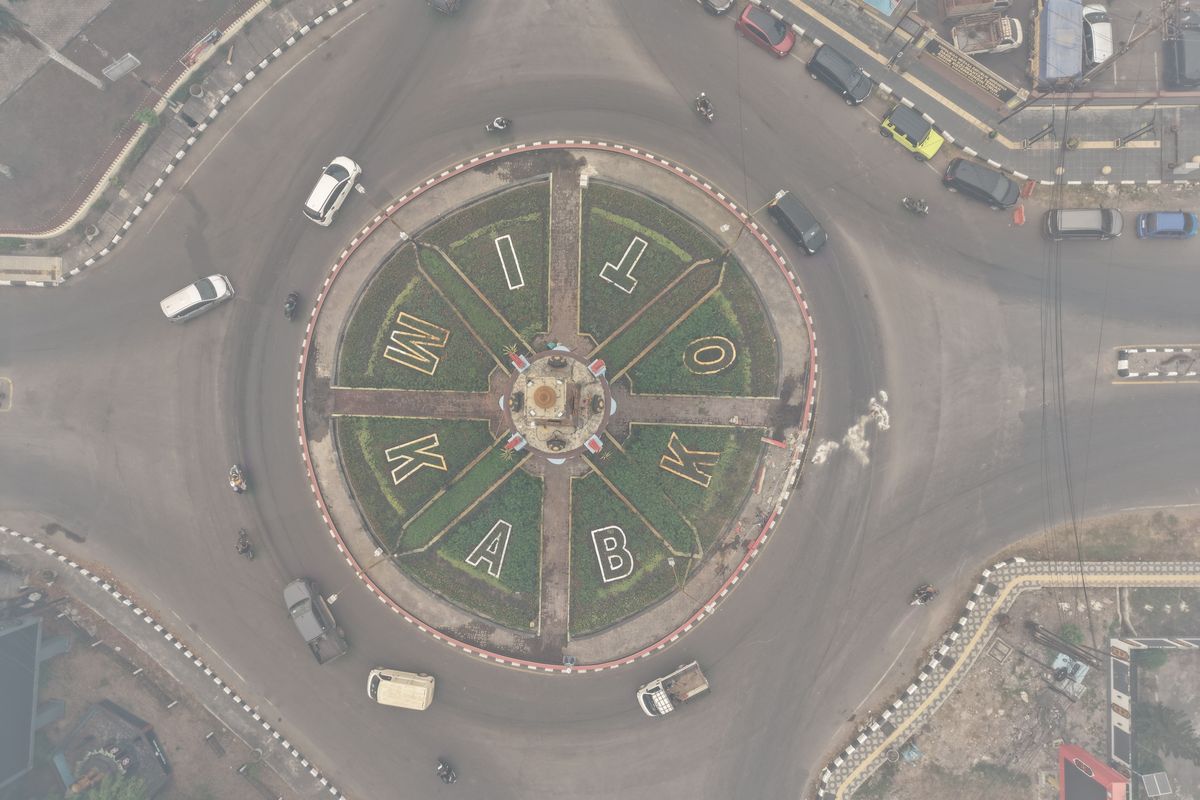
His statement continued with descriptions of communities experiencing coughing, sore throats, and shortness of breath, along with disruptions to schools, tourism, and jobs.
Through language relatable to everyday experiences, Kalam connects environmental policy to tangible consequences faced by the public.
An even more intriguing dimension emerged when he discussed Indonesian workers in Malaysia, saying “Wong Indonesia sing nyambut gawe ning kebun Malaysia, yo melu susah akibat asap iki”.
This message underscores that cross-border pollution knows no citizenship boundaries, as Indonesians working abroad also suffer from the fires in their homeland.
Kalam clarified the economic consequences through the phrase “Ora iso kerjo, ora oleh duit”, meaning they cannot work and thus do not earn money.
He linked this to the difficulties workers face in sending money back to their families in Indonesia, indicating that karhutla also touches upon household welfare and protections for migrant workers.
Kalam's critique sharpened as he addressed the assumption that Indonesia's forests supply oxygen for Malaysia.
He remarked, “Mulo, ojo malah iki digawe guyonan, digawe luconan”, meaning this issue should not be made a joke or a jest.
This sarcasm continued with his statement: “Alas Malaysia kuwi opo mung pokok plastik”.
In essence, are the trees in Malaysian forests made of plastic?
This statement serves as political satire to dismiss the notion that Malaysia relies on Indonesia's forests for oxygen, while also emphasizing the seriousness of the haze's impact.
Behind the humorous style, the issues discussed carry serious ecological consequences.
Reuters reported on October 20, 2026, that the cumulative estimate of burned land based on Nusantara Atlas satellite data has increased.
What was initially 895,650 hectares at the end of August grew to 1.92 million hectares by the end of September.
This figure reflects the detected area of burned land, not the automatically lost natural forest area.