

Problems Arise from Flagship Programs and the President's Circle of Power
-
News
-
4 minutes ago
This article was translated by AI. Read the original article on Kompas.com. See Original
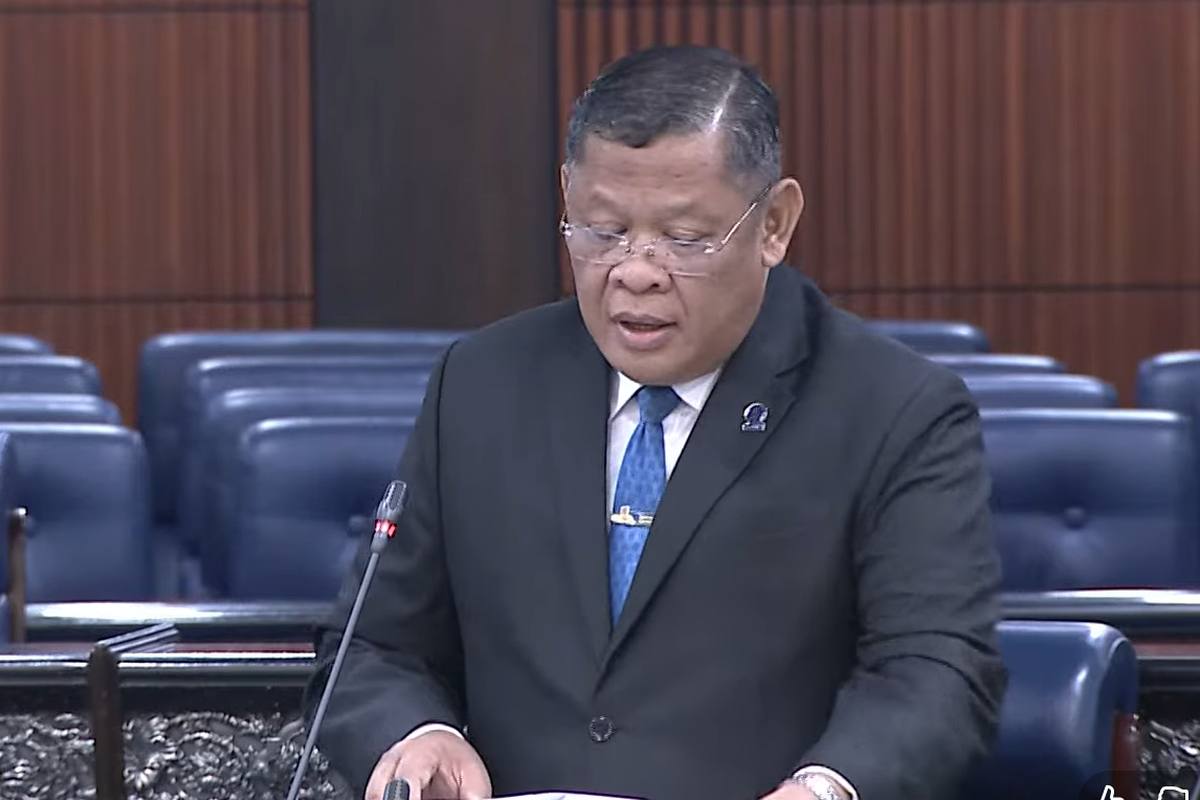
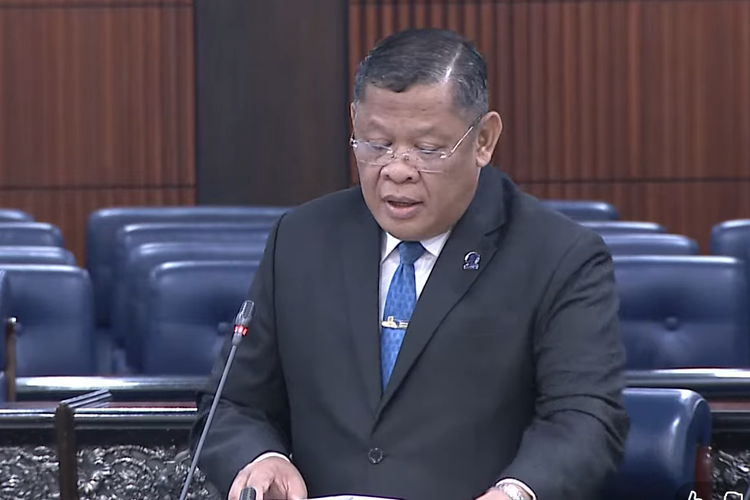
THE SPEECH by Malaysian parliament member Kalam Salan, who used Javanese to highlight the forest and land fires (karhutla) in Indonesia on October 21, 2026, marks a significant moment in the relationship between the two nations.
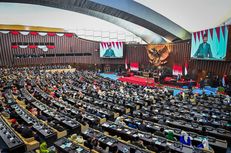
Before the Malaysian Parliament, he delivered a direct message to President Prabowo Subianto regarding the transboundary haze, public health disruptions, and economic losses suffered by Malaysians and Indonesian migrant workers.
“How are you, Pak Prabowo?” became a greeting that signified Kalam's transition from Malay to Javanese.
Behind this seemingly familiar expression lies a political admonition concerning the ecological issues that continuously test Indonesia's ability to protect its citizens while simultaneously upholding the trust of neighboring countries.
Kalam began his address with the phrase “Assalamualaikum, Pak Prabowo”, and continued with “Paringi waras, nggih”, which means may you always be healthy.
This greeting builds a cultural bond before redirecting the Parliament's focus to the recurring haze and its impacts on cross-border communities.
The choice of Javanese carries symbolic meaning in Indonesia–Malaysia relations, shaped by a history of migration, trade, and cultural ties.
The presence of the Javanese community in Malaysia provides a social context for using the language as a medium for cross-country political communication.
Kalam explained his choice by stating that some Indonesian leaders might not understand Malay, hence he asked for permission to speak in Javanese.
This statement is a rhetorical strategy rather than proof that Indonesian and Malay serve as barriers to diplomatic communication.
After the greeting, Kalam addressed the main issue with the expression “Kulo arep ngomong soal kabut asep sing saben tahun kok meneh songko Indonesia nganti Malaysia”.
This means he wanted to discuss the annual haze that flows from Indonesia to Malaysia.
A sentence that turns environmental issues into a direct reprimand to the head of state.
He then asserted, “Asep songko kobongan alas kuwi nggawe wong Malaysia susah arep ambekan”, meaning that smoke from the forest fires makes it hard for Malaysians to breathe.
This sentence illustrates Kalam's emphasis on public health as the foundation of his criticism, indicating that the issue of karhutla goes beyond just debating the source of the fires.
His statement continued with descriptions of communities experiencing coughing, sore throats, and shortness of breath, along with disruptions to schools, tourism, and jobs.
Through language relatable to everyday experiences, Kalam connects environmental policy to tangible consequences faced by the public.
An even more intriguing dimension emerged when he discussed Indonesian workers in Malaysia, saying “Wong Indonesia sing nyambut gawe ning kebun Malaysia, yo melu susah akibat asap iki”.
This message underscores that cross-border pollution knows no citizenship boundaries, as Indonesians working abroad also suffer from the fires in their homeland.
Kalam clarified the economic consequences through the phrase “Ora iso kerjo, ora oleh duit”, meaning they cannot work and thus do not earn money.
He linked this to the difficulties workers face in sending money back to their families in Indonesia, indicating that karhutla also touches upon household welfare and protections for migrant workers.
Kalam's critique sharpened as he addressed the assumption that Indonesia's forests supply oxygen for Malaysia.
He remarked, “Mulo, ojo malah iki digawe guyonan, digawe luconan”, meaning this issue should not be made a joke or a jest.
This sarcasm continued with his statement: “Alas Malaysia kuwi opo mung pokok plastik”.
In essence, are the trees in Malaysian forests made of plastic?
This statement serves as political satire to dismiss the notion that Malaysia relies on Indonesia's forests for oxygen, while also emphasizing the seriousness of the haze's impact.
Behind the humorous style, the issues discussed carry serious ecological consequences.
Reuters reported on October 20, 2026, that the cumulative estimate of burned land based on Nusantara Atlas satellite data has increased.
What was initially 895,650 hectares at the end of August grew to 1.92 million hectares by the end of September.
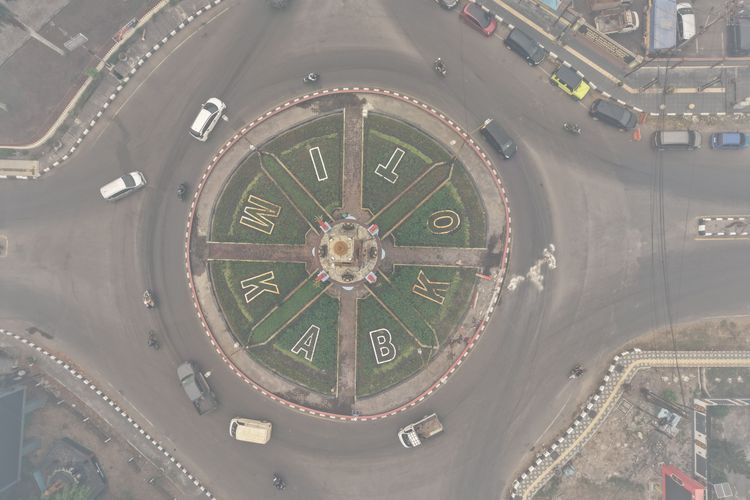 Sampit Roundabout is seen shrouded in haze in Kotawaringin Timur, Central Kalimantan, on Thursday (22/10/2026). The massive forest and land fires in Kalimantan have caused a haze disaster for the past four months.
This figure reflects the detected area of burned land, not the automatically lost natural forest area.
However, this increase highlights the enormity of the challenges in controlling fires, especially when the haze disrupts air quality and has the potential for cross-border impacts.
Karhutla is also linked to peatland conditions, land clearing practices, plantation management, and law enforcement.
Therefore, emergency firefighting must proceed alongside prevention, ecosystem recovery, and oversight of those proven responsible for the fires.
For Malaysia, haze becomes a public health and economic issue, while for Indonesia, the impacts also affect its international reputation.
When such issues recur, neighboring countries may question the consistency between Indonesia's commitments to regional cooperation and actual policies on the ground.
Indonesia has a framework for cooperation to address haze pollution through the ASEAN Agreement on Transboundary Haze Pollution (AATHP).
This regional agreement provides a framework for prevention, monitoring, information exchange, and cooperation in handling cross-border fire outbreaks.
In his speech, Kalam urged for strengthened joint law enforcement, satellite-based early warning systems, regional rapid response teams, and funding for fire prevention and peat restoration.
These proposals illustrate that resolving karhutla demands more coordinated regional efforts, alongside clear accountability for actions causing pollution.
His main appeal to President Prabowo was encapsulated in the phrase “Pak Prabowo, tulung masalah iki enggal ditangani”, meaning Pak Prabowo, please address this issue promptly.
He added, “Kobongan alas kudu dipateni”, or forest fires must be extinguished, as a direct demand for the government to take concrete action.
Kalam then expressed his hope, “Kita kabeh pengin langit padhang gumebyar, udarane resik, ambegane lega, lan uripe sehat saklawase”.
This means everyone wants a bright sky, clean air, smooth breathing, and a healthy life.
A conclusion that brings the political debate back to the basic needs of society.
For Indonesia, this message must be responded to through transparency in karhutla data, consistent law enforcement, peat restoration, and active communication with affected countries.
The success of environmental diplomacy must be measured by a decrease in the burned land area, fewer recurring fires, improved air quality, and faster responses to hotspots.
Kalam Salan's speech, while not an official diplomatic note from the Malaysian government, serves as a political signal that Indonesia should heed.
The alarm for Indonesian diplomacy lies in the risk when recurring ecological issues erode the trust of neighboring nations and weaken the credibility of regional commitments.
The greeting “How are you, Pak Prabowo?” at the beginning of the speech reflects the cultural closeness that transcends national borders, while the demand for fire extinguishing indicates the limits of that closeness.
Indonesian diplomacy will be stronger when cultural fraternity is accompanied by ecological responsibility, measurable policies, and sincerity in protecting communities from the impacts of karhutla.