

UI Law Professor Critiques Perception that MPR Cannot Make Regulations
-
News
-
14 minutes ago
This article was translated by AI. Read the original article on Kompas.com. See Original
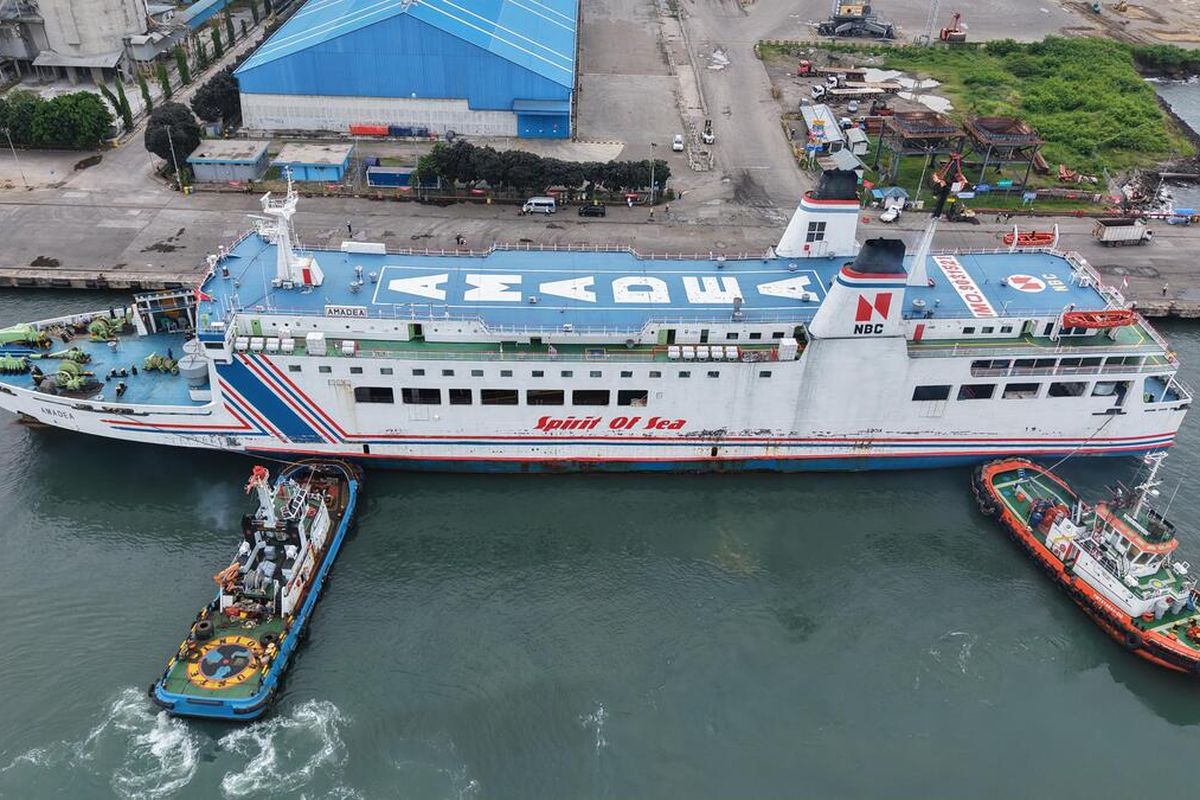
In the first year, the government, along with operators, can conduct audits on the compatibility of the entire fleet with their routes.
The results can be classified into three categories: ships that are already compliant, ships that comply with certain restrictions, and ships that need to be relocated to different routes.
Ships with the highest risks should be addressed immediately, while others can continue serving the public with operation limitations based on weather and load.
Vessel transfers between routes should always be preceded by verification of compatibility, including during peak seasons.
At the same time, loading discipline at ports is continually reinforced.
Weighing vehicles, digital manifests, and vehicle tie-down inspections before departure are relatively low-cost steps but can significantly enhance the safety reserve of every ship.
Within one to three years, every route can be classified based on its wave conditions using maritime weather data from BMKG.
This classification can serve as a single reference for route licenses, ship placements, and the issuance of Sailing Approval Letters. Data on ship certificates, route licenses, and sailing approvals can be consolidated into a single digital system, ensuring automatic verification of ship suitability.
Assessing the compatibility of second-hand ships before importation, refining fare formulas, and documenting vessel compatibility variables in accident investigations can run in parallel.
Within three to ten years, fleet renewal programs can be implemented with support for soft financing or guarantee schemes.
Indonesia also has the opportunity to develop standard ship designs for each class of route built in domestic shipyards.
This step would not only reduce costs through serial production but also revitalize the national shipbuilding industry and open job opportunities. For long-distance corridors, network structuring can be assessed to ensure every route is served by the most appropriate vessels.
Indonesia is not alone. The international maritime community through the International Maritime Organization (IMO) continues to update passenger ship stability standards, including amendments to the SOLAS Convention regarding ship stability under leaking conditions adopted in 2017 and effective since 2020.
The annual report of the European Maritime Safety Agency (EMSA) also indicates that data-driven and consistent safety management can maintain passenger navigation safety at high levels.
The most crucial lessons from various countries' experiences teach us that successful reforms always combine three elements: clear technical standards, realistic fleet financing, and consistent rule enforcement.
Indonesia has strong capital to take this path, starting from a regulatory framework that is continuously updated through Government Regulation No. 31 of 2021, experienced operators, a developing shipyard industry, and ever-improving maritime weather data.
For a nation with more than seventeen thousand islands, ships are not just a means of transport.
Ships are bridges that connect families, drive local economies, and stabilize staple goods prices in remote islands.
Therefore, ensuring every vessel sails on the sea according to its design is a form of respect for every passenger who entrusts their journey to the sea.
Match the ship to its sea: make compliance economically achievable and embed the decision in the system.
Through phased steps, close collaboration, and a spirit of continuous improvement, our ferry and shipping services can evolve into safe, reliable, and prideworthy solutions.
In line with Indonesia's aspirations as an advanced maritime nation.