

UI Law Professor Critiques Perception that MPR Cannot Make Regulations
-
News
-
14 minutes ago
This article was translated by AI. Read the original article on Kompas.com. See Original
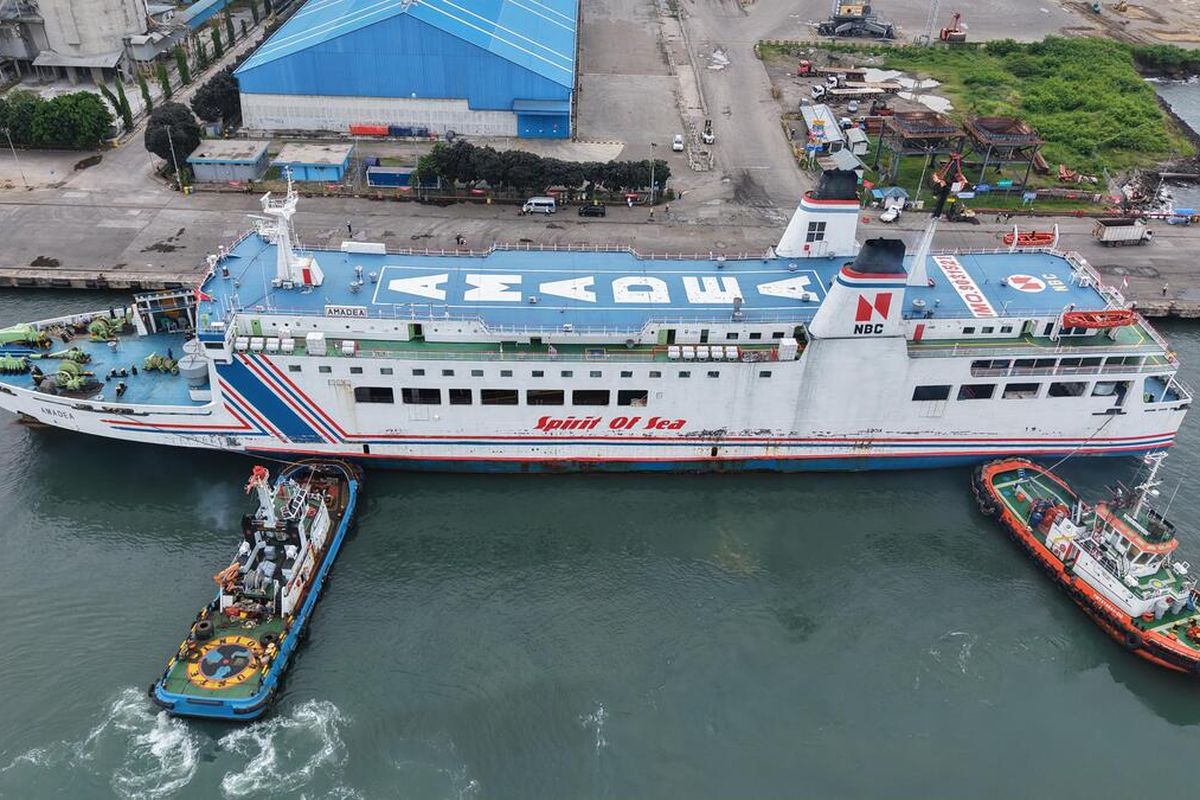
A ship may sail dozens of times without issues. However, when an overloaded vessel faces inclement weather, a ship designed correctly still possesses some stability reserve to endure, while one that is not compliant loses that reserve more quickly.
Here lies the optimistic angle. Unlike weather, which is beyond our control, aligning the ship with its route is entirely within policy control.
This alignment can be checked before the vessel is dispatched, recorded in the licensing system, and monitored prior to issuing the Sailing Approval Letter. This means this is one of the most manageable risk factors we have.
It should also be noted that distance is not the only metric. Short routes can also have strong currents and high waves.
The sinking of KMP Yunicee in the Bali Strait in June 2021 serves as a reminder that even the shortest routes demand ships that are compatible with their sea nature.
Therefore, the key policy is the ship's suitability for the sea conditions along the route, not merely the route's length.
Another improvement opportunity lies in data. So far, the compatibility of ships with routes has not been tracked as a separate variable in accident documentation.
If this variable begins to be recorded in every investigation, we will have a solid foundation to assess risk and formulate more targeted policies.
The Tanjung Perak–Banjarmasin corridor is an intriguing example. This route crosses the open Java Sea, known for having quite high waves during both the west and east monsoon seasons.
The good news is that this route is serviced by operators such as PT Dharma Lautan Utama and PT Berlian Lautan Sejahtera, with RoRo ships operated for long-distance sea transport, complete with sleeping cabins for overnight trips.
For instance, during the 2023 Eid transportation period, all ships on this route underwent spot checks and were declared seaworthy.
Moving forward, service quality can continue to be improved by periodically and transparently verifying the certificates for navigation areas, year of manufacture, and origin of each ship.
This step is not about finding faults but rather about assuring passengers, logistics operators, and businesses that this vital corridor is serviced by fleets genuinely suited to the characteristics of the Java Sea.
The interest of state-owned enterprises like Pelni to bring RoRo ships to the Surabaya-Kalimantan corridor also indicates that this market is healthy and promising.
So, which is more effective in reducing accident risks: banning calm water vessels from heavy routes or mandating their replacement with maritime-standard vessels? The answer is that both must occur together, much like two legs moving in unison.
Targeted bans have the fastest impact at low public cost.
However, if implemented suddenly without replacements, such bans can lead to a shortage of vessels on certain routes, typically the routes most relied upon by the public.
Conversely, replacing ships provides a lasting impact but requires years and financial support.
A phased ban with clear deadlines can encourage operators to confidently invest in new vessels.
A single keyword unites both aspects, which is economy. Operators are rational business players.
If fares cover the costs for maritime-standard vessels and affordable financing schemes are available, selecting the right ship is the most sensible business decision.
Regularly refining capital costs and safety costs in the fare formula can be a strategic step to encourage fleet renewal.
To ensure smooth transitions without disrupting service, measures can be implemented in phases.