

UI Law Professor Critiques Perception that MPR Cannot Make Regulations
-
News
-
14 minutes ago
This article was translated by AI. Read the original article on Kompas.com. See Original
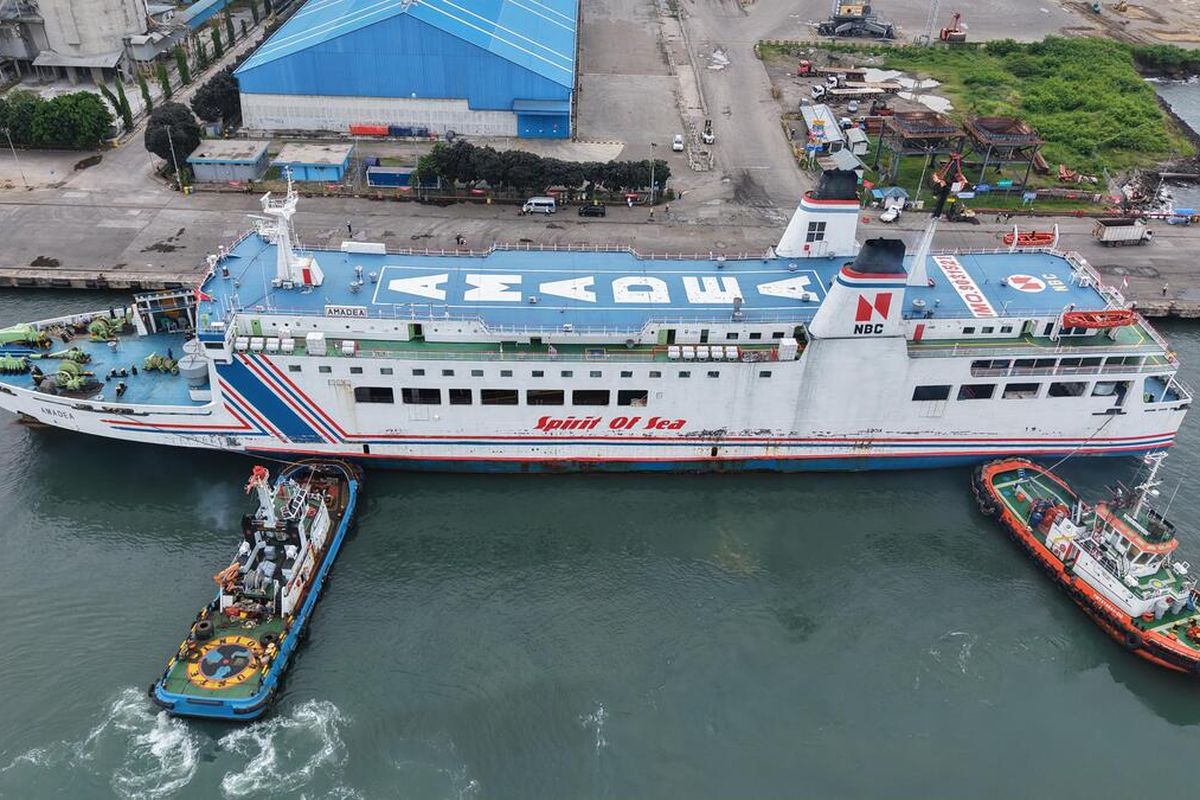
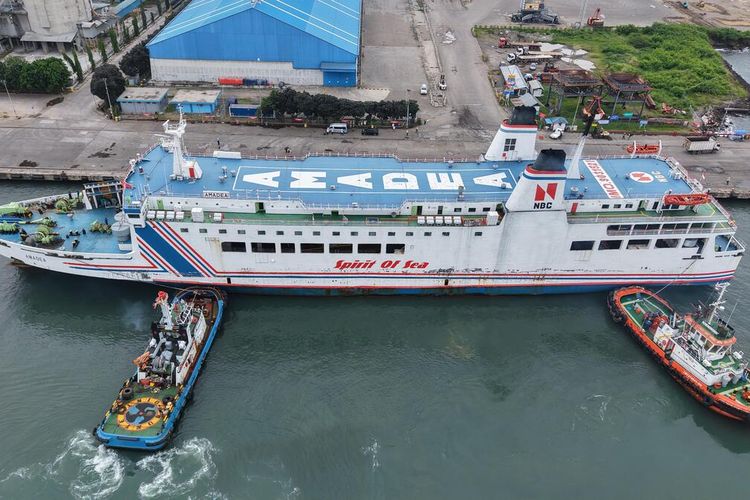
SHIP RoRo, short for Roll-on/roll-off, refers to vessels that load and unload vehicles through a ramp.
At a glance, all RoRo ships may look similar. However, beneath their similar appearances, there are two classes of ships with vastly different capabilities.
The first class is designed for calm waters and short distances. These ships are built for quick back-and-forth trips in narrow straits or coastal waters with small waves.
They often feature ramps at both the bow and stern, so the vessel does not need to turn when docking.
Their engines are agile for maneuverability, passenger spaces are typically equipped with simple seating, and safety equipment is tailored for journeys lasting just one or two hours.
The second class is for open seas and long distances. Their hulls are stronger to withstand wave impacts.
They have more watertight compartments, allowing the ship to remain afloat even if part of the hull is compromised.
Their doors are weatherproof, vehicles inside are secured with adequate safety systems, and these ships come equipped with lifeboats, long-range communication devices, cabins, and larger, more trained crews.
This class of ship is made to endure hours or even days away from land.
The analogy is simple: calm water vessels are like reliable minibuses on city streets, while open-sea vessels akin to inter-island buses ready to traverse long routes.
Both are equally important, provided they are used on the appropriate routes.
Challenges arise when calm water vessels are diverted to longer routes or those with larger waves.
This typically happens not out of malice, but due to urgent needs: a surge in demand during peak seasons, breakdowns of other vessels, or temporary openings for new routes with limited available fleets.
Some of our ships are also imported second-hand vessels originally designed for protected waters in their countries of origin.
According to regulations, every ship has a certificate indicating the areas it is authorized to navigate.
Ships are only allowed to operate within those boundaries, unless they have been reassessed and modified to meet the standards for a wider navigation area.
The good news is that this regulatory framework is already in place. Our homework is to ensure that these rules are genuinely enforced at every port and for every departure.
Why is this compliance important? In open waters, calm water vessels are more prone to rolling.
If the vehicles inside are not securely fastened, loads can shift to one side, causing the vessel to tilt.
If seawater enters a large deck area devoid of partitions, the water will flow to the lower side and exacerbate the tilt.
In maritime science, this phenomenon is known as free surface effect, and many RoRo ship accidents worldwide begin with a series of events like this.
It is important to emphasize that using ships outside their class is rarely the sole cause of accidents.
Safety experts refer to this as latent conditions, defining factors that quietly diminish the safety reserve of a vessel.
A ship may sail dozens of times without issues. However, when an overloaded vessel faces inclement weather, a ship designed correctly still possesses some stability reserve to endure, while one that is not compliant loses that reserve more quickly.
Here lies the optimistic angle. Unlike weather, which is beyond our control, aligning the ship with its route is entirely within policy control.
This alignment can be checked before the vessel is dispatched, recorded in the licensing system, and monitored prior to issuing the Sailing Approval Letter. This means this is one of the most manageable risk factors we have.
It should also be noted that distance is not the only metric. Short routes can also have strong currents and high waves.
The sinking of KMP Yunicee in the Bali Strait in June 2021 serves as a reminder that even the shortest routes demand ships that are compatible with their sea nature.
Therefore, the key policy is the ship's suitability for the sea conditions along the route, not merely the route's length.
Another improvement opportunity lies in data. So far, the compatibility of ships with routes has not been tracked as a separate variable in accident documentation.
If this variable begins to be recorded in every investigation, we will have a solid foundation to assess risk and formulate more targeted policies.
The Tanjung Perak–Banjarmasin corridor is an intriguing example. This route crosses the open Java Sea, known for having quite high waves during both the west and east monsoon seasons.
The good news is that this route is serviced by operators such as PT Dharma Lautan Utama and PT Berlian Lautan Sejahtera, with RoRo ships operated for long-distance sea transport, complete with sleeping cabins for overnight trips.
For instance, during the 2023 Eid transportation period, all ships on this route underwent spot checks and were declared seaworthy.
Moving forward, service quality can continue to be improved by periodically and transparently verifying the certificates for navigation areas, year of manufacture, and origin of each ship.
This step is not about finding faults but rather about assuring passengers, logistics operators, and businesses that this vital corridor is serviced by fleets genuinely suited to the characteristics of the Java Sea.
The interest of state-owned enterprises like Pelni to bring RoRo ships to the Surabaya-Kalimantan corridor also indicates that this market is healthy and promising.
So, which is more effective in reducing accident risks: banning calm water vessels from heavy routes or mandating their replacement with maritime-standard vessels? The answer is that both must occur together, much like two legs moving in unison.
Targeted bans have the fastest impact at low public cost.
However, if implemented suddenly without replacements, such bans can lead to a shortage of vessels on certain routes, typically the routes most relied upon by the public.
Conversely, replacing ships provides a lasting impact but requires years and financial support.
A phased ban with clear deadlines can encourage operators to confidently invest in new vessels.
A single keyword unites both aspects, which is economy. Operators are rational business players.
If fares cover the costs for maritime-standard vessels and affordable financing schemes are available, selecting the right ship is the most sensible business decision.
Regularly refining capital costs and safety costs in the fare formula can be a strategic step to encourage fleet renewal.
To ensure smooth transitions without disrupting service, measures can be implemented in phases.
In the first year, the government, along with operators, can conduct audits on the compatibility of the entire fleet with their routes.
The results can be classified into three categories: ships that are already compliant, ships that comply with certain restrictions, and ships that need to be relocated to different routes.
Ships with the highest risks should be addressed immediately, while others can continue serving the public with operation limitations based on weather and load.
Vessel transfers between routes should always be preceded by verification of compatibility, including during peak seasons.
At the same time, loading discipline at ports is continually reinforced.
Weighing vehicles, digital manifests, and vehicle tie-down inspections before departure are relatively low-cost steps but can significantly enhance the safety reserve of every ship.
Within one to three years, every route can be classified based on its wave conditions using maritime weather data from BMKG.
This classification can serve as a single reference for route licenses, ship placements, and the issuance of Sailing Approval Letters. Data on ship certificates, route licenses, and sailing approvals can be consolidated into a single digital system, ensuring automatic verification of ship suitability.
Assessing the compatibility of second-hand ships before importation, refining fare formulas, and documenting vessel compatibility variables in accident investigations can run in parallel.
Within three to ten years, fleet renewal programs can be implemented with support for soft financing or guarantee schemes.
Indonesia also has the opportunity to develop standard ship designs for each class of route built in domestic shipyards.
This step would not only reduce costs through serial production but also revitalize the national shipbuilding industry and open job opportunities. For long-distance corridors, network structuring can be assessed to ensure every route is served by the most appropriate vessels.
Indonesia is not alone. The international maritime community through the International Maritime Organization (IMO) continues to update passenger ship stability standards, including amendments to the SOLAS Convention regarding ship stability under leaking conditions adopted in 2017 and effective since 2020.
The annual report of the European Maritime Safety Agency (EMSA) also indicates that data-driven and consistent safety management can maintain passenger navigation safety at high levels.
The most crucial lessons from various countries' experiences teach us that successful reforms always combine three elements: clear technical standards, realistic fleet financing, and consistent rule enforcement.
Indonesia has strong capital to take this path, starting from a regulatory framework that is continuously updated through Government Regulation No. 31 of 2021, experienced operators, a developing shipyard industry, and ever-improving maritime weather data.
For a nation with more than seventeen thousand islands, ships are not just a means of transport.
Ships are bridges that connect families, drive local economies, and stabilize staple goods prices in remote islands.
Therefore, ensuring every vessel sails on the sea according to its design is a form of respect for every passenger who entrusts their journey to the sea.
Match the ship to its sea: make compliance economically achievable and embed the decision in the system.
Through phased steps, close collaboration, and a spirit of continuous improvement, our ferry and shipping services can evolve into safe, reliable, and prideworthy solutions.
In line with Indonesia's aspirations as an advanced maritime nation.