

Prabowo Gathers Gerindra Cadres in Hambalang, Dasco and KDM Attend
-
News
-
1 hour ago
This article was translated by AI. Read the original article on Kompas.com. See Original
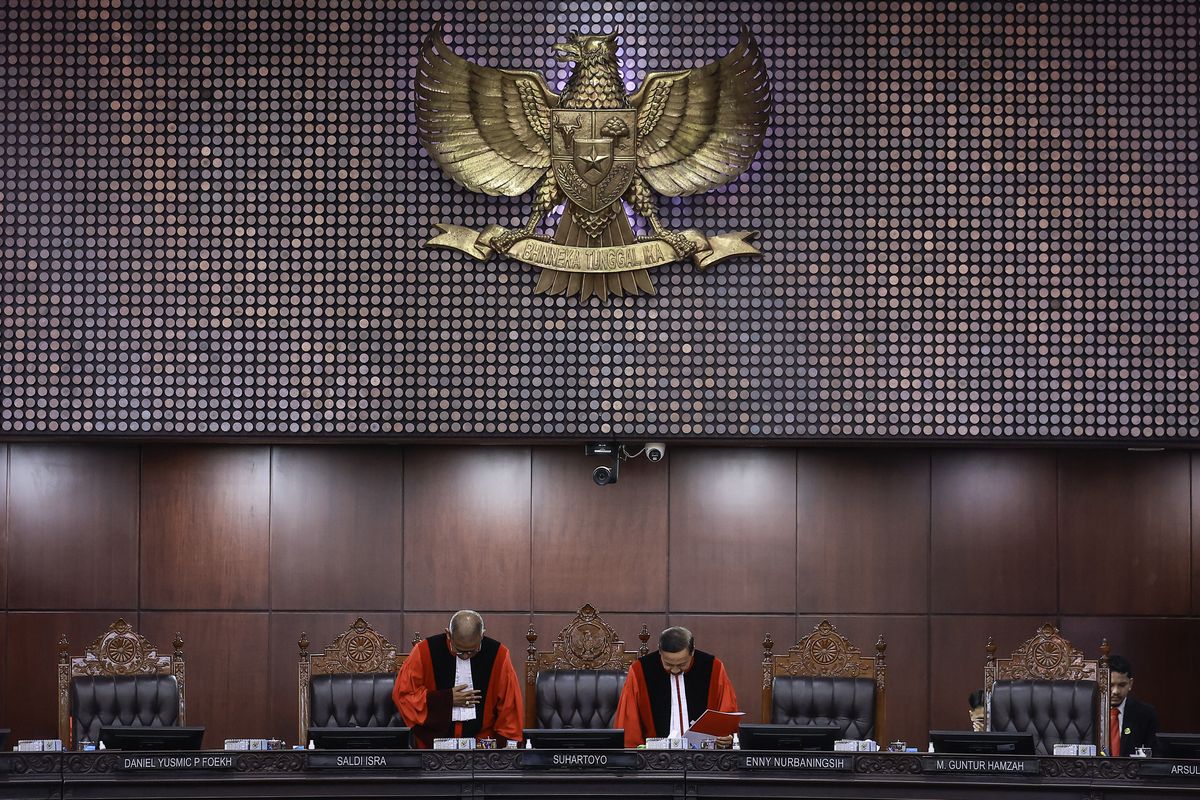
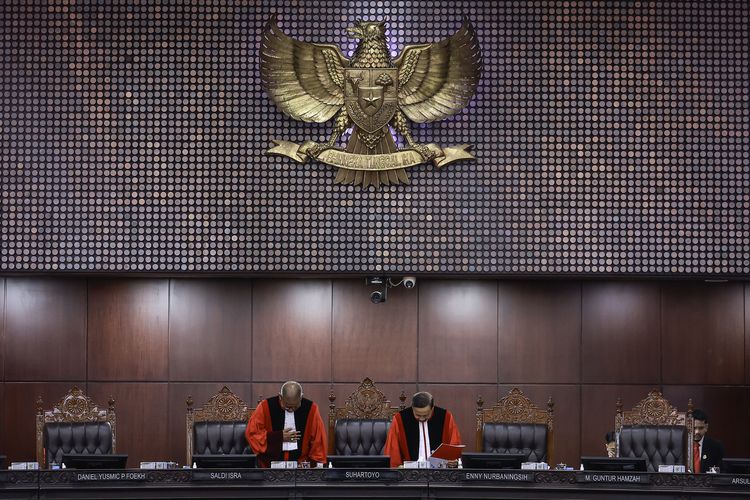
CONCLUSION The Constitutional Court's ruling Number 01/PHPU.PRES-XXIV/2026 concerning the educational requirements of Vice President Gibran Rakabuming Raka raises broader constitutional issues beyond the existence of a diploma.
The Court indicated in its assessment that it found no convincing evidence showing that Gibran possesses a diploma, certificate, or foreign degree that could be equated with at least a high school education as required by the Election Law.
However, the petition was ultimately deemed unacceptable because the petitioners were assessed to have no legal standing.
In my view, the reason for the rejection of the petition should not solely rest on the issue of legal standing of the petitioners.
This is because the petitioners can assert that there exists a tangible constitutional grievance due to alleged defects in the nomination requirements for the 2024 Presidential Election.
The elections encompass more than merely the legal relationship between the candidates and the General Election Commission (KPU); it is a constitutional process involving the candidates, supporting political parties, and the voting public as holders of sovereignty.
Should there be a suspicion that a candidate fails to meet the legally-required qualifications, and yet that candidate continues to compete and receives votes from the public, then the issue transcends merely the individual interests of the candidate.
This matter pertains to the rights of election participants to engage in a legitimate and fair competition and the voters' rights to cast their votes in a democratic process that meets constitutional requirements.
Hence, it is essential to differentiate between statutory standing and constitutional standing. It is true that positive law confines the Presidential and Vice Presidential PHPU petitioners to specific parties.
However, that limitation does not eliminate the reality that other parties involved in the electoral process may experience constitutional harm when the integrity of the nomination requirements is challenged.
In such cases, the constitutional interests of the participants and voters should not be perceived merely as abstract interests.
The constitutional issue that requires deliberation is whether the limitation of statutory standing precludes all access to addressing matters concerning the fundamental validity of a candidate.
If the answer is affirmative, there exists the risk of a constitutional gap, where serious allegations regarding candidate qualifications arise, but no party has the capacity to bring the issue to the appropriate forum.
Nonetheless, I do not believe the Constitutional Court should disqualify the Vice President appointed through this PHPU matter.
It is crucial to differentiate here between determining legal facts and concluding legal consequences for the incumbent officials.