
More Loved After Becoming a Former Leader
-
News
-
2 minutes ago
This article was translated by AI. Read the original article on Kompas.com. See Original
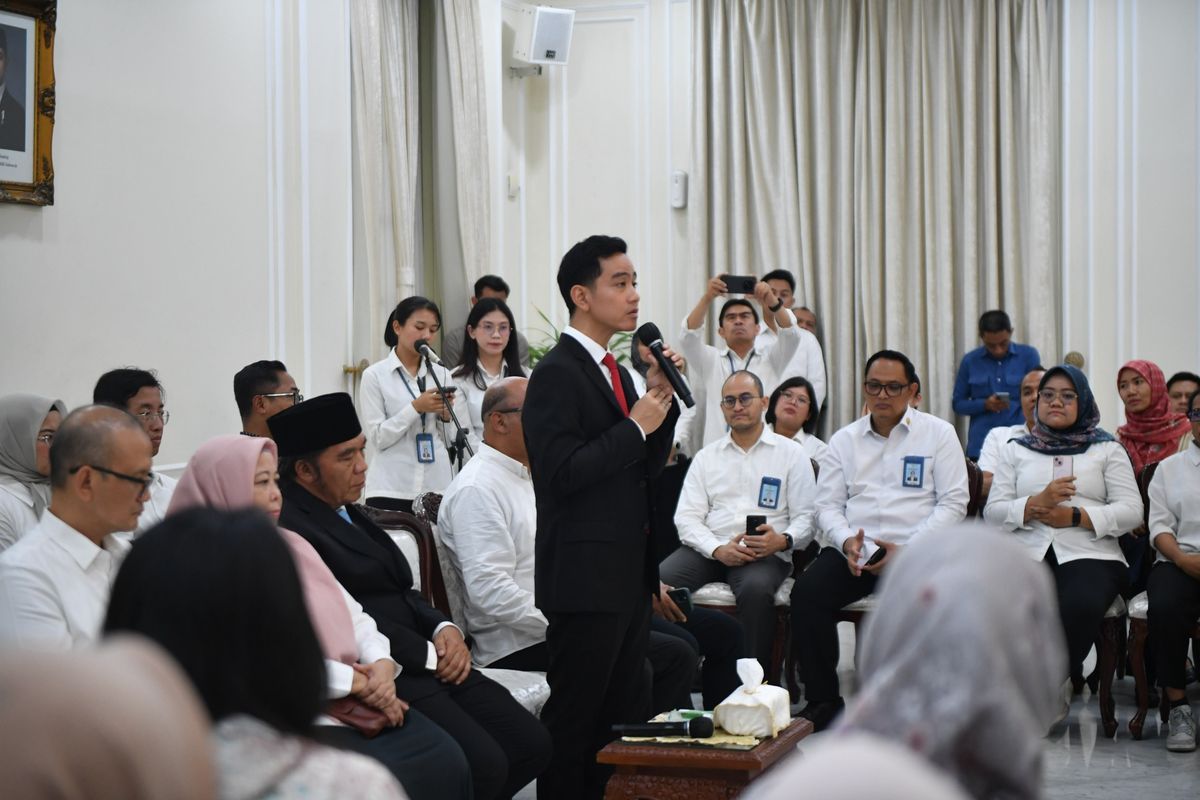
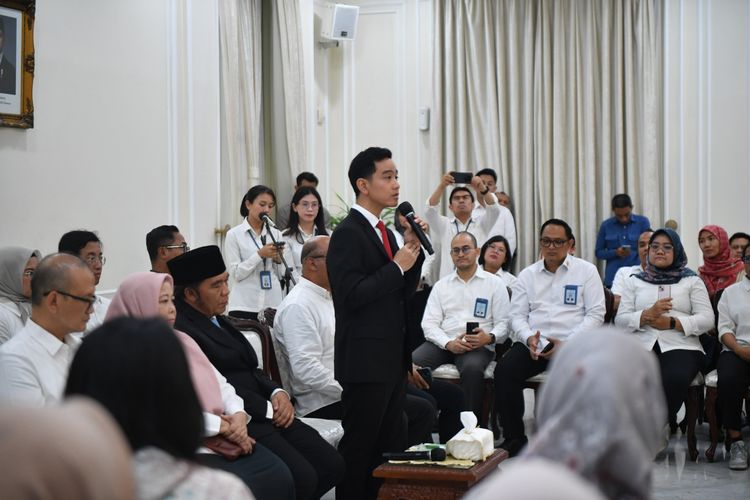
GIBRAN Rakabuming Raka is now a former vice president.
He resigned in mid-November 2026. The House of Representatives did not even have the chance to vote on a Motion of Censure when he stepped down.
This marks the most disruptive chapter in his soaring political career. His decision to resign came swiftly after many were still uncertain about whether he would take that step.
However, his decision was also met with relief by many.
It ended a constitutional crisis following the Supreme Court's ruling that invalidated the equivalence of his secondary education.
At 39 years old, while many politicians are just beginning to reach the peak of their national careers, Gibran has exited the stage of power.
The question now is where he should head after losing his position.
This essay aims to propose a route that may be unconventional, less popular, and perhaps even seen as wishful thinking, but valuable enough to consider.
Gibran has a significant historical reference to restore his reputation: following the post-presidency route of Jimmy Carter, the U.S. president who became increasingly beloved after his term.
For Gen Z, the name Jimmy Carter may only ring faintly. He was the 39th President of the United States serving from 1977 to 1981.
Carter's life journey holds one of the most intriguing paradoxes in the history of modern political communication.
He left the White House as an unpopular one-term president—viewed as weak in handling the economic crisis and failing to timely free U.S. diplomatic hostages in Iran.
Interestingly, rather than sinking into shame or busying himself with blaming political opponents, Carter returned to his humble home in the small town of Plains, Georgia. He began a new chapter.
Through The Carter Center, he transformed into a global peace mediator and democracy monitor.
However, he also emerged as a hands-on laborer, carrying a hammer to build homes for the poor alongside the charity organization Habitat for Humanity, which he founded.
He persevered in this endeavor until old age. This quiet commitment earned him the Nobel Peace Prize in 2002, making him one of the most beloved former presidents among the American public.
Carter proved that the post-power stage could become a space for the noblest image rehabilitation. This is a roadmap that may serve as a reference for Gibran and his loyal supporters.
The question is: Is this route feasible for Gibran?
This essay will analyze this through three perspectives of communication science.
First, Carl Hovland's Source Credibility Theory emphasizes that a figure's persuasive power relies on two pillars: expertise and trustworthiness.
Upon leaving office, Carter experienced a collapse in the dimension of expertise as he was perceived to have failed in handling the economy. Yet, post-resignation, he successfully rebuilt the dimension of trust massively.
The key lies in his status as a disinterested communicator.
He clearly showed no longer aspiring to run for office. The public trusted the sincerity of each of his steps.
In assessing Gibran through this framework, it is most striking that Gibran's crisis struck both pillars of credibility simultaneously.
The annulment of his diploma equivalency eroded perceptions of his expertise, while the controversy surrounding his nomination process undermined public trust.
On the other hand, Gibran is still young. His desire to return to the political arena cannot be completely ruled out.