
More Loved After Becoming a Former Leader
-
News
-
35 minutes ago
This article was translated by AI. Read the original article on Kompas.com. See Original
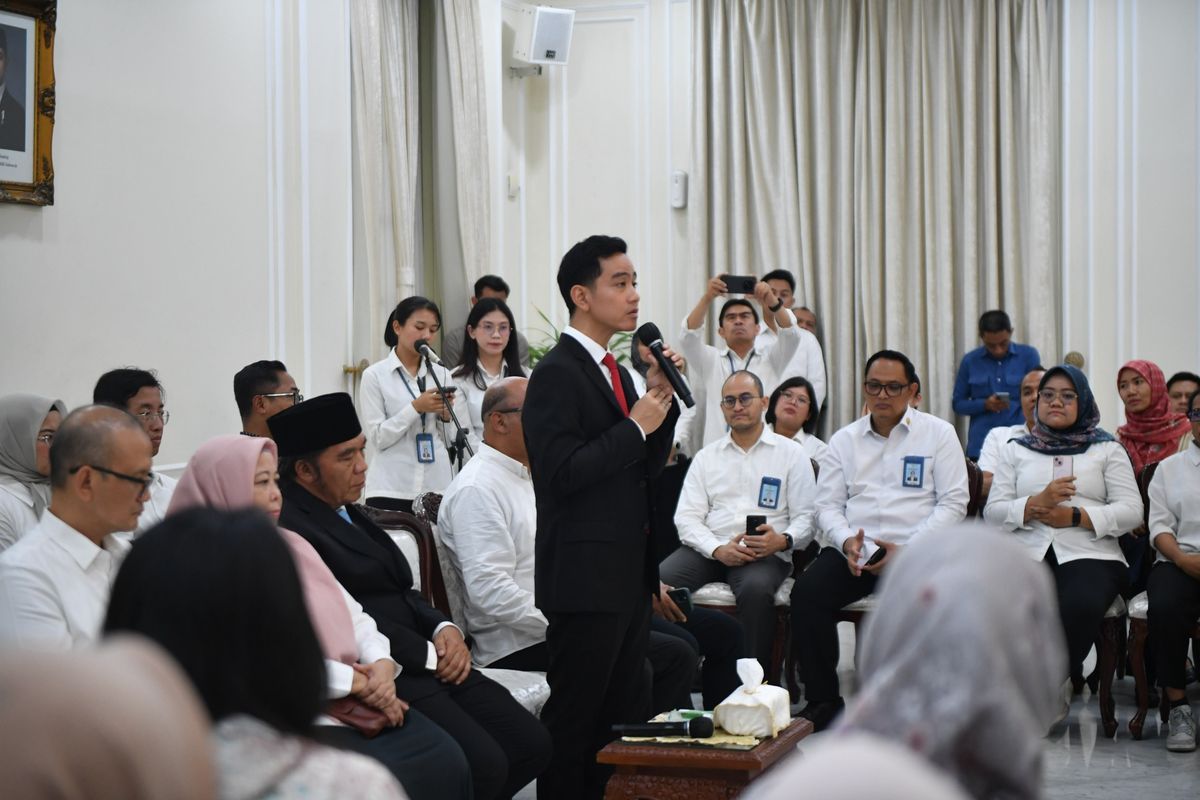
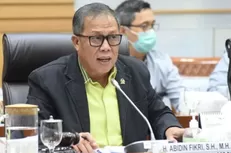
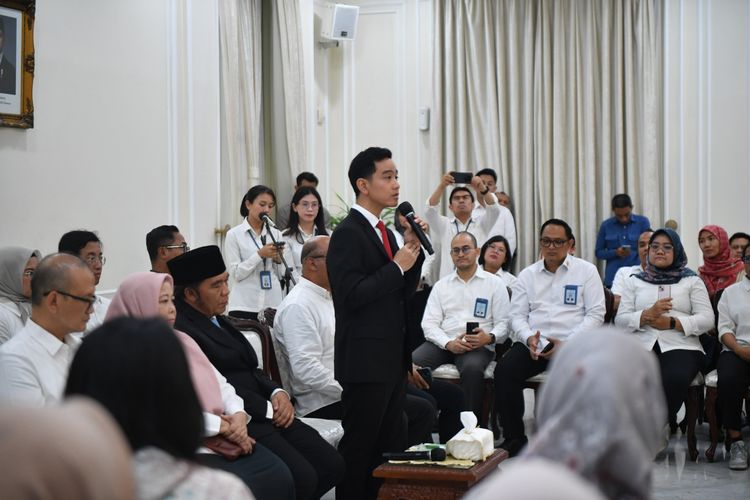
GIBRAN Rakabuming Raka is now a former vice president.
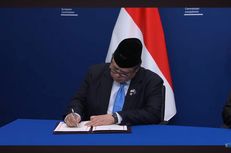
He resigned in mid-November 2026. The House of Representatives did not even have the chance to vote on a Motion of Censure when he stepped down.
This marks the most disruptive chapter in his soaring political career. His decision to resign came swiftly after many were still uncertain about whether he would take that step.
However, his decision was also met with relief by many.
It ended a constitutional crisis following the Supreme Court's ruling that invalidated the equivalence of his secondary education.
At 39 years old, while many politicians are just beginning to reach the peak of their national careers, Gibran has exited the stage of power.
The question now is where he should head after losing his position.
This essay aims to propose a route that may be unconventional, less popular, and perhaps even seen as wishful thinking, but valuable enough to consider.
Gibran has a significant historical reference to restore his reputation: following the post-presidency route of Jimmy Carter, the U.S. president who became increasingly beloved after his term.
For Gen Z, the name Jimmy Carter may only ring faintly. He was the 39th President of the United States serving from 1977 to 1981.
Carter's life journey holds one of the most intriguing paradoxes in the history of modern political communication.
He left the White House as an unpopular one-term president—viewed as weak in handling the economic crisis and failing to timely free U.S. diplomatic hostages in Iran.
Interestingly, rather than sinking into shame or busying himself with blaming political opponents, Carter returned to his humble home in the small town of Plains, Georgia. He began a new chapter.
Through The Carter Center, he transformed into a global peace mediator and democracy monitor.
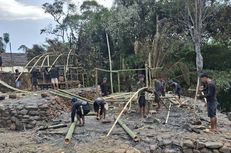
However, he also emerged as a hands-on laborer, carrying a hammer to build homes for the poor alongside the charity organization Habitat for Humanity, which he founded.
He persevered in this endeavor until old age. This quiet commitment earned him the Nobel Peace Prize in 2002, making him one of the most beloved former presidents among the American public.
Carter proved that the post-power stage could become a space for the noblest image rehabilitation. This is a roadmap that may serve as a reference for Gibran and his loyal supporters.
The question is: Is this route feasible for Gibran?
This essay will analyze this through three perspectives of communication science.
First, Carl Hovland's Source Credibility Theory emphasizes that a figure's persuasive power relies on two pillars: expertise and trustworthiness.
Upon leaving office, Carter experienced a collapse in the dimension of expertise as he was perceived to have failed in handling the economy. Yet, post-resignation, he successfully rebuilt the dimension of trust massively.
The key lies in his status as a disinterested communicator.
He clearly showed no longer aspiring to run for office. The public trusted the sincerity of each of his steps.
In assessing Gibran through this framework, it is most striking that Gibran's crisis struck both pillars of credibility simultaneously.
The annulment of his diploma equivalency eroded perceptions of his expertise, while the controversy surrounding his nomination process undermined public trust.
On the other hand, Gibran is still young. His desire to return to the political arena cannot be completely ruled out.
Thus, if he wishes to follow Carter's path, Gibran needs to consider restoring trust by shedding electoral ambitions for a sufficient period.
Negotiating this will indeed require an art of its own.
Secondly, William Benoit's Image Restoration Theory provides that corrective action is the most dignified way out of a reputation crisis.
Carter did not spend the rest of his life giving speeches defending his past policies.
He took concrete corrective actions by eradicating tropical diseases in Africa and building decent housing for vulnerable groups.
In Gibran's case, his decision to resign ahead of impeachment was just the beginning to subdue the crisis.
For his image to recover fully, he would need long-term corrective actions that certainly operate outside government structures.
He needs to implement corrective measures that directly address the root causes of his downfall.
Such corrective actions should not come from verbal clarifications, but from demonstrable work capacity.
Thirdly, Symbolic Non-Verbal Communication. This perspective, rooted in Blumer’s symbolic interactionism and Mehrabian's body language, explains why physical presence and gestures often speak much louder than defense speeches.
Carter sent messages of humility through everyday symbols that contrasted with the opulence of the White House.
He lived in a simple house in Plains. He hammered wood himself in poverty housing projects.
At this point, Gibran stands to have a comparative advantage that Carter lacked when he began his post-presidency chapter at nearly 60 years old. Gibran is still only 39.
Gibran possesses physical flexibility and high mobility that allow him to directly engage with communities without the barriers of protocol.
His ability to visit citizens—such as reaching out to victims of the Free Nutritious Meal (MBG) program with calm empathy without saying much or bravely riding a motorcycle through the rain to hard-to-reach areas—represents a powerful symbolic language.
Such grounded gestures effectively break down the psychological distance between elites and the populace.
However, for the symbolism to resonate like Carter’s hammer, there is one essential requirement: it must occur in silence. The choreography of cameras and social media content production teams, which often incite public cynicism, must be kept at bay.
Suggesting Gibran emulate Jimmy Carter's route is sure to upset many. At least three fundamental criticisms might arise.
First, from his supporters, the view may emerge that Gibran is not at fault and merely fell victim to political pressures using legal instruments.
Engaging in image restoration connoting 'atonement' would emphasize Gibran's admission of guilt.
In response, in political communication, the debate surrounding legal truth does not always align with public perception reality.
Pursuing Carter’s path is not entirely an admission of guilt but rather a corrective action strategy to shift his position as a communication subject: from merely a 'victim of circumstance' to a 'statesman sovereign over his own steps.'
Carter also often felt like a victim of the political situations of his time, yet he chose not to waste energy seeking scapegoats.
Here, maintaining calm outside of power proves to be the most rational legitimacy investment for Gibran.
The second criticism concerns differing calibers. Gibran, who has only served two years as vice president, is certainly not in the same league as a U.S. president.
Comparing Gibran with Jimmy Carter is akin to comparing two boxers from different weight classes in the same ring.
This criticism is valid. To address it, a clear mapping of weaknesses and strengths for each must be done.
Carter excelled in leading a superpower. His lack of electoral ambition was influenced more by age, and he began his new chapter with diminishing physical energy.
Conversely, Gibran carries the weak link of an administrative legitimacy crisis. He also bears the burden of political dynasty association.
Moreover, public skepticism regarding every social move he makes will not disappear. Every step he takes will be viewed as groundwork for the next election.
However, Gibran holds strengths that Carter did not possess. At 39, he has long stamina, high mobility, and mastery of the digital ecosystem of the youth.
With decades ahead of him, Gibran does not need to replicate Carter's large-scale global projects. He can simply adjust his service field to a local scale that is relevant to his capacity.
The third criticism involves cultural gaps: can the Indonesian public accept post-office transformations as American society does, which has a more mature democratic tradition?
In America, honoring leaders who return to ordinary civilian life is part of established republican ethics.
They recognize the Cincinnatus tradition—high regard for leaders willing to relinquish power and return to civilian life.
In contrast, Indonesian political culture often leans towards pragmatism and carries a long history of polarization. Power is often intertwined with resources and patronage.
When a figure loses their position, their political network tends to dissolve quickly, while the public often harbors political grudges or long-standing polarization.
Here, Carter's route seems steep for Gibran. However, there are bright side opportunities.
From an intercultural communication perspective, local culture holds hidden opportunities for Gibran.
In the Javanese cultural trove, which forms his social roots, the attitude of legowo—accepting a downfall with an open heart without retaliation—holds high symbolic value.
Furthermore, Indonesian society has a strong cultural empathy towards individuals perceived as 'wronged' or victims of circumstance.
If Gibran responds to his fall not with aggressive resistance but with calmness and quiet service in the midst of the populace, the cultural capital of tepo seliro could actually become an accelerator to restore public sympathy.
From the assessment of modalities and communication theories mentioned earlier, three strategic steps can be taken by Gibran moving forward.
First, announce a political electoral moratorium by stepping away from the party stage and contesting positions for at least one full election cycle (five to ten years).
In Hovland's framework, this break is imperative to create a disinterested communicator effect to restore the public trust dimension.
Second, execute substantive corrective action by establishing institutions or social movements that address the roots of his crisis.
For example, institutions advocating for the expansion of vocational education access, educational equivalency programs for marginalized groups, and supporting grassroots SMEs.
Third, conduct symbolic transformations toward silent yet impactful effects.
Gibran can leverage his mobility advantage to meet citizens in the field, touring cities and villages across Indonesia throughout the year.
However, there is an important note: avoid making these activities mere image-production content. Let the actions speak louder than camera lights.
Jimmy Carter became increasingly beloved after his presidency. Gibran? It is not impossible.