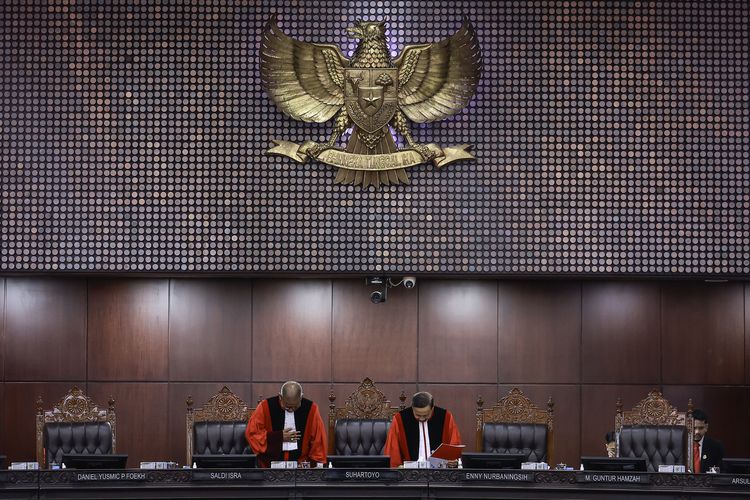


Prabowo Instructs Renovation of All Community Health Centers and Every District to Have a Good Hospital
-
News
-
16 minutes ago
This article was translated by AI. Read the original article on Kompas.com. See Original
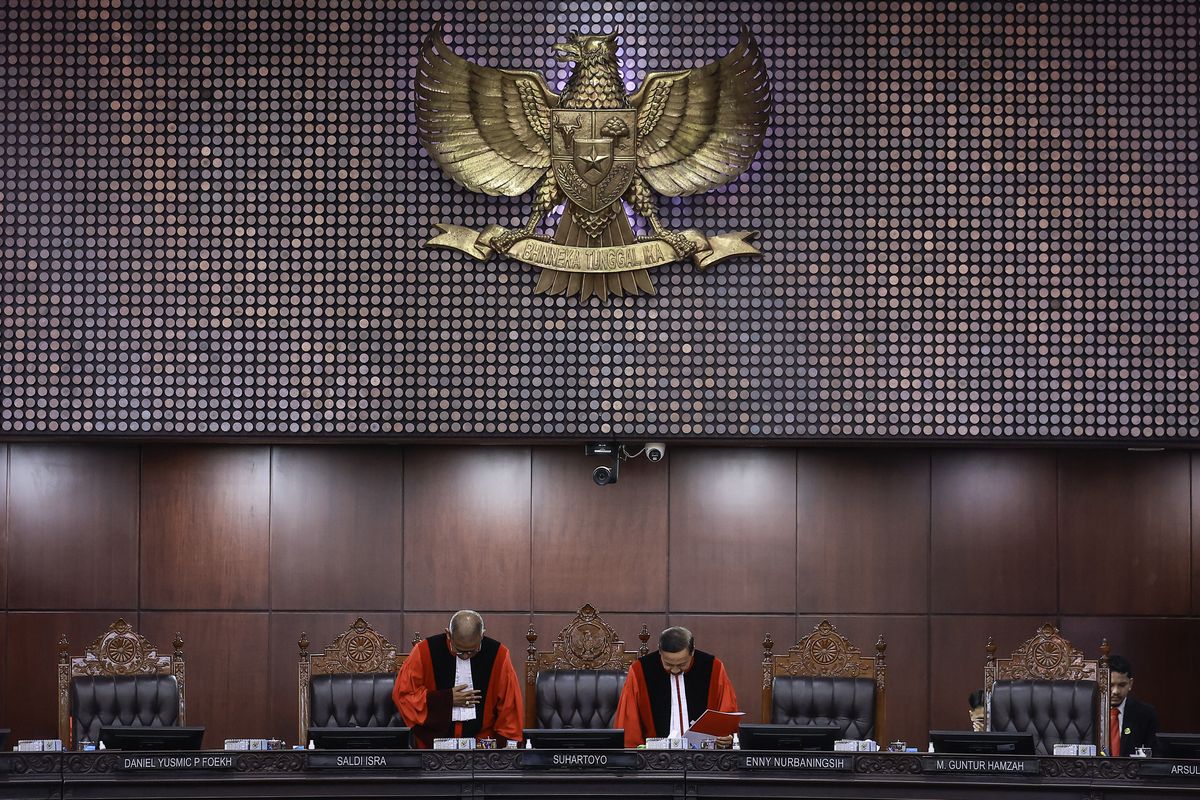
The Court has stated that during the hearings, no convincing evidence was found regarding a diploma, certificate, or foreign degree that could serve as the basis for equating education with at least the high school level.
Simultaneously, the Court affirmed it could not cancel or disqualify Gibran in his capacity as Vice President.
After his inauguration, the matter is no longer akin to a dispute over candidate status, but rather concerns a constitutional officeholder's status.
This raises a critical constitutional question: If the Court states it did not find the required evidence of a diploma but also asserts it lacks the authority to disqualify the Vice President, then who ought to follow up on these findings, and through what mechanism?
According to the constitutional framework of the 1945 Constitution, the answer to that question can be directed towards Articles 7A and 7B.
Article 7A stipulates that the President and/or Vice President may be dismissed during their term if found to no longer meet the qualifications as President and/or Vice President.
Article 7B then provides a special mechanism: the DPR submits a request to the Court to examine, adjudicate, and decide on the DPR's opinion regarding those allegations.
Consequently, the more accurate construction is that the Court in the PHPU matter need not disqualify the appointed Vice President.
However, if the examination reveals relevant legal facts indicating unmet requirements, those facts should be considered in the decision's reasoning as legal findings.
Furthermore, should there be a party authorized to act on those findings, the mechanism must be placed within the framework of Articles 7A and 7B of the 1945 Constitution.
This is also consistent with the principle that disqualification applies to candidates, while dismissal applies to officials who have held office.
After the inauguration, an individual's legal status shifts. They are no longer merely an election participant but a holder of a constitutional office. Thus, the legal mechanisms must follow the constitutional office regime.
In this context, the ruling of niet ontvankelijk verklaard should not conclude with the determination that the petitioners lack legal standing.
The ruling ought to provide a more comprehensive constitutional explanation regarding the forums and legal mechanisms available should findings related to candidate qualifications have consequences on the continuation of the Vice President's office.
In other words, the issue is not merely whether petitioners may enter through the PHPU doorway, but also where the matter should be directed if the PHPU door has been closed while relevant legal findings are acknowledged by the Court itself.

























