

Judge Rejects Silmy Karim's Objection, Trial in Foreign Nationals’ Residence Permit Extortion Case Continues
-
News
-
3 minutes ago
This article was translated by AI. Read the original article on Kompas.com. See Original
JAKARTA, KOMPAS.com - The use of influencers by ministries to promote government programs has come under scrutiny again.
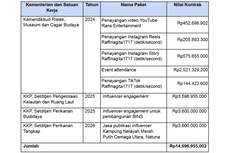
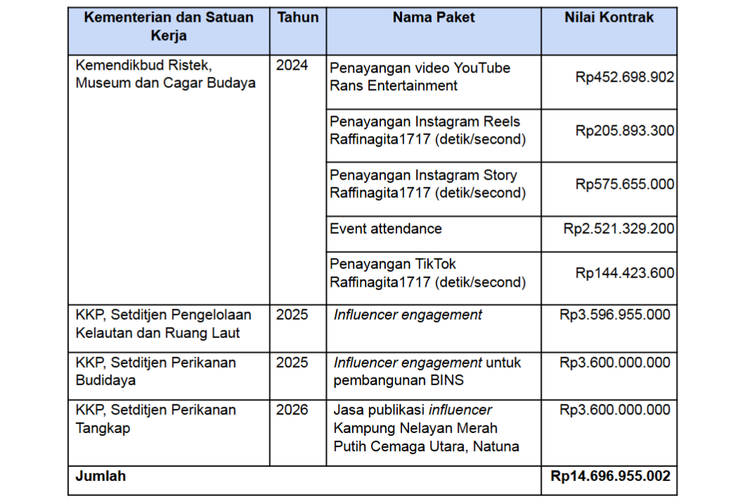
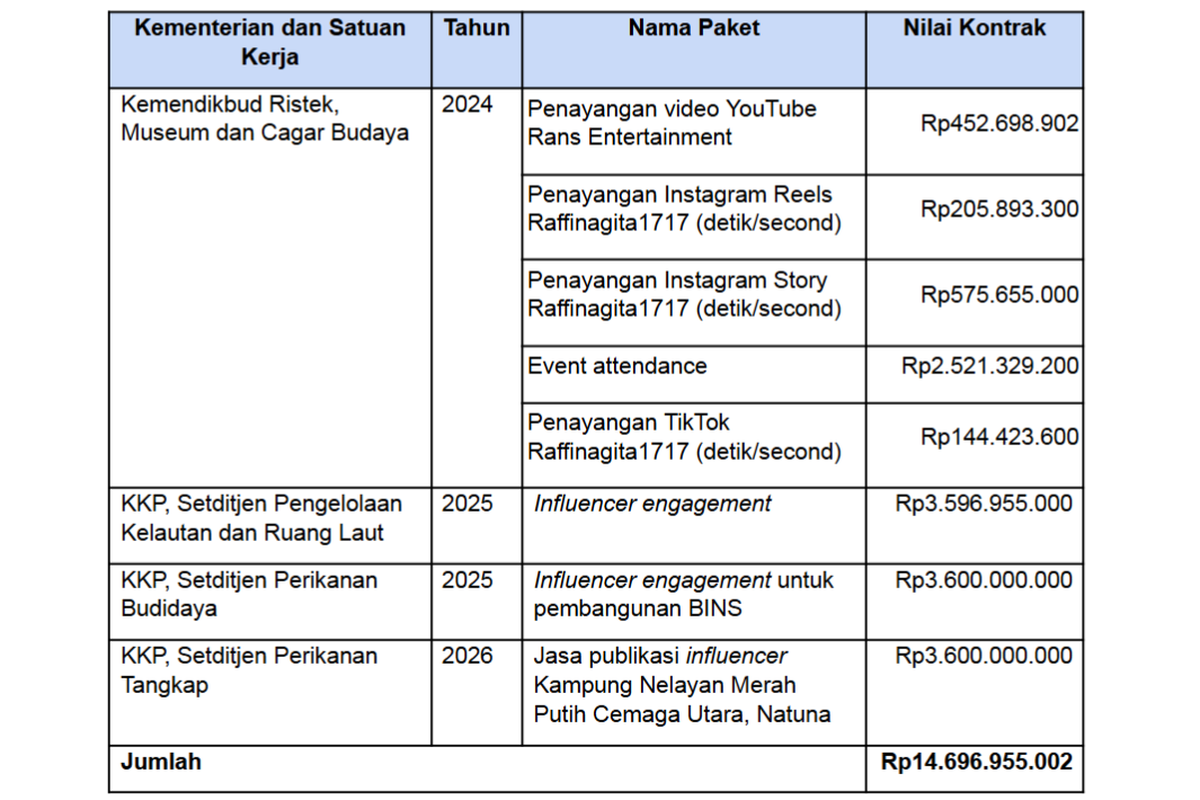
This comes after Indonesia Corruption Watch (ICW) highlighted a budget allocation of IDR 14.69 billion by two ministries to PT Rans Animasi Indonesia, a company allegedly owned by Raffi Ahmad, for influencer services from 2024 to 2026.
The two ministries in question are the Ministry of Education, Culture, Research, and Technology (Kemendikbud Ristek) and the Ministry of Marine Affairs and Fisheries (KKP).
Amid budget efficiency policies, spending tens of billions of rupiah to collaborate with a high-profile business has raised questions among the public.
Concerns range from the necessity of using influencers as a government communication channel to the effectiveness of the budget spent.
Public policy and political communication experts will discuss this as follows:
Political communication expert from Gadjah Mada University (UGM) and Executive Director of Indonesian Presidential Studies, Nyarwi Ahmad, views the government's use of influencers as a shortcut for communicating policies and programs to the public.
He states that this practice has been ongoing for more than a decade.
However, the selection of influencers is often not based on competence, reputation, or expertise relevant to the issues being addressed.
"For over the past 10 years, the government has preferred shortcuts by hiring influencers, and this has not been done selectively," Nyarwi told Kompas.com on Wednesday (11/11/2026).
He argues that the government tends to prioritize follower count and popularity when selecting public figures.
In reality, a large following on social media does not automatically indicate someone's ability to convey public information accurately.
Nyarwi reminds us that the influencers involved essentially function as public communicators.
Thus, they should possess the competence, understanding of the issues, and the ability to convey information responsibly.
He likens the selection of public communicators to the profession of doctors, which requires specialized skills.
"Public communicators should be trained with the necessary skills or have certification as public communicators. In simple terms, it's similar to being a doctor," he says.
According to Nyarwi, the government cannot arbitrarily appoint someone simply because they are famous or have many followers to present programs pertaining to public interest.
Moreover, information about government policies requires accurate messaging to avoid misunderstandings among the public.
He also highlights the risks of using influencers lacking credibility and adequate understanding of the issues disseminated.
"Often, instead of a communication process between the government and its citizens, we see the usage of influencers as a hegemonic instrument, dominating public discourse or mobilizing through their influence," Nyarwi explains.
He assesses that this situation indicates the government has not fully adapted to changes in the digital communication landscape.
Rather than strengthening public communication capacity within institutions, the government tends to take shortcuts by partnering with popular figures.
However, using influencers also carries risks if the chosen figures become embroiled in controversies or lose public trust.
"If the influencer's reputation falls, it affects the reputation of the hiring parties as well," he argues.
The government not only risks losing budget when the messages fail to reach the target audience but also faces issues of public trust.