

KPK Summons Wife of PPTR Director General Lampri as Witness in HGB Corruption Case
-
News
-
3 minutes ago
This article was translated by AI. Read the original article on Kompas.com. See Original
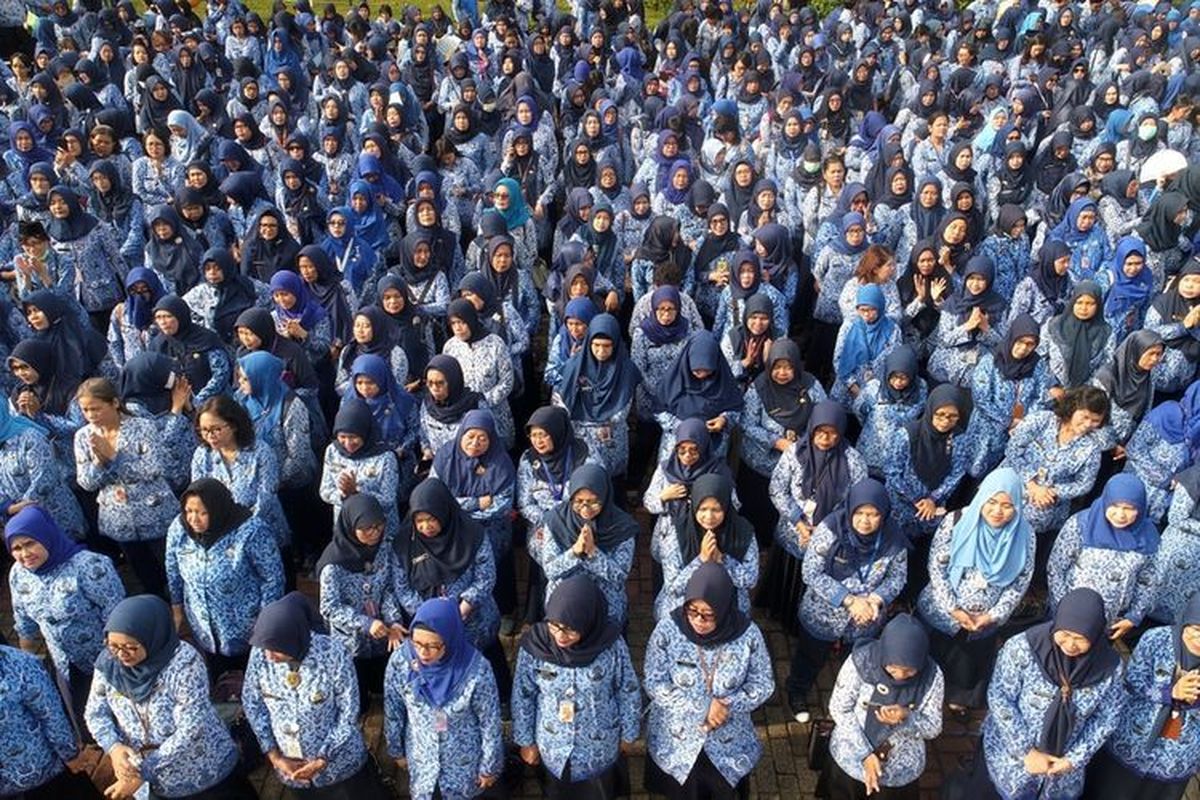
The recruitment of civil servants must go hand in hand with clear program designs, distribution of authority, competency needs, and budget readiness.
In this way, the number of recruited civil servants should genuinely reflect the organizational needs and real workload, not just an ambition to expand bureaucratic capacity.
Technically, the government also needs to ensure the suitability of job requirements and the competencies to be recruited.
We must prevent a buildup of employees in certain functional roles while other roles, which are in high demand, suffer from shortages.
On the other hand, we should not allow the government to open a large number of positions for roles with relatively limited actual demand.
Proper needs mapping should be meticulously formulated by the Ministry of Administrative and Bureaucratic Reform (PANRB), the National Civil Service Agency (BKN), along with other ministries, institutions, and local governments as proposing agencies.
Meanwhile, the high recruitment needs for civil servants should also consider the number of public servants currently employed by the state.
As of June 30, 2026, the total number of active civil servants in central and regional agencies reached 6,776,871 individuals.
This figure indicates that Indonesia actually already has a very large base of public servants.
Therefore, the challenge for the government is not merely to add to the number of employees but to ensure that every recruitment is truly based on organizational needs, strengthening institutional capacities, and results in improved public service quality.
Ultimately, the position of civil servant will again become contested among millions.
As I mentioned earlier, the motivation for becoming a state apparatus today is not merely about the embellishment of service but is increasingly tied to the need for financial certainty.
This phenomenon should serve as a reflection point for the government to view the job market and the economic resilience of the community more comprehensively.
I wish to reiterate the core argument from my opinion piece published in Harian Kompas on March 12, 2025, titled: “The High Enthusiasm to Become a Civil Servant and the Heavy Burden of Bureaucracy”. A bloated bureaucracy can create unhealthy fiscal burdens, reduce the room for development spending, and slow down the achievement of government goals in providing public services.
The state certainly needs competent, professional, and integrity-driven public servants.
However, this need should not translate into an obligation to continually increase the number of employees.
Bureaucratic optimization should instead be carried out by balancing quantitative and qualitative aspects, strengthening the capacities of public servants, and ensuring that every employee expenditure generates real benefits for the community.
Moreover, the government must begin to restore public trust in the business sector.
Investment must be revived, productivity increased, and decent job opportunities expanded.
The success of development should not be measured by how many people succeed in becoming civil servants but by how wide the opportunities are for the community to secure decent employment and live prosperous lives.
We should not allow becoming a civil servant to be seen as the only path to securing a future.
A healthy state is one where not all citizens compete to enter the bureaucracy, but rather a state that can create an economic ecosystem in which society can thrive, whether as civil servants or as workers and entrepreneurs in the private sector.