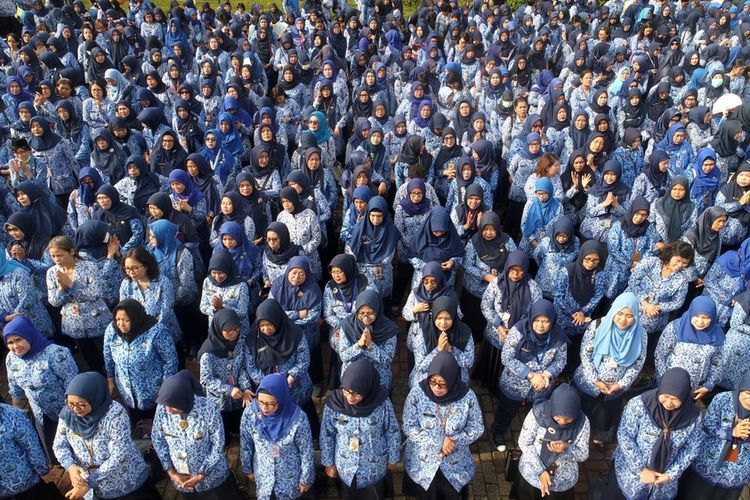


KPK Summons Wife of PPTR Director General Lampri as Witness in HGB Corruption Case
-
News
-
3 minutes ago
This article was translated by AI. Read the original article on Kompas.com. See Original
“When? When? When?”
PERHAPS that is the sentiment echoing in the minds of our society.
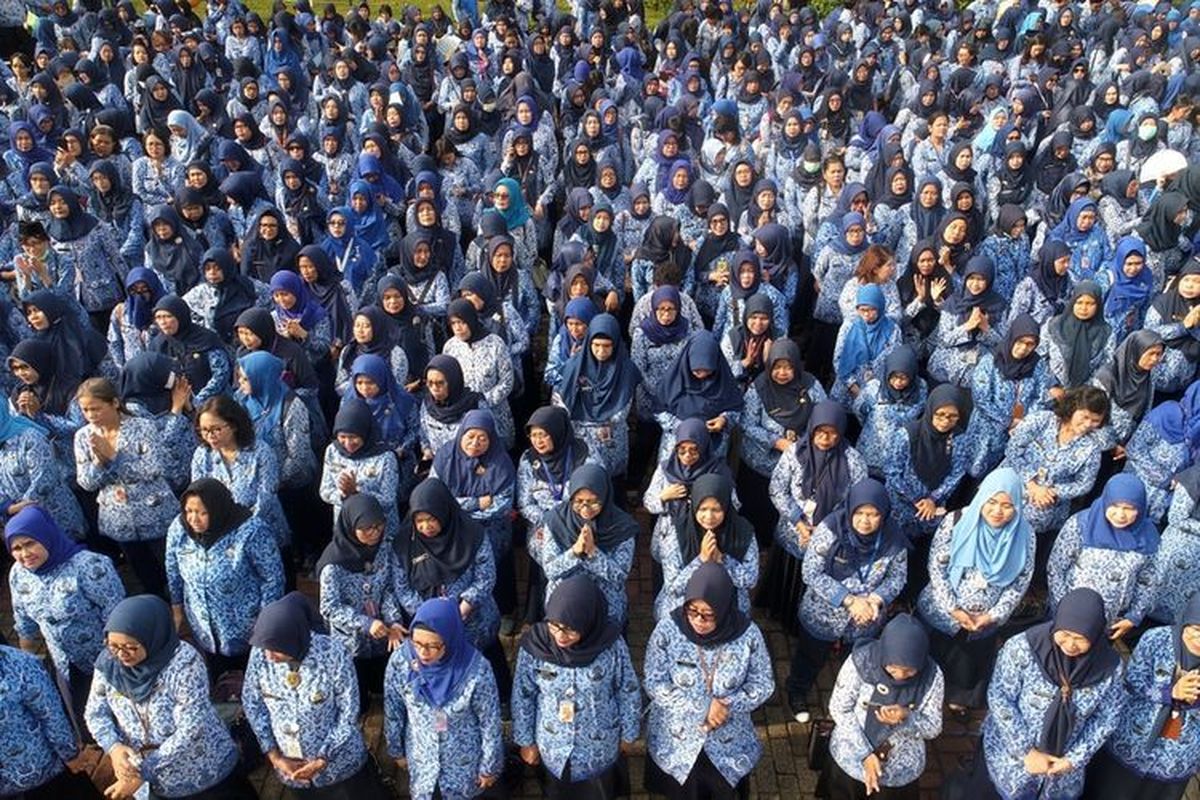
The word “when” has become a question directed at the government: when will the selection for Civil Servant Candidates (CASN) reopen?
In recent years, the surge in the number of applicants for civil service has indeed captured public attention.
Every time the government announces recruitment, millions of people from diverse educational backgrounds flock to compete for the available positions.
“In this economy” and “in this efficiency” are two phrases that have recently become common in conversations among young people.
Both seem to illustrate the heavy economic pressure currently faced by society.
From declining purchasing power, increasing layoffs, to various economic issues that ultimately affect household livelihoods.
In fact, on social media, it is not uncommon to see expressions like, “It feels like my economic pressure isn't as heavy as it was during the COVID-19 pandemic. Mercy!”
In this situation, the business world is facing significant pressures.
Economic uncertainty has forced some companies to implement efficiency measures, even making the difficult decision to reduce their workforce.
At the same time, an increasing number of young people are focusing their hopes on one goal: securing a position as a civil servant.
It’s not only recent graduates who are aiming for these roles but also those whose ages are nearing the maximum registration limits.
Why is this phenomenon occurring? We must acknowledge that becoming a civil servant is still viewed as a job option that offers financial security and certainty.
In the face of business uncertainties, the status of employment, relatively guaranteed income, and social protection become particularly attractive.
Moreover, amid the implementation of Presidential Instruction (Inpres) No. 1 of 2025 on Spending Efficiency in the Execution of the 2025 State Budget and Regional Budget, employee expenditure remains exempt from various efficiency policies.
This further illustrates that the income of state apparatus is relatively protected compared to workers in the business sector, who must confront dynamic risks.
This depiction is not merely an assumption. I recall a conversation with a colleague in a law firm who is facing economic pressures.
Previously, he had a relatively stable financial condition. However, changing business situations forced him to pivot and redefine his career choices.
He even remarked, “If I had known this, I should have just applied to become a civil servant earlier.”
From that simple experience, I began to realize that there is a greater issue than just the high enthusiasm for becoming a civil servant.
The current competition for civil servant positions does not solely stem from a desire to serve the country; rather, it is also an effort to secure an economic livelihood amid uncertainties.
Choosing to be a civil servant is increasingly seen as a solution when the private sector no longer offers the same security.