
KPK Reveals Regent Hamenang Misused Authority for MURI World Record Chicken Soup
-
News
-
2 minutes ago
This article was translated by AI. Read the original article on Kompas.com. See Original
THE CHANGE of the vice president is not merely about filling a vacant seat in the power structure. It should serve as a moment to reevaluate the true meaning of the second-in-command's role in the republic.
Is the vice president merely needed as a companion to the president, a guardian of political stability, and a task executor when the head of state is incapacitated?
Or should they be a statesman with intellectual capacity, moral courage, diplomatic skills, and deep thinking to help determine the nation's direction?
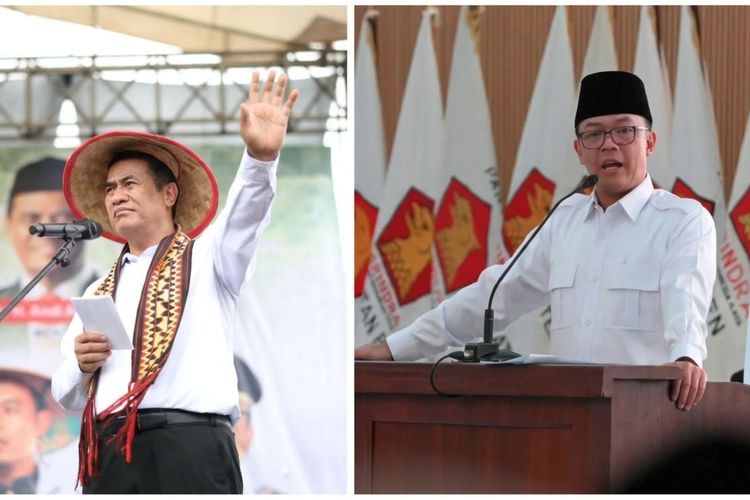
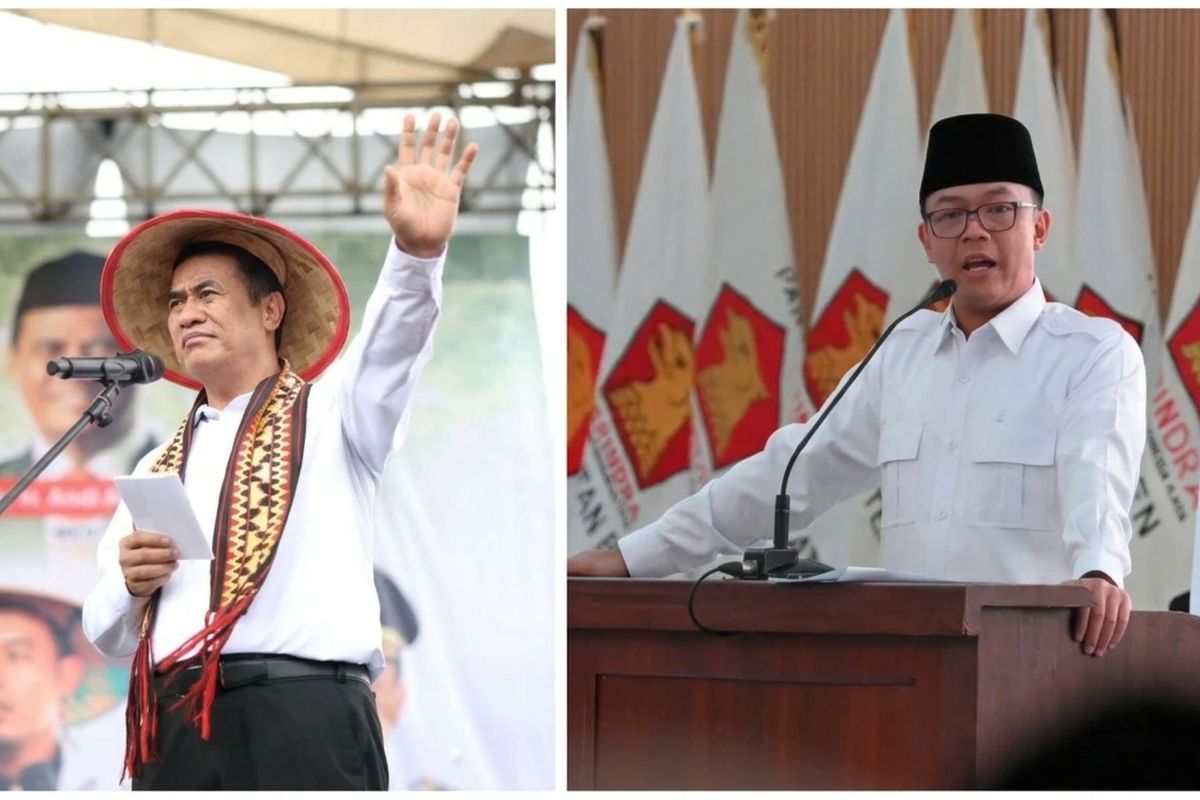
The resignation of Gibran Rakabuming Raka and the emergence of two names proposed by President Prabowo Subianto to the MPR, namely Andi Amran Sulaiman and Sugiono, have opened a more substantive discussion on the quality of national leadership.
These two names were officially communicated on November 23, 2026, with the MPR scheduling a plenary session for the vice presidential election on December 11, 2026.
However, the most important issue is not who is closest to the president, most loyal to the power, or enjoys the strongest political support.
This raises a critical question: who possesses the capacity to be a statesman when the nation's interests clash with the interests of power?
In this context, the figure of Mohammad Hatta becomes relevant to revisit. Not to find another Bung Hatta, as history never produces individuals in an identical mold, but to find the values of leadership that a vice president should embody.
Constitutionally, Article 4 paragraph (2) of the 1945 Constitution states that in performing their duties, the president is assisted by a vice president.
This wording is often interpreted administratively as if the vice president is merely a helper to the president.
In fact, Article 8 paragraph (1) imposes a much greater consequence: if the president passes away, resigns, is dismissed, or cannot perform their duties, the vice president replaces them until the end of the term.
This means that the vice president is not just a spare tire stored away in the power trunk, only to be pulled out when the vehicle breaks down.
They must possess leadership capacity that allows the state to continue operating during political, economic, security crises, or even international geopolitical conflicts.
From a perspective of leadership and organizational behavior, the vice presidential role requires what is referred to as leadership complementarity, the ability to complement the president's leadership with competencies, perspectives, and character that may not be fully possessed by the primary leader.
The president does not need a follower who simply nods their head. They need a strategic partner who can provide different insights, challenge decisions, issue warnings when policies have the potential to be wrong, while also maintaining government solidity.
This is where leadership is put to the test. Loyalty to the president must not outshine loyalty to the constitution and the people's interests.
Discussing the vice president of Indonesia is almost impossible without recalling Mohammad Hatta. Bung Hatta was not only the first vice president but also a representation of an intellectual understanding that political freedom must be followed by economic independence, social intelligence, and national self-reliance.
Hatta had a combination of qualities that are relatively rare in political leadership: academic depth, personal integrity, simplicity of life, steadfast principles, and the ability to read international relations.
His education at the Nederlandsch Handelshogeschool in Rotterdam shaped his understanding of economics, trade, and governance.
His extensive experience in the independence movement in Europe also provided him with a strong international perspective.