
Maintaining the Pulse of Maritime Civilization
-
News
-
6 minutes ago
This article was translated by AI. Read the original article on Kompas.com. See Original
They must also consider how knowledge and professional skills are passed on to the next generation.
While technology can accelerate industry changes, the sustainability of the industry still requires people who can understand and manage those changes.
For Indonesia, the issues raised by the IMO are highly relevant.
As the largest archipelagic nation in the world, Indonesia has inseparable historical, geographical, economic, and cultural ties to the sea.
The sea is not just a boundary separating islands; it is a vital link for national life and a source of strategic strength in the global economic arena.
This position should serve as a capital for Indonesia to play a significant role in developing international maritime human resources.
Indonesia has maritime education and training institutions that produce graduates across various maritime disciplines and has a need for professional seafarers to support both national and international shipping industries.
Nonetheless, the vast potential of maritime education does not automatically guarantee job opportunities and sailing practice for all graduates.
The imbalance faced by several developing countries — between the number of maritime school graduates and the availability of sailing practice placements — also requires Indonesia's attention.
This is where the government, educational institutions, and national shipping companies need to foster more systematic collaboration.
Shipping companies should not merely be viewed as ready-to-use labor users.
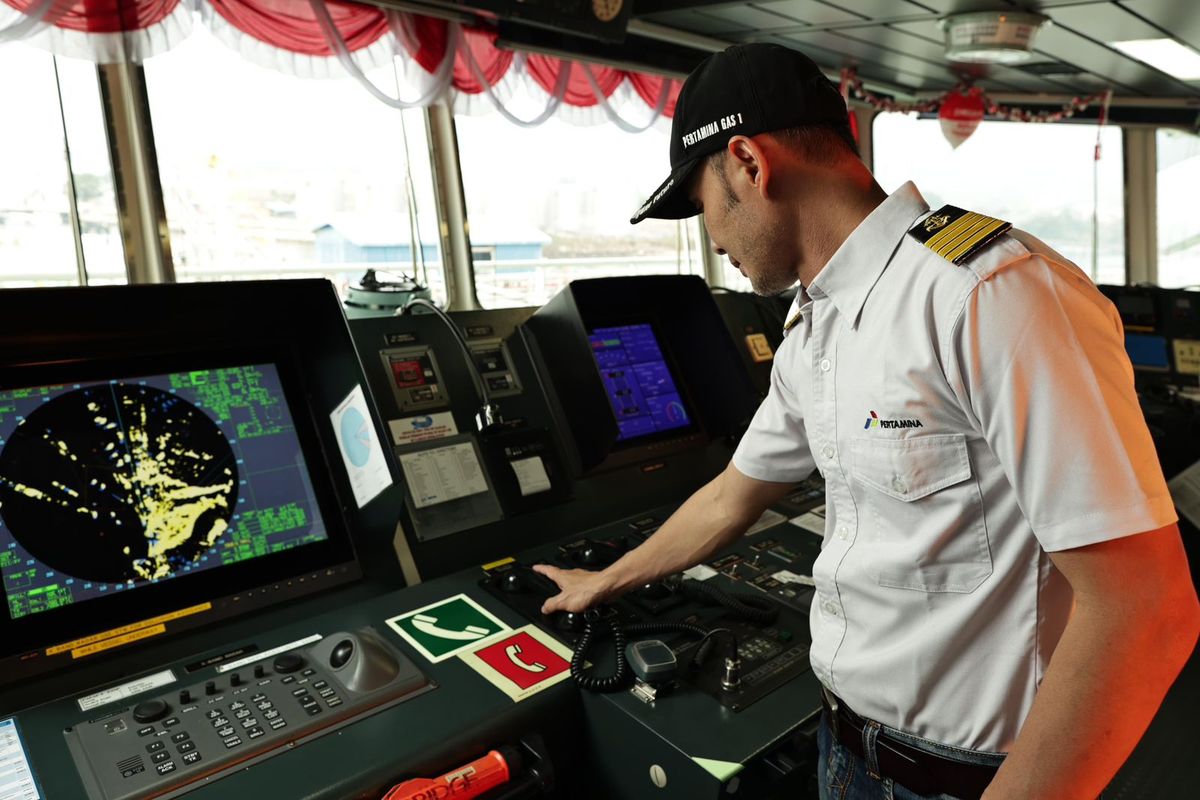
They also need to take part in the process of professional development by providing cadet quotas, mentoring onboard, and developing continuous training systems.
The government can serve as a facilitator through incentive policies, simplifying cadet placement administration, strengthening international cooperation, and opening access to foreign shipping fleets.
Such collaborations are vital to ensuring that limitations in the national fleet do not hinder maritime education graduates from acquiring sea experience.
Additionally, educational institutions should adjust their curricula to align with changes in shipping technologies.
Mastery of navigation, engineering techniques, maritime safety, and ship management must progress alongside competencies in digital systems, automation, and maritime information security.
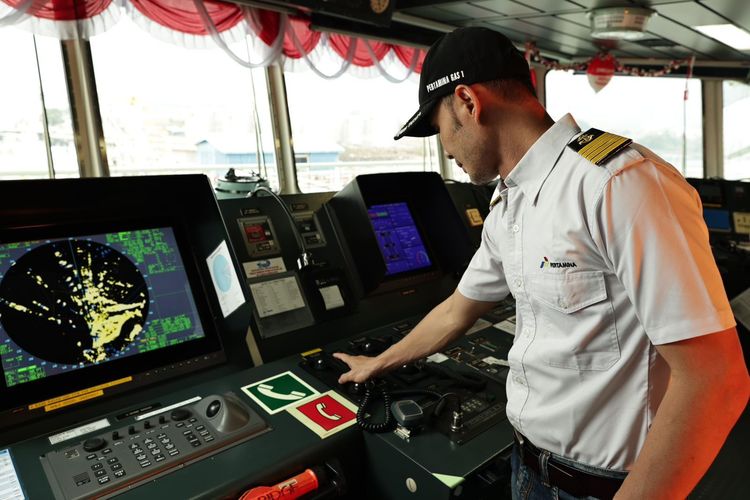
Future maritime education must bridge two needs: maintaining fundamental navigational skills and mastering increasingly crucial technologies in modern ship operations.
At the same time, Indonesia must leverage the IMO forum to advocate for a fairer cadet placement mechanism for developing countries.
Maritime diplomacy should not merely revolve around issues of territorial boundaries, sea security, and international trade.
Human resource development for seafarers must also be a vital agenda because the quality of people is the foundation for the sustainability of a nation’s maritime strength.
Thus, the issues raised by the IMO remind us that the future of the maritime industry cannot be gauged solely by the number of ships, the tonnage of fleets, the sophistication of navigation technology, or operational cost efficiencies.
There is a human dimension that must remain at the forefront.
Ships may become increasingly modern, navigation systems may grow more automated, and the shipping industry may become more efficient, yet the sustainability of the entire system still hinges on the human ability to manage, supervise, and make decisions — among them those humans are seafarers.