

Coup Motive of Listyo Sigit Suspected to Retain the Kapolri Position: How Logical Is It?
-
News
-
Just now
This article was translated by AI. Read the original article on Kompas.com. See Original
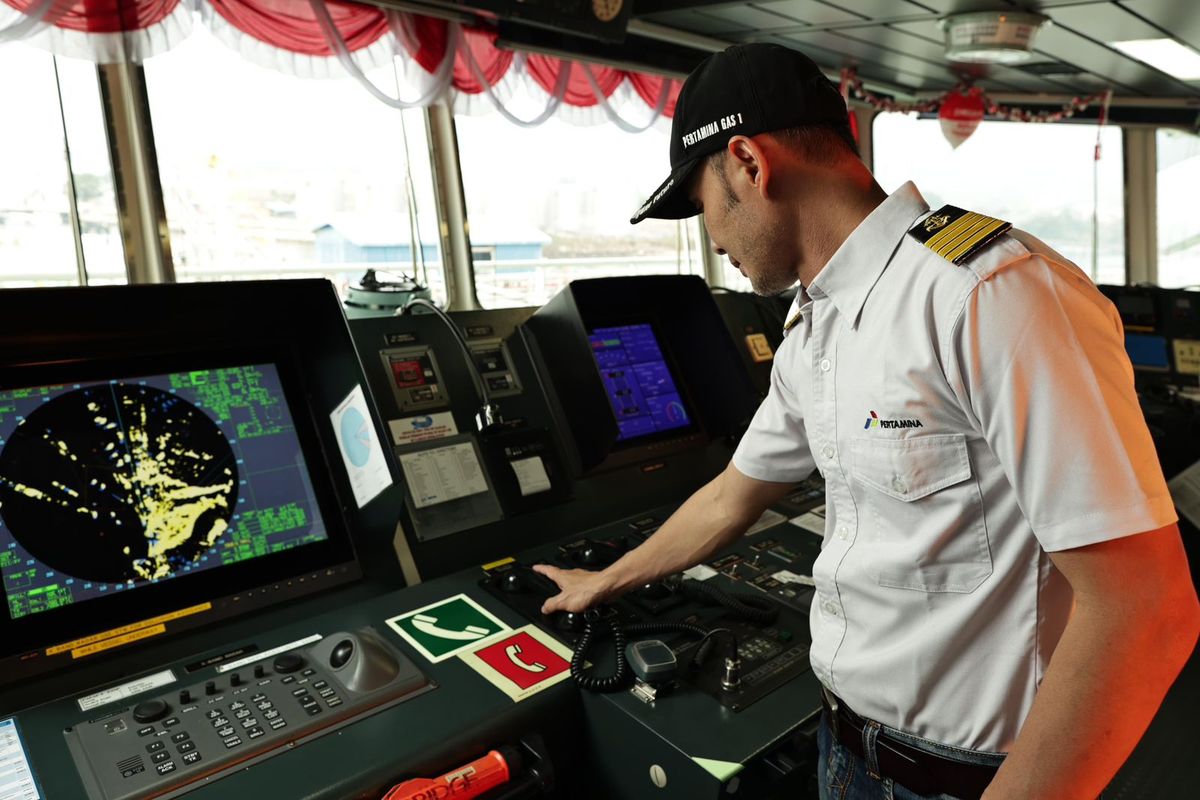
AS GLOBAL trade increasingly relies on maritime transportation, shipping technology becomes more advanced, and the demand for professional seafarers skyrockets, many graduates from maritime schools find it difficult to secure their first job at sea.
These individuals have completed their education, mastered navigation theory, understood maritime safety, and possess technical competencies.
However, when faced with the requirements for professional certification, there is one experience that cannot be substituted by a classroom or simulation: sea time.
This marks the fundamental challenge in the regeneration of the global seafarer workforce.
Being a seafarer is not just about obtaining a maritime education degree or mastering a set of technical knowledge.
This profession clearly demands real experience in facing the dynamics of the sea, reading weather changes, making decisions in emergencies, and developing teamwork skills in a high-risk, disciplined environment aboard a vessel.
The sea is not merely an object of learning; it is a space for developing skills, responsibilities, and professional maturity.
This issue garnered international attention when the International Maritime Organization (IMO) called for more shipping companies to provide training quotas for young officer candidates.
The call was made during the Global NextWave Seafarers Workshop at the IMO headquarters in London on November 20, 2026, attended by over 80 representatives from 25 countries.
Simultaneously, this becomes an important momentum to broaden that awareness.
Equally important, the call is a response to the long queue of maritime education graduates who have yet to secure opportunities for sailing practice as cadets.
A striking irony worth contemplating: the world needs quality seafarers, yet prepared candidates face limitations in access to meet the requirements to become professional officers.
It requires courage to build partnerships, align educational interests with industry needs, and position human development as an integral part of the future maritime strategy.
The maritime industry has shown profound changes over the past decades.
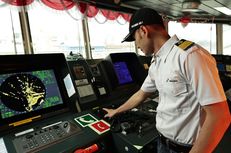
Modern vessels are equipped with digital navigation technology, satellite communication systems, automated monitoring devices, and various safety instruments based on technological intelligence.
However, this brings complex consequences for the human resources within the sector.
One of the facets pertains to the changing requirements for ship crew numbers and the provision of accommodation facilities.
As companies prioritize operational efficiency and construction cost reductions, modern ship designs have been increasingly stripped of space.
New generation vessels no longer provide additional room facilities such as accommodations for pilots, owners' representatives, spare cabins, or dedicated cabins for cadets to reduce construction budgets.
The removal of various extra accommodation spaces for the sake of cost efficiency presents new challenges in the seafarer regeneration process.
The lack of specific cabins complicates the placement of cadets needing practice hours at sea, raising issues about where they should be accommodated during voyages.
The fact is, cadets are not ordinary passengers who merely require a bed and meals throughout the journey.
They are future professionals undergoing competency development.
Their presence aboard is part of the continuity of the education system and the regeneration of seafarers.
Eliminating space for cadets effectively narrows one of the main pathways for academic knowledge to develop into professional skills.
This is where the maritime industry must reevaluate the balance between economic efficiency and regeneration responsibility.
Efficiency that solely focuses on short-term cost reduction risks neglecting long-term needs.
Ships can be made increasingly modern, operational systems can become more automated, and crew sizes can be further minimized.
However, who will operate, supervise, maintain, and make decisions when those systems face issues that cannot be resolved automatically?
Regeneration of seafarers is not merely the concern of educational institutions or governments.
It is a strategic interest of the shipping industry itself.
The challenges of seafarer regeneration become even more complicated as the maritime industry enters the automation era.
Technological developments have led to the emergence of vessels with increasingly autonomous operational systems, from partial automation of navigation and monitoring functions to the development of unmanned ships.
This transformation raises fundamental questions about the future of the seafarer profession.
If technology enables certain human jobs to be performed by automated systems, will the need for seafarers continue to diminish?
If the number of crew members is continuously reduced, how can maritime education ensure that new graduates gain the experience necessary to become officers?
These questions cannot be answered solely by pitting humans against machines.
Technology is fundamentally a tool for enhancing safety, efficiency, and productivity.
However, the capabilities of technology do not eliminate the need for human judgment, especially in unexpected circumstances.
In emergencies, for example, a ship officer is not only required to understand technical procedures.
They must assess risks, prioritize safety, coordinate the crew, and make decisions under time pressure.
Such competencies require experience gained through a lengthy process.
Simulations may provide insights into specific situations, but the experience of confronting real sea conditions retains irreplaceable educational value.
This is an issue that maritime policymakers need to address.
The more advanced the ships and the fewer the crew members, the more crucial it becomes to ensure that every officer candidate has the opportunity to fully comprehend ship operations.
We must not let technological efficiency create regeneration gaps.
Therefore, the development of automated vessels should progress in tandem with the updating of maritime education curricula and training systems.
Prospective seafarers need to be equipped with conventional navigation skills alongside an understanding of digital systems, automation control, maritime cybersecurity, and technological risk management.
The officers of the future must not only be ship operators but also decision-makers capable of understanding the relationships between humans, machines, and the marine environment.
This matter calls for shipping companies to not merely calculate how many crew can be reduced through automation.
They must also consider how knowledge and professional skills are passed on to the next generation.
While technology can accelerate industry changes, the sustainability of the industry still requires people who can understand and manage those changes.
For Indonesia, the issues raised by the IMO are highly relevant.
As the largest archipelagic nation in the world, Indonesia has inseparable historical, geographical, economic, and cultural ties to the sea.
The sea is not just a boundary separating islands; it is a vital link for national life and a source of strategic strength in the global economic arena.
This position should serve as a capital for Indonesia to play a significant role in developing international maritime human resources.
Indonesia has maritime education and training institutions that produce graduates across various maritime disciplines and has a need for professional seafarers to support both national and international shipping industries.
Nonetheless, the vast potential of maritime education does not automatically guarantee job opportunities and sailing practice for all graduates.
The imbalance faced by several developing countries — between the number of maritime school graduates and the availability of sailing practice placements — also requires Indonesia's attention.
This is where the government, educational institutions, and national shipping companies need to foster more systematic collaboration.
Shipping companies should not merely be viewed as ready-to-use labor users.
They also need to take part in the process of professional development by providing cadet quotas, mentoring onboard, and developing continuous training systems.
The government can serve as a facilitator through incentive policies, simplifying cadet placement administration, strengthening international cooperation, and opening access to foreign shipping fleets.
Such collaborations are vital to ensuring that limitations in the national fleet do not hinder maritime education graduates from acquiring sea experience.
Additionally, educational institutions should adjust their curricula to align with changes in shipping technologies.
Mastery of navigation, engineering techniques, maritime safety, and ship management must progress alongside competencies in digital systems, automation, and maritime information security.
Future maritime education must bridge two needs: maintaining fundamental navigational skills and mastering increasingly crucial technologies in modern ship operations.
At the same time, Indonesia must leverage the IMO forum to advocate for a fairer cadet placement mechanism for developing countries.
Maritime diplomacy should not merely revolve around issues of territorial boundaries, sea security, and international trade.
Human resource development for seafarers must also be a vital agenda because the quality of people is the foundation for the sustainability of a nation’s maritime strength.
Thus, the issues raised by the IMO remind us that the future of the maritime industry cannot be gauged solely by the number of ships, the tonnage of fleets, the sophistication of navigation technology, or operational cost efficiencies.
There is a human dimension that must remain at the forefront.
Ships may become increasingly modern, navigation systems may grow more automated, and the shipping industry may become more efficient, yet the sustainability of the entire system still hinges on the human ability to manage, supervise, and make decisions — among them those humans are seafarers.