

MPR Set to Issue 3 TAPs in the Replacement Process of Gibran: What Are They?
-
News
-
7 minutes ago
This article was translated by AI. Read the original article on Kompas.com. See Original
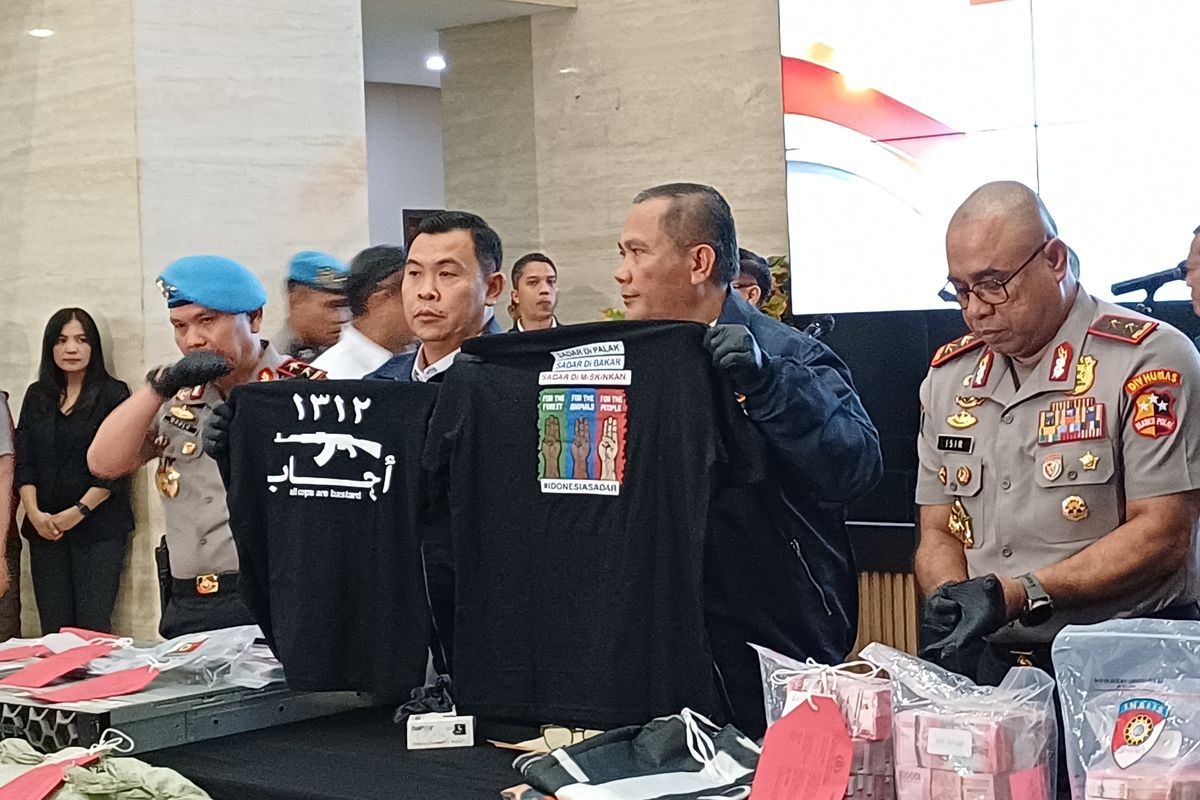
THE CASE of illegal wiretapping has escalated to allegations of treason. An investigation has been launched, resulting in the designation of six suspects.
This was the essence of the explanation provided by the Chief of Criminal Investigation Agency, Police Commissioner General Asep Safrudin, on November 23, 2026.
In the framework of the case presented, the motive behind Listyo Sigit Prabowo's (LSP) alleged treason is characterized as an attempt to maintain his position as Chief of Police.
From this motive, I interpret and envision the reconstruction of this case. It is not as stated by the Head of the Criminal Investigation Department: tapping, delegitimizing, followed by a decline in public trust.
However, my interpretation is: Tapping. Data is used to threaten and control. The President loses the freedom to make decisions regarding the Chief of Police.
The President is obstructed from exercising his constitutional authority. The suspects want this condition to persist until the President submits.
This construction, to me, is more reasonable for allegations of treason.
Why? Because the initial framework presented by the Head of the Criminal Investigation Department stops at delegitimization. Delegitimization is an external attack. It attacks opinion, rather than capability.
The President can be criticized daily, public trust can decline, but the President can still appoint ministers, still sign presidential decrees, and still replace the Chief of Police. The President may be delegitimized, but not obstructed.
The framework I have constructed takes a step further. It does not discuss delegitimization. It speaks about control.
Control is an attack from within. It does not attack the President's opinion. It attacks the President's freedom.
Here is where Article 191 of the Penal Code finds its foundation. Article 191 talks not only about making the President incapable of governing but also about usurping the President's freedom.
What does it mean to usurp the President's freedom? It does not mean imprisoning the President. It does not mean confining the President to the palace.
In constitutional law theory, usurping the President's freedom means depriving the President of his constitutional decision-making independence, free from pressure, threats, or control from other parties.
If the President wants to replace the Chief of Police but hesitates because he knows that all his plans are being monitored, all his communications are known, and that data could be used to retaliate against him, then the President has, in fact, lost his freedom. He may still occupy the presidential seat, but his decisions are controlled.
This is what modern treason doctrine refers to as constitutional capture (Kim Lane Scheppele, 2018): the capture of the constitution from within, without a coup, without tanks, without weaponry. Only with data, threats, and control.
In this framework, motive, intention, and consequences form a coherent sequence. The motive is for power: to maintain the position of the Chief of Police.
The intention is control: to make the President submit and prevent him from replacing the Chief of Police. The consequence is usurpation of freedom: the President is obstructed from exercising his constitutional authority.
This is not present in the construction by the Head of the Criminal Investigation Department. The Head only mentions the motive and method but does not articulate the intention and constitutional implications.
In criminal law, treason is a crime with a specific intent. It must be proven separately, distinct from the motive.
A person can retain power through nefarious means—wiretapping, threatening, spreading rumors—without intending for the President to be incapacitated. They only want the President to be afraid, doubtful, or defer making decisions.