

BI States KOIN Money Changer in Febrie Adriansyah Case Previously Faced 2 Sanctions
-
News
-
2 minutes ago
This article was translated by AI. Read the original article on Kompas.com. See Original
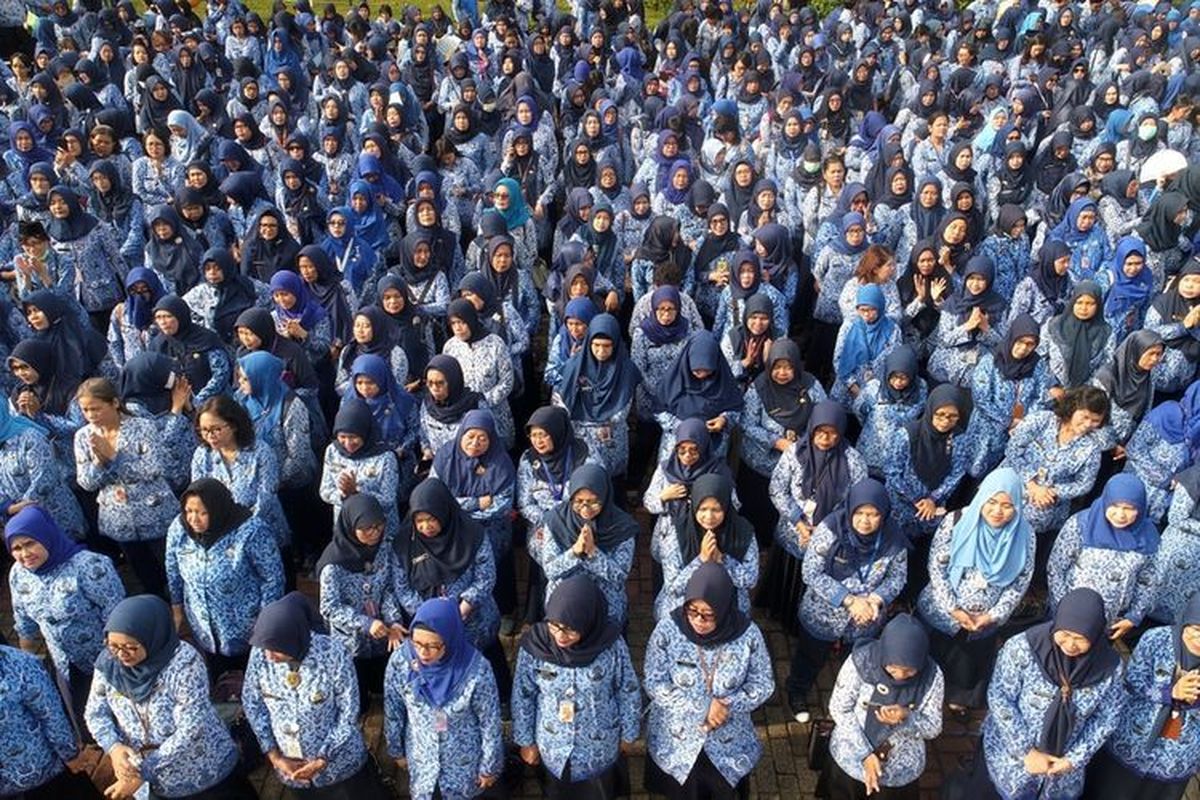
JAKARTA, KOMPAS.com - The National Civil Service Agency (BKN) has streamlined the documentation requirements for the 2026 civil servant candidate (CPNS) registration to facilitate the selection process for participants.
"To simplify the document requirements. Previously in 2024, the documentation was extensive, now we have simplified it. Earlier there was a cover letter and declaration, but now they are combined into a single cover letter," said BKN Head Zudan Arif Fakrulloh during a press conference for the 2026 CPNS selection announcement on Wednesday (25/11/2026).
Under these regulations, applicants need only upload one document that contains both the cover letter and the declaration.
Additionally, BKN has also simplified the educational document requirements.
If previously applicants needed to upload both their diploma and transcript, they now only need to submit their transcript.
"Previously there were both a transcript and a diploma, but now only the transcript needs to be submitted. Why only the transcript? Because it contains the study program and grades, as there are grade requirements for certain positions," he explained.
Other changes include the removal of the obligation to upload a passport photo.
Thus, applicants no longer need to prepare a photo document for the registration process.
BKN has also made it easier regarding the use of stamps and signatures on CPNS 2026 application documents.
"We also provide options for signatures; applicants may use a wet signature, regular signature, or a digital signature," he stated.
The Ministry of Administrative and Bureaucratic Reform (PANRB) has established 154,052 formations for civil servant candidates (CPNS).
"The national selection committee (Panselnas) has agreed to the national priority procurement of CPNS for 2026, totaling 154,052 formations," said Minister of Administrative and Bureaucratic Reform Rini Widyantini.
Rini explained that these formations are divided into two groups: the first includes fast-track best outcome programs and presidential priority programs, while the second includes other national priority sectors.
A total of 118,208 formations have been allocated for the fast-track best outcome programs and presidential priority programs.
Among these are 70,000 formations in forestry, 26,614 for teaching staff and higher education technical personnel, 13,362 for health workers, and 3,612 for teachers and educational staff.
Furthermore, there are 2,007 formations for government internal audits, 1,618 for nutrition fulfillment services, and 986 for cooperative supervision.
Within these additional priority sectors, there are 19,016 formations in legal, human rights, judiciary, and corrections fields.
Still under the category of other national priority sectors, there are also 7,286 formations in statistics and development data, 4,496 for food self-sufficiency and blue economy, and 2,867 for financial acceptance and supervision.
Finally, there are 1,395 formations for the development of the national superior generation.