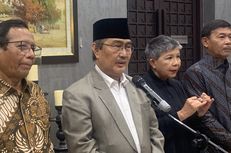

DPR Members to Minister: Educational Policies Keep Changing, Parents Are Confused
-
News
-
Just now
This article was translated by AI. Read the original article on Kompas.com. See Original
Fear, doubt, and delay are not equivalent to incapacity.
To invoke Article 191, the investigator must prove that the suspects desired the President to be incapacitated, not merely that they wished for the President not to replace the Chief of Police.
The key phrase lies in the final sentence of this framework: that they desire the conditions to persist until the President submits.
The phrase "until the President submits" is significant. It indicates a sustained intent, not a fleeting desire.
This shows that this is not merely criticism, nor an oversized intelligence operation. This is a design for control.
The public must understand: this case is not about who the Chief of Police is. This case is about whether the President still has sovereignty over his own decisions.
In Carl Schmitt's (1922) theory of sovereignty, the sovereign is one who can decide in a state of exception.
If the President cannot decide who his Chief of Police is because he is being controlled by his subordinates, then the sovereign is no longer the President. The sovereign is the one who controls the data.
This is what makes this construction qualifying as treason, rather than mere abuse of power.
Abuse of power occurs when an official uses their authority for personal gain. In this construction, treason involves officials using their authority to seize some of the President's sovereignty.
Abuse of power attacks administration. Treason attacks the constitution.
The authority to replace the Chief of Police is the most sensitive constitutional authority because the Chief of Police holds the legitimate monopoly on state violence.
Whoever controls the Chief of Police controls part of the state’s power. If the Chief of Police is retained not because the President wishes it but because the President is too afraid to replace him, then the structure of state power has changed in an unconstitutional manner.
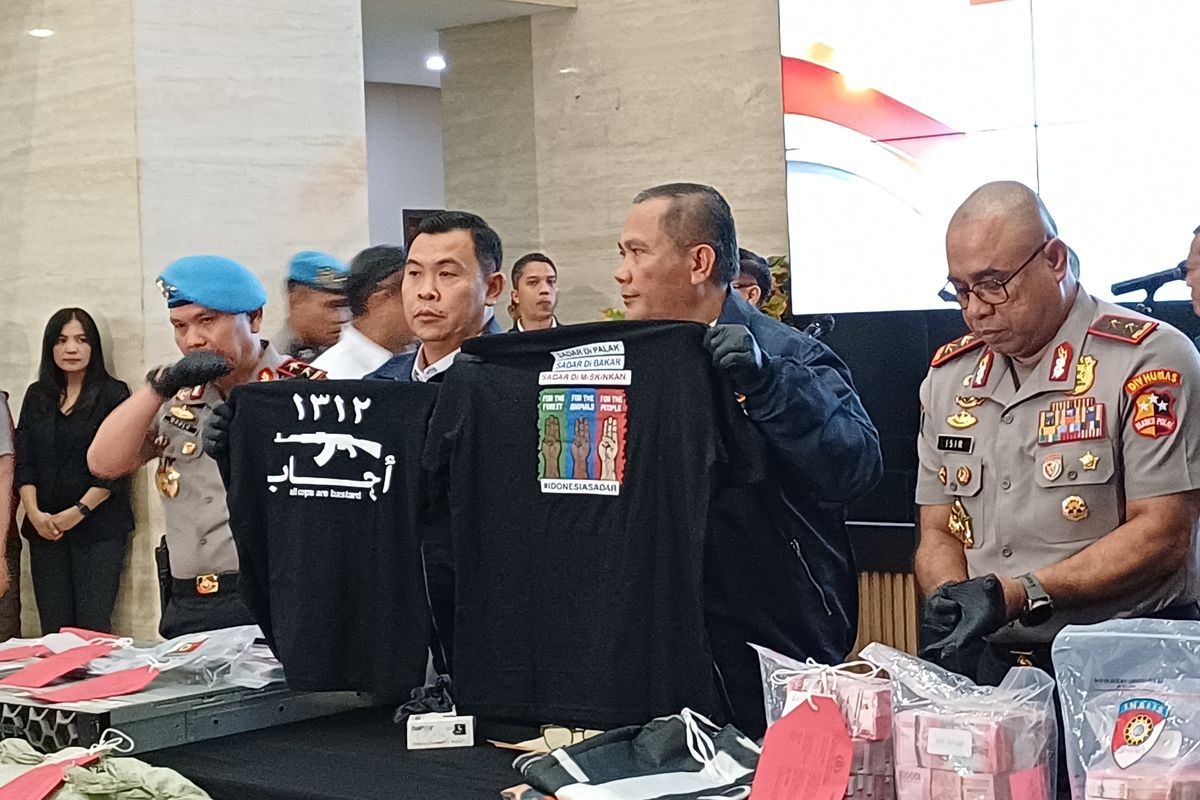
Herein lies the importance of political intelligence experts, a resource lacking among investigators in yesterday's press conference. Investigators only presented criminal law and constitutional law experts. That is not enough.
In the intelligence world, there is a fundamental difference between three concepts: collection (Shermen Kent, 1949), leverage (Peter Gill & Mark Phythian, 2006), and control (Michael Warner, 2009).
Collection involves gathering information to understand what is happening. Leverage means using information to gain an advantage in negotiation. Control involves using information to dictate the opponent's decisions.
The framework by the Head of the Criminal Investigation Department stops at collection and leverage. They wiretap, analyze, and delegitimize.
My constructed framework extends to control. They wiretap, data is used to threaten, the President loses freedom, and submits.
To prove control, investigators must not only show the existence of the wiretapping. They must demonstrate how the data was weaponized.
For example, is there wiretapped data about plans to replace the Chief of Police that was leaked to the media to derail that plan?
Are there any direct or indirect threat messages sourced from the wiretapped data?