
DPR Members to Minister: Educational Policies Keep Changing, Parents Are Confused
-
News
-
Just now
This article was translated by AI. Read the original article on Kompas.com. See Original
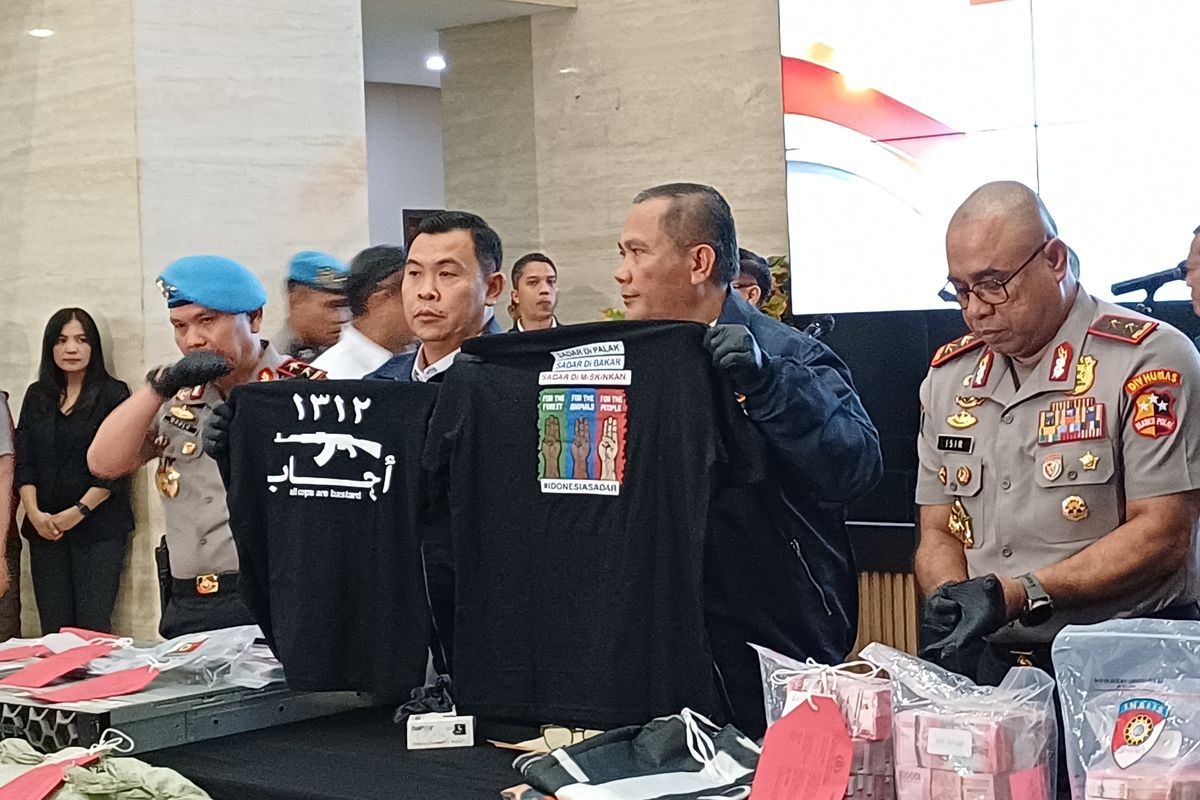
THE CASE of illegal wiretapping has escalated to allegations of treason. An investigation has been launched, resulting in the designation of six suspects.
This was the essence of the explanation provided by the Chief of Criminal Investigation Agency, Police Commissioner General Asep Safrudin, on November 23, 2026.
In the framework of the case presented, the motive behind Listyo Sigit Prabowo's (LSP) alleged treason is characterized as an attempt to maintain his position as Chief of Police.
From this motive, I interpret and envision the reconstruction of this case. It is not as stated by the Head of the Criminal Investigation Department: tapping, delegitimizing, followed by a decline in public trust.
However, my interpretation is: Tapping. Data is used to threaten and control. The President loses the freedom to make decisions regarding the Chief of Police.
The President is obstructed from exercising his constitutional authority. The suspects want this condition to persist until the President submits.
This construction, to me, is more reasonable for allegations of treason.
Why? Because the initial framework presented by the Head of the Criminal Investigation Department stops at delegitimization. Delegitimization is an external attack. It attacks opinion, rather than capability.
The President can be criticized daily, public trust can decline, but the President can still appoint ministers, still sign presidential decrees, and still replace the Chief of Police. The President may be delegitimized, but not obstructed.
The framework I have constructed takes a step further. It does not discuss delegitimization. It speaks about control.
Control is an attack from within. It does not attack the President's opinion. It attacks the President's freedom.
Here is where Article 191 of the Penal Code finds its foundation. Article 191 talks not only about making the President incapable of governing but also about usurping the President's freedom.
What does it mean to usurp the President's freedom? It does not mean imprisoning the President. It does not mean confining the President to the palace.
In constitutional law theory, usurping the President's freedom means depriving the President of his constitutional decision-making independence, free from pressure, threats, or control from other parties.
If the President wants to replace the Chief of Police but hesitates because he knows that all his plans are being monitored, all his communications are known, and that data could be used to retaliate against him, then the President has, in fact, lost his freedom. He may still occupy the presidential seat, but his decisions are controlled.
This is what modern treason doctrine refers to as constitutional capture (Kim Lane Scheppele, 2018): the capture of the constitution from within, without a coup, without tanks, without weaponry. Only with data, threats, and control.
In this framework, motive, intention, and consequences form a coherent sequence. The motive is for power: to maintain the position of the Chief of Police.
The intention is control: to make the President submit and prevent him from replacing the Chief of Police. The consequence is usurpation of freedom: the President is obstructed from exercising his constitutional authority.
This is not present in the construction by the Head of the Criminal Investigation Department. The Head only mentions the motive and method but does not articulate the intention and constitutional implications.
In criminal law, treason is a crime with a specific intent. It must be proven separately, distinct from the motive.
A person can retain power through nefarious means—wiretapping, threatening, spreading rumors—without intending for the President to be incapacitated. They only want the President to be afraid, doubtful, or defer making decisions.
Fear, doubt, and delay are not equivalent to incapacity.
To invoke Article 191, the investigator must prove that the suspects desired the President to be incapacitated, not merely that they wished for the President not to replace the Chief of Police.
The key phrase lies in the final sentence of this framework: that they desire the conditions to persist until the President submits.
The phrase "until the President submits" is significant. It indicates a sustained intent, not a fleeting desire.
This shows that this is not merely criticism, nor an oversized intelligence operation. This is a design for control.
The public must understand: this case is not about who the Chief of Police is. This case is about whether the President still has sovereignty over his own decisions.
In Carl Schmitt's (1922) theory of sovereignty, the sovereign is one who can decide in a state of exception.
If the President cannot decide who his Chief of Police is because he is being controlled by his subordinates, then the sovereign is no longer the President. The sovereign is the one who controls the data.
This is what makes this construction qualifying as treason, rather than mere abuse of power.
Abuse of power occurs when an official uses their authority for personal gain. In this construction, treason involves officials using their authority to seize some of the President's sovereignty.
Abuse of power attacks administration. Treason attacks the constitution.
The authority to replace the Chief of Police is the most sensitive constitutional authority because the Chief of Police holds the legitimate monopoly on state violence.
Whoever controls the Chief of Police controls part of the state’s power. If the Chief of Police is retained not because the President wishes it but because the President is too afraid to replace him, then the structure of state power has changed in an unconstitutional manner.
Herein lies the importance of political intelligence experts, a resource lacking among investigators in yesterday's press conference. Investigators only presented criminal law and constitutional law experts. That is not enough.
In the intelligence world, there is a fundamental difference between three concepts: collection (Shermen Kent, 1949), leverage (Peter Gill & Mark Phythian, 2006), and control (Michael Warner, 2009).
Collection involves gathering information to understand what is happening. Leverage means using information to gain an advantage in negotiation. Control involves using information to dictate the opponent's decisions.
The framework by the Head of the Criminal Investigation Department stops at collection and leverage. They wiretap, analyze, and delegitimize.
My constructed framework extends to control. They wiretap, data is used to threaten, the President loses freedom, and submits.
To prove control, investigators must not only show the existence of the wiretapping. They must demonstrate how the data was weaponized.
For example, is there wiretapped data about plans to replace the Chief of Police that was leaked to the media to derail that plan?
Are there any direct or indirect threat messages sourced from the wiretapped data?
Is there a pattern where every time the President is about to make a decision regarding the Chief of Police, there is a corresponding social media attack that mirrors the content of the wiretap?
Do witnesses exist who heard suspects say the President would not dare to replace him because they have the data?
Without such evidence, control will only be a theory, not a fact.
This is the trap. This construction is strong in theory but demands much heavier proof. Investigators must establish five interlinked chains that cannot be broken.
The first is that the wiretap exists and its target is the President or those close to the President. This has been sufficiently established with 39 devices and LIMS forensic analysis, PLX, and DFS.
The second is that the wiretap data was used to threaten or control. This is the hardest challenge. Data stored on a server is not the same as data used for intimidation.
The third is that the President lost the freedom to make decisions regarding the Chief of Police. Evidence is needed showing that the President intended to replace LSP and then refrained.
Without evidence of the President's initial intent, it cannot be proven that the President was obstructed. How can we know the President was obstructed if we do not understand what decision he intended to make? Investigators need witnesses from within the President's circle or pending presidential decree documentation.
The fourth is that the obstruction has a constitutional character, not merely a political one. It must be proven that what is obstructed is the President's constitutional authority, not simply the President's political comfort.
The fifth is that the suspects want conditions to persist until the President submits. This requires evidence of sustained intent.
For instance, is there an order to continue wiretapping, continue attacking, continue pressuring, even though they already know the President is under pressure?
If any chain is broken, this construction will collapse into mere illegal wiretapping and abuse of authority.
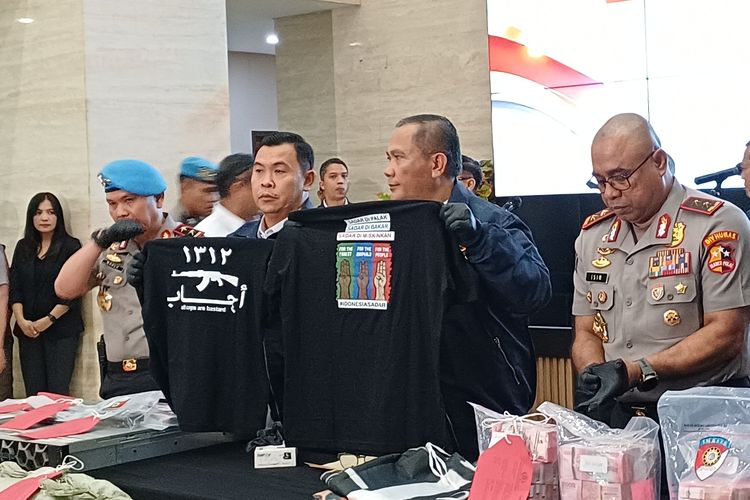
Therefore, investigators must change their proof strategy. Stop showcasing shirts and One Piece flags. That has nothing to do with control.
Not only should they present criminal and constitutional law experts; they need political intelligence experts who can explain the difference between collection, leverage, and control.
They must begin proving threats, not just wiretapping. They must demonstrate that the President was obstructed, not merely that he was delegitimized.
If this can be proven, then it is not just treason. This is modern treason. Treason without weapons, treason with data. Treason that does not remove the President from his seat but undermines the sovereignty of the President over his decisions.
Such treason, in a modern democratic state, is far more dangerous than a military coup.
A coup is visible. Data-based treason is invisible. A coup can be resisted. Data-based treason can make its victims unaware that they are being controlled.
This is why this construction is vital. It shifts the debate from whether there are shirts and demonstrations to whether the President remains free in his decision-making.
And that question is the most fundamental constitutional question.
We should not demand treason based on wiretapping evidence. We must hold accountable for treason based on evidence of treason.