
Komnas HAM and Police Chief Highlight the Military's Presence in Civilian Spaces
-
News
-
Just now
This article was translated by AI. Read the original article on Kompas.com. See Original
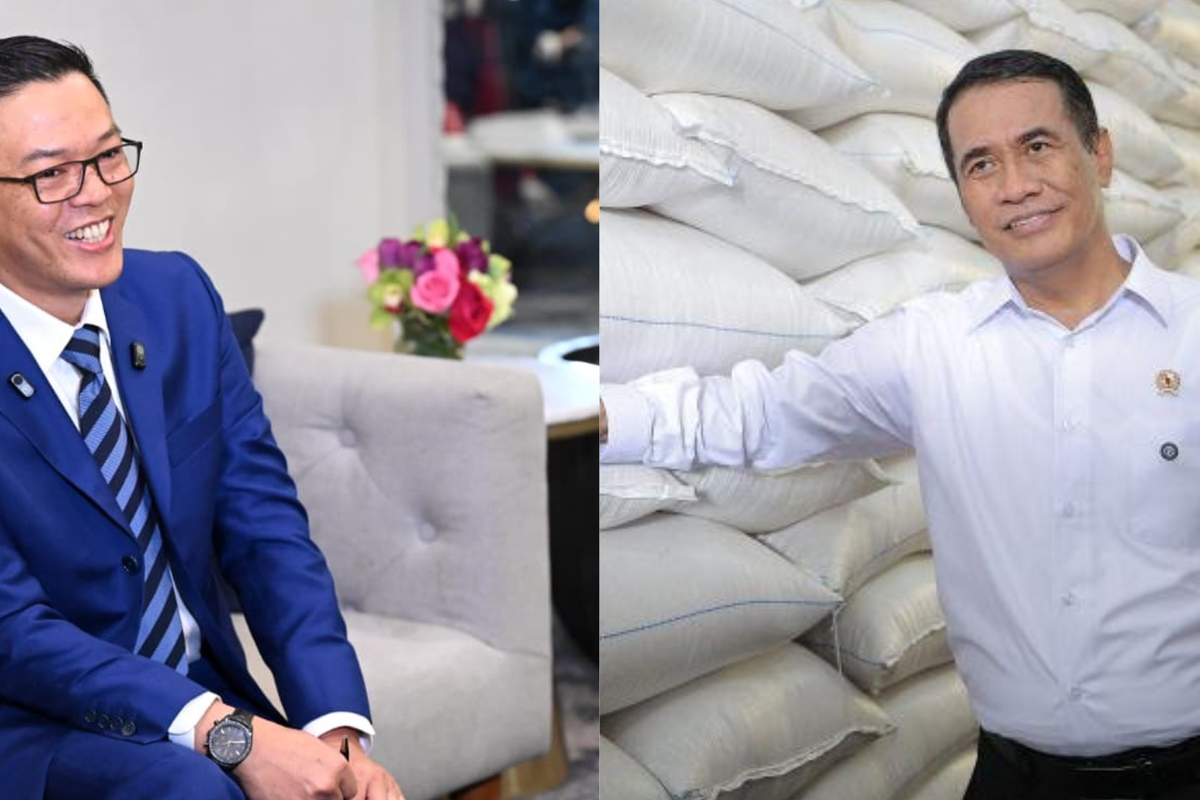
His experience as Minister of Foreign Affairs from 2024 to 2026, and then as Coordinating Minister for Human Development and Culture since October 2026, provides an interesting combination of experience.
He also has a military background and serves as the Secretary-General of the Gerindra Party.
This experience is crucial for understanding geopolitical dynamics, international relations, as well as political and governmental coordination.
In an increasingly uncertain global situation, Indonesia needs leadership capable of interpreting geopolitical changes.
International trade tensions, regional conflicts, great power competition, shifts in global supply chains, and global economic uncertainty present challenges that cannot be faced with a solely domestic economic approach.
Indonesia requires diplomatic skills that not only maintain good relations with other countries but also generate tangible economic benefits.
Diplomacy must successfully open export markets, attract quality investments, strengthen technological cooperation, secure energy and food supplies, and enhance Indonesia's bargaining position on the global stage.
On the flip side, Sugiono's experience as Coordinating Minister for Human Development is also relevant to human development challenges.
Because, economic growth will mean little if not accompanied by improvements in education quality, health, workforce productivity, and community welfare.
However, Sugiono also faces his own challenges. Political and diplomatic experience does not automatically guarantee capacity to manage complex domestic economic issues.
The vice president needs a strong understanding of fiscal issues, investment, employment, industry, poverty, and economic disparity.
He must ensure that the human development agenda does not operate in isolation but is integrated with national economic transformation strategies.
Thus, Sugiono's challenge is to prove that his political and strategic capacity can be translated into the ability to execute development policies that directly impact society.
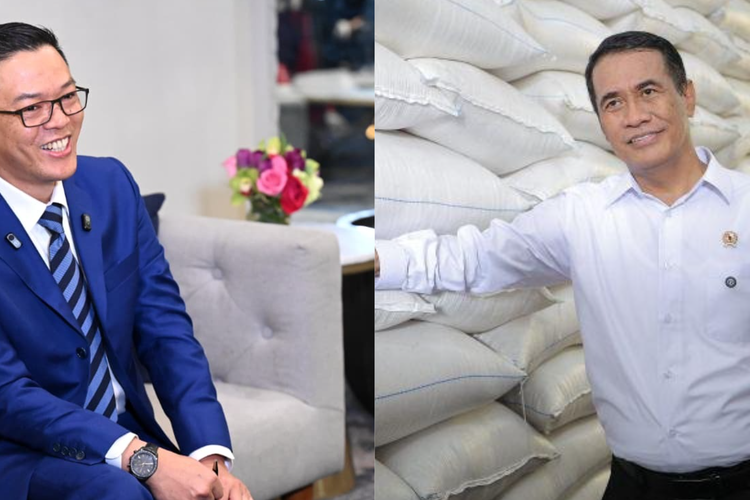
In comparison, Amran and Sugiono actually offer two different leadership approaches.
Amran can be viewed as a representation of leadership focused on the real sector and productivity.
Meanwhile, Sugiono offers political and strategic experience that can strengthen government coordination.
Both have advantages, but also spaces to prove themselves. Therefore, the selection of a vice president should not be based on questions of who is more popular, closer to the power circle, or politically stronger. The main criterion is who can best complement the president's leadership.
In this context, the concept of complementary leadership becomes essential. An ideal vice president is not merely a duplicate of the president but a figure with the capacity to fill the leadership gaps that need strengthening.
Considerations for vice presidential candidates should also be placed within the context of Indonesia's economic challenges.
The Indonesian economy grew 5.47 percent year-on-year in the third quarter of 2026, up from 5.29 percent growth in the previous quarter.
Household consumption grew by 5.04 percent, investment grew by 6.06 percent, while government consumption rose by 8.95 percent.
These figures show that the economy still has good growth momentum.
However, economic growth must not be the sole measure of government success.
The more fundamental issue is how to ensure that growth creates quality jobs, increases productivity, strengthens the manufacturing industry, expands the middle class, and reduces inequality.
Indonesia still faces structural challenges, including suboptimal labor productivity, incomplete industrial transformation, limited creation of quality formal jobs, and dependence on certain primary commodities.