
KPK Temporarily Suspends Detention of Fahd Arafiq to RS Polri Due to Illness
-
News
-
Just now
This article was translated by AI. Read the original article on Kompas.com. See Original
REPLACEMENT of a vice president during a government term is not a routine political event.
It is not merely a change of figure within the power structure, but a moment to reassess the national leadership direction, government effectiveness, and the strategic needs of the nation in facing various upcoming challenges.
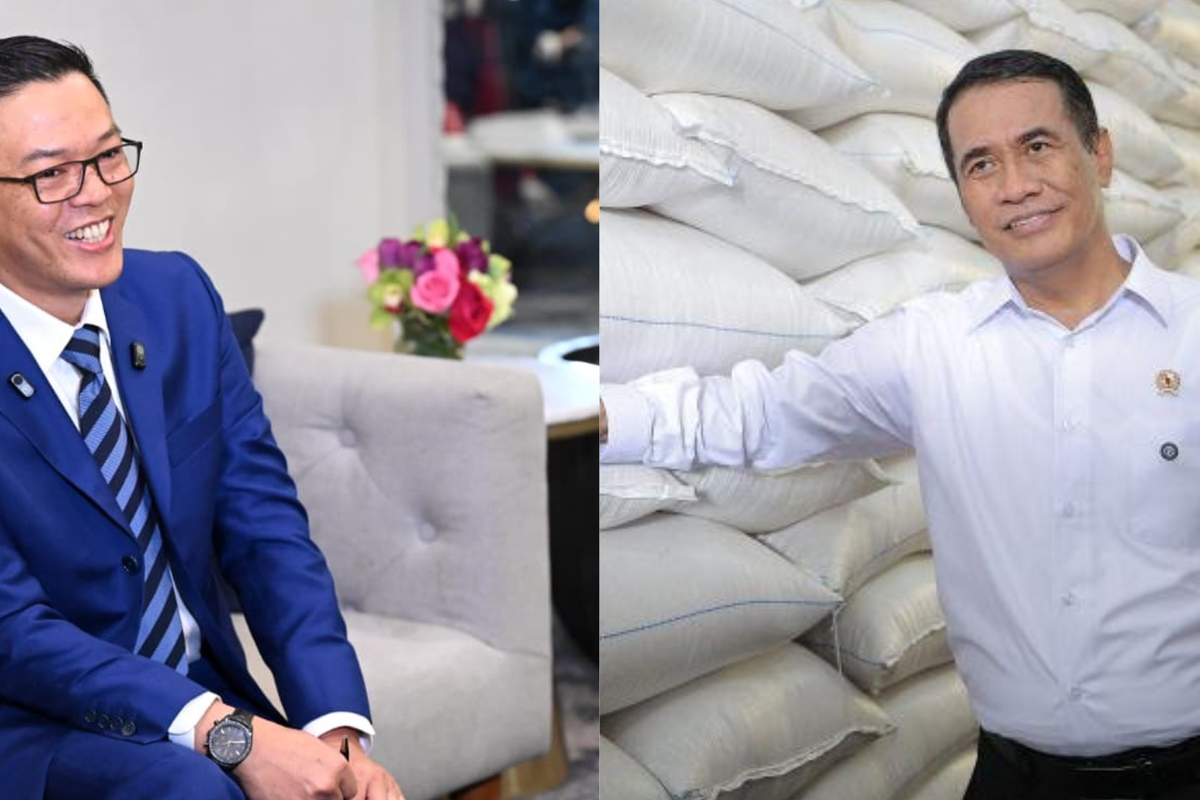
When President Prabowo Subianto proposed two names, Andi Amran Sulaiman and Sugiono, to the People's Consultative Assembly (MPR) as candidates for vice president to replace Gibran Rakabuming Raka on November 23, 2026, the public should pay serious attention.
Both individuals represent different backgrounds, experiences, and leadership characteristics.
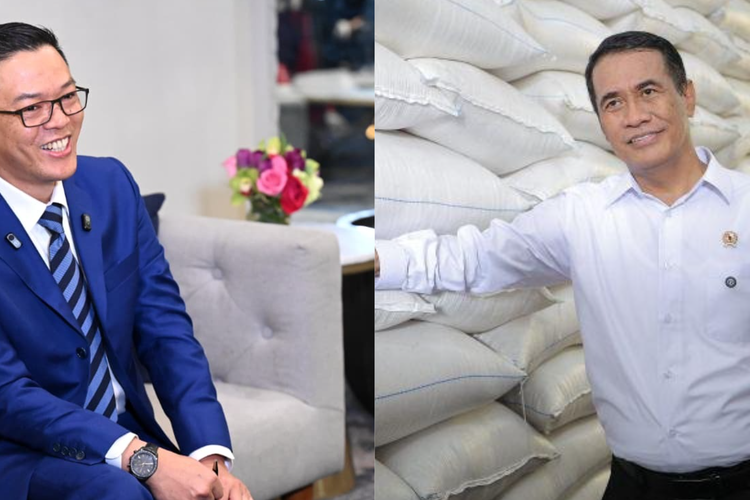
Amran is known as a technocrat and businessman with extensive experience in agriculture and food sectors.
On the other hand, Sugiono is a political figure with experience in governance, defense, diplomacy, and party leadership.
Both possess political capital and capacity that should be considered. However, the fundamental question is not just who is closer to President Prabowo, but who is most capable of adding value to the government and addressing the nation's issues.
President Prabowo stated that his considerations for proposing both names are based on their achievements, dedication, loyalty to the state, and confidence that both can perform their duties well.
This consideration is certainly important. However, for the vice presidential position, loyalty alone is not enough.
Indonesia needs a vice president who not only acts as a political companion to the president but also drives policy, connects various institutions, and represents national leadership.
The name Andi Amran Sulaiman is compelling due to his relatively different leadership character compared to most national political figures.
He is not merely a product of political party cadre training; instead, he grew from the business world and has direct experience managing productive sectors.
His experience as Minister of Agriculture during several government periods has given him a deep understanding of food, agriculture, supply chains, and farmer welfare issues.
In the context of Prabowo's administration, this experience has strategic relevance. One of the main agendas of the government is to achieve food self-sufficiency as part of national resilience.
Food is no longer just an agricultural production issue; it concerns economic stability, inflation control, poverty reduction, and national sovereignty.
Data from the Central Statistics Agency indicates that rice production for food consumption in 2025 reached 34.69 million tons, an increase of 13.29 percent compared to 2024's production of 30.62 million tons.
Meanwhile, government rice reserves reached 4.61 million tons as of September 19, 2026. This figure indicates significant progress in strengthening national food security.
This achievement certainly serves as positive capital for Amran. However, we must also be cautious not to oversimplify the success of the food sector as the achievement of one individual alone.
Agricultural production results from the collective efforts of farmers, extension workers, local governments, ministries, food agencies, budget support, infrastructure, and climatic conditions.
This presents a challenge for Amran if he is elected as vice president. He must shift from sectoral leadership to broader national leadership.
The vice president must not only understand food issues. He must be capable of coordinating cross-sector policies, ranging from agriculture, industry, trade, investment, education, health, to poverty alleviation.
Moreover, food issues themselves cannot simply be resolved by increasing production.
Indonesia still faces distribution challenges, price disparities between regions, farmers’ limited access to technology, dependence on certain agricultural inputs, and the weak bargaining position of farmers in the supply chain.
Amran must prove that his well-known leadership approach in the agriculture sector can be transformed into the capability to orchestrate national development.
Unlike Amran, Sugiono represents a leadership character more aligned with politics, diplomacy, defense, and governmental strategy.
His experience as Minister of Foreign Affairs from 2024 to 2026, and then as Coordinating Minister for Human Development and Culture since October 2026, provides an interesting combination of experience.
He also has a military background and serves as the Secretary-General of the Gerindra Party.
This experience is crucial for understanding geopolitical dynamics, international relations, as well as political and governmental coordination.
In an increasingly uncertain global situation, Indonesia needs leadership capable of interpreting geopolitical changes.
International trade tensions, regional conflicts, great power competition, shifts in global supply chains, and global economic uncertainty present challenges that cannot be faced with a solely domestic economic approach.
Indonesia requires diplomatic skills that not only maintain good relations with other countries but also generate tangible economic benefits.
Diplomacy must successfully open export markets, attract quality investments, strengthen technological cooperation, secure energy and food supplies, and enhance Indonesia's bargaining position on the global stage.
On the flip side, Sugiono's experience as Coordinating Minister for Human Development is also relevant to human development challenges.
Because, economic growth will mean little if not accompanied by improvements in education quality, health, workforce productivity, and community welfare.
However, Sugiono also faces his own challenges. Political and diplomatic experience does not automatically guarantee capacity to manage complex domestic economic issues.
The vice president needs a strong understanding of fiscal issues, investment, employment, industry, poverty, and economic disparity.
He must ensure that the human development agenda does not operate in isolation but is integrated with national economic transformation strategies.
Thus, Sugiono's challenge is to prove that his political and strategic capacity can be translated into the ability to execute development policies that directly impact society.
In comparison, Amran and Sugiono actually offer two different leadership approaches.
Amran can be viewed as a representation of leadership focused on the real sector and productivity.
Meanwhile, Sugiono offers political and strategic experience that can strengthen government coordination.
Both have advantages, but also spaces to prove themselves. Therefore, the selection of a vice president should not be based on questions of who is more popular, closer to the power circle, or politically stronger. The main criterion is who can best complement the president's leadership.
In this context, the concept of complementary leadership becomes essential. An ideal vice president is not merely a duplicate of the president but a figure with the capacity to fill the leadership gaps that need strengthening.
Considerations for vice presidential candidates should also be placed within the context of Indonesia's economic challenges.
The Indonesian economy grew 5.47 percent year-on-year in the third quarter of 2026, up from 5.29 percent growth in the previous quarter.
Household consumption grew by 5.04 percent, investment grew by 6.06 percent, while government consumption rose by 8.95 percent.
These figures show that the economy still has good growth momentum.
However, economic growth must not be the sole measure of government success.
The more fundamental issue is how to ensure that growth creates quality jobs, increases productivity, strengthens the manufacturing industry, expands the middle class, and reduces inequality.
Indonesia still faces structural challenges, including suboptimal labor productivity, incomplete industrial transformation, limited creation of quality formal jobs, and dependence on certain primary commodities.
On top of that, there are fiscal challenges that prompt the government to be increasingly selective in prioritizing expenditures.
Large programs like Free Nutritious Meals, infrastructure development, strengthening food security, and various social protection initiatives must be managed based on principles of effectiveness, efficiency, transparency, and accountability.
This is where the vice president's role becomes critical. He must ensure that priority programs not only run but also yield measurable economic and social impacts.
An economic growth rate of 5.47 percent should be a foundation for pursuing structural transformation, not an excuse for complacency.
The vice president needed is one who can bridge political interests and economic development needs.
He should connect government policies with the business world, higher education institutions, local governments, civil society, and the most vulnerable community groups.
A recurring issue in Indonesia's state administration practice is the vice president's position, which has not always had substantive and measurable work space.
Constitutionally, the president holds governmental power, while the vice president assists the president in performing their duties.
However, in practice, the effectiveness of the vice president's role is greatly determined by task distribution, the president's trust, and the ability to build inter-ministerial and institutional coordination. Therefore, whoever is eventually elected must receive a clear work mandate.
The vice president should not be merely a ceremonial companion at state events, a meeting attendee, or representing the president at certain activities. He must have measurable substantive responsibilities.
At least there are three strategic agendas that could provide room for contribution from the vice president.
First, to oversee the transformation of the national economy. The vice president must ensure that the agendas of downstreaming, industrialization, MSME strengthening, digital economy, and job creation run in an integrated manner.
Second, to strengthen human resource development. Education, health, poverty reduction, family quality enhancement, and increased productivity must be priorities that are inseparable from the economic growth agenda.
Third, to strengthen national resilience. Food, energy, strategic industries, and social stability must be part of the long-term development agenda.
With a clear mandate, the vice president can be a policy mover that enhances governmental effectiveness, not merely an accessory within the power structure.
Ultimately, considering Amran Sulaiman and Sugiono as vice presidential candidates should not be trapped in popularity contests or political speculation about who is the front-runner.
Amran offers experience in managing productive sectors, particularly in agriculture and food security.
Sugiono brings experience in politics, diplomacy, defense, and governmental coordination. Both have capital that can contribute to Prabowo's administration.
However, Indonesia currently needs more than just figures who can maintain the political stability of the government.
Indonesia requires leadership that can accelerate economic transformation, improve the quality of human resources, address inequalities, and ensure that economic growth genuinely benefits the people.
Therefore, the most important question is not who deserves to be the second-in-command but who can make the government work more effectively and bring about greater change.
If Amran is elected, he must bring the spirit of productivity in the food sector into a broader national development agenda.
If Sugiono is elected, he must translate his political and strategic experience into concrete and impactful development leadership.
In the end, the vice presidency is not a political gift, nor merely a symbol of loyalty to the president. It is a constitutional mandate that demands capacity, integrity, and the courage to shoulder responsibility.
Indonesia is not looking for a vice president just to accompany the president. Indonesia needs a vice president who can strengthen the president, drive the government, and ensure that power truly works for the welfare of the people.