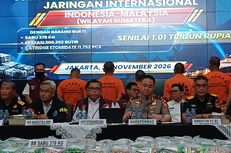

Cafe De'Clan in Febrie Case Said to Have Turnover of Rp 300 Million Per Month, but Not Profitable
-
News
-
4 minutes ago
This article was translated by AI. Read the original article on Kompas.com. See Original
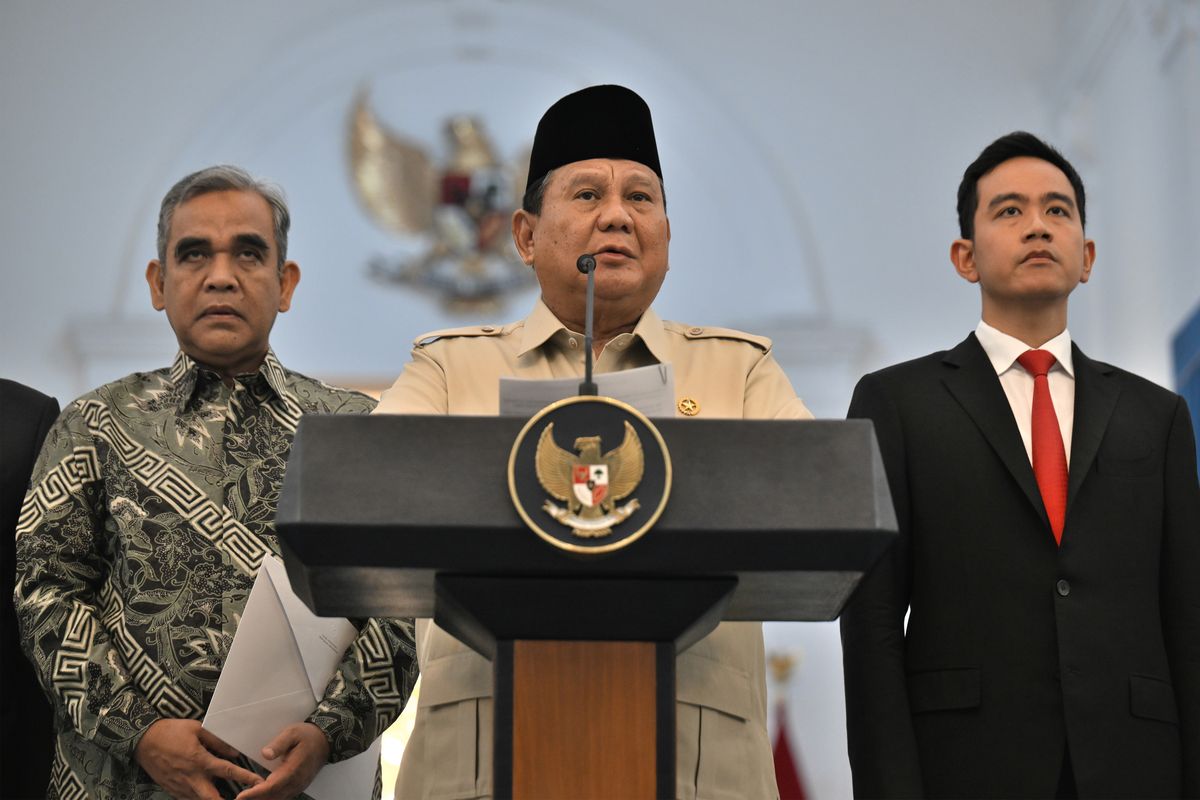
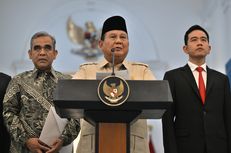
The two names proposed by President Prabowo to the MPR should reflect objective considerations, not simply the representation of party or specific group interests.
There are at least several substantive criteria that need attention. First, moral integrity and a track record in public life.
Second, understanding of the constitution and the ability to uphold the principles of the rule of law. Third, leadership capacity and experience in governance.
Fourth, the ability to coordinate with the president and all state institutions. Fifth, commitment to democracy, social justice, and national interest.
These criteria are important because the vice president is not merely a complement to the government structure but holds a constitutional mandate that can assume presidential functions should circumstances dictate, as outlined in Article 8, paragraph (1) of the 1945 Constitution.
Political Transition for Public Interests
The issue of vice presidential succession must also be placed within the broader framework of reflecting on Indonesia's democratic future.
The 1998 Reformation opened broader democratic space, strengthened people's sovereignty, and built mechanisms for power limitation.
However, our democratic journey still faces issues of political pragmatism, transactional politics, weak leadership cadre development, and the tendency towards the personalization of power.
The resignation of Gibran teaches us that the institutionalization of democracy cannot rely on figures or short-term political agreements.
The state must have strong mechanisms to ensure governance continuity while maintaining accountability of power.
Democracy should not only be measured by the success of conducting elections. It must also be assessed by the ability of state institutions to resolve political issues through legal and constitutional mechanisms.
In this context, the process of filling the vice-presidential position tests whether we have truly moved from procedural democracy to substantive democracy.
Therefore, transparency is crucial. The president needs to explain the substantive considerations in proposing two candidates.
The MPR must execute its authority responsibly, transparently, and not merely ratify political agreements that have been established beforehand.
The public also has the right to know the capacities, track records, and commitments of both candidates toward the national development agenda.
Additionally, this process must take into account the provisions of Article 46 of Law No. 17 of 2014 regarding the MPR, DPR, DPD, and DPRD as amended, which regulate the mechanism for vice presidential elections in the event of a vacancy.
Compliance with procedures and deadlines is not just an administrative matter but part of legal certainty and constitutional legitimacy.
Furthermore, this event should serve as a basis for evaluating the design of the presidential system in Indonesia.