
In the TPPU Trial of Febrie, Norman Herin's Account Was Allegedly Used to Channel Money for Cafe De'Clan
-
News
-
8 minutes ago
This article was translated by AI. Read the original article on Kompas.com. See Original
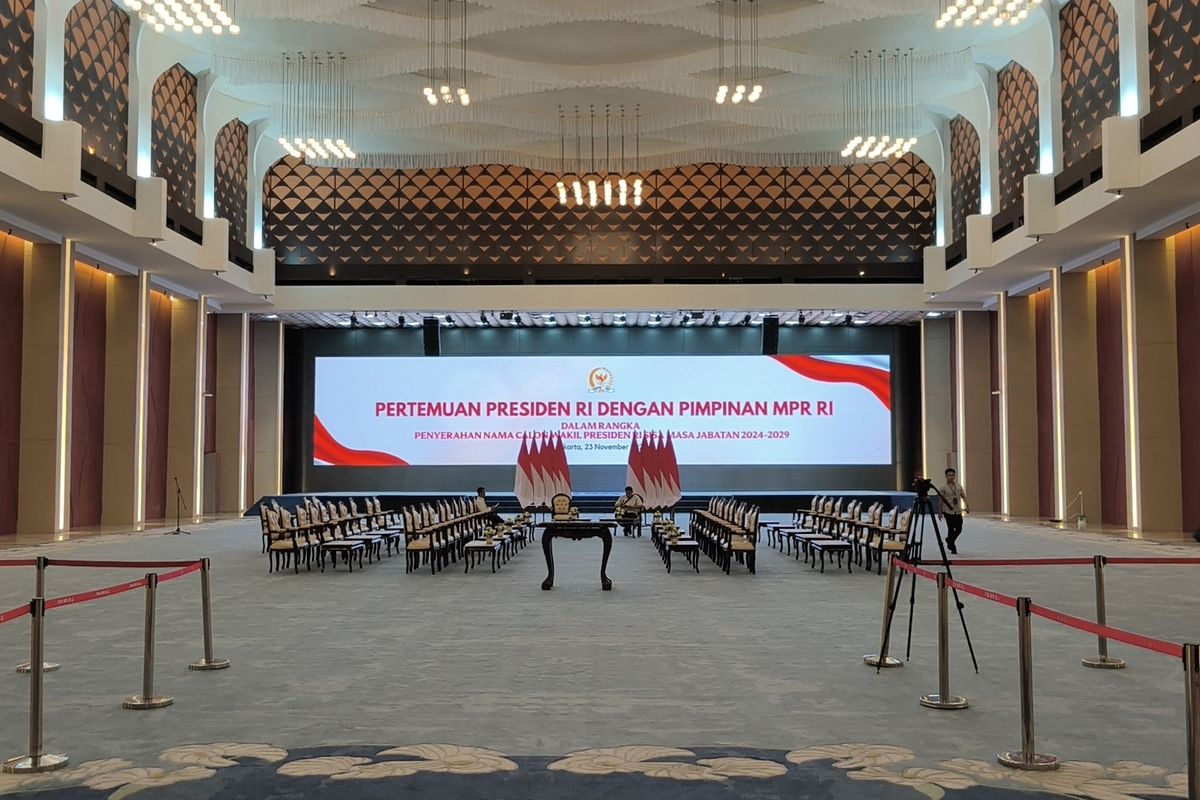
THERE is something intriguing about the public discussion regarding the appointment of a vice president following the resignation of Gibran Rakabuming.
The names that are circulating predominantly belong to the political party elite and government officials.
So far, there appears to be no significant open competition to present alternatives from community leaders, religious figures, academics, independent professionals, or nonpartisan statesmen.
The conversation seems to be moving in a narrow corridor. We hear names from the circles of power, but we hardly hear any serious discussions regarding figures from outside those circles.
It seems as if national leadership can only be envisioned as emerging from party meeting rooms, government offices, or the limited circles of power holders.
Why is that?
One explanation worth examining is that the vice president's position is more treated as a political consolidation tool than as a search space for national figures.
In presidential and vice-presidential elections, political parties typically consider electoral combinations.
Candidate pairs are formed by calculating regional balance, social bases, identity, political networks, party strength, and the ability to consolidate voter support.
In this context, the selection of leadership pairs cannot be separated from political calculations and winning strategies.
However, the appointment of a vice president mid-term has a different character. The process no longer takes place through electoral competition for popular votes.
The constitution dictates that the president proposes two candidates to the MPR to be elected as vice president.
Thus, the focus of the process shifts from competing for electoral mandates to selection and negotiation among power elites.
In such a situation, political alignment, proximity to the president, government stability, and coalition party interests may become the primary considerations.
Meanwhile, professional capacity, state experience, social legitimacy, and the ability to represent society's diversity may not receive equal attention.
This is the crux of the problem. It’s not just that the candidate pool appears limited, but that we are witnessing the narrowing of imagination about who is eligible to lead the nation.
Politics is never completely free from interests. In a democracy, compromise and negotiation are integral to the formation of government.
There is nothing wrong with political considerations as long as everything is directed toward the country's interests.
However, there is a difference between politics as a means of managing the state and the state as a means of managing political interests.