
In the TPPU Trial of Febrie, Norman Herin's Account Was Allegedly Used to Channel Money for Cafe De'Clan
-
News
-
14 minutes ago
This article was translated by AI. Read the original article on Kompas.com. See Original
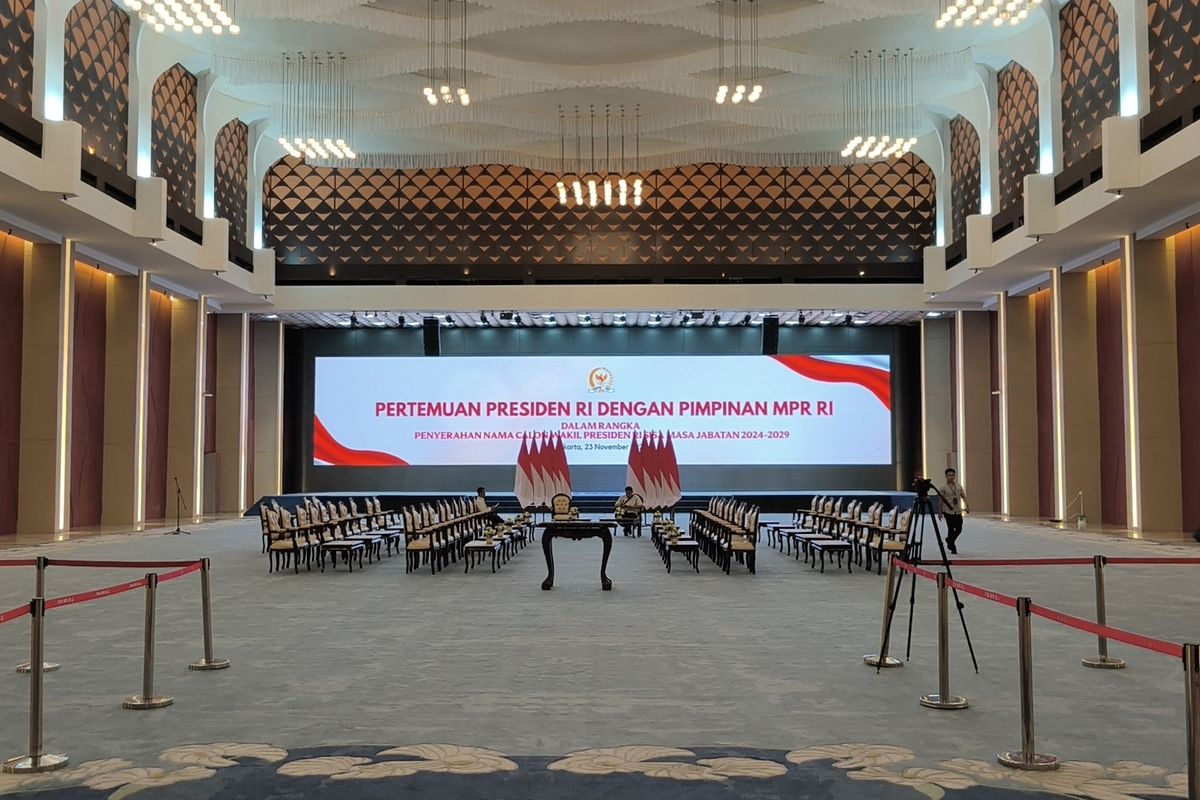
THERE is something intriguing about the public discussion regarding the appointment of a vice president following the resignation of Gibran Rakabuming.
The names that are circulating predominantly belong to the political party elite and government officials.
So far, there appears to be no significant open competition to present alternatives from community leaders, religious figures, academics, independent professionals, or nonpartisan statesmen.
The conversation seems to be moving in a narrow corridor. We hear names from the circles of power, but we hardly hear any serious discussions regarding figures from outside those circles.
It seems as if national leadership can only be envisioned as emerging from party meeting rooms, government offices, or the limited circles of power holders.
Why is that?
One explanation worth examining is that the vice president's position is more treated as a political consolidation tool than as a search space for national figures.
In presidential and vice-presidential elections, political parties typically consider electoral combinations.
Candidate pairs are formed by calculating regional balance, social bases, identity, political networks, party strength, and the ability to consolidate voter support.
In this context, the selection of leadership pairs cannot be separated from political calculations and winning strategies.
However, the appointment of a vice president mid-term has a different character. The process no longer takes place through electoral competition for popular votes.
The constitution dictates that the president proposes two candidates to the MPR to be elected as vice president.
Thus, the focus of the process shifts from competing for electoral mandates to selection and negotiation among power elites.
In such a situation, political alignment, proximity to the president, government stability, and coalition party interests may become the primary considerations.
Meanwhile, professional capacity, state experience, social legitimacy, and the ability to represent society's diversity may not receive equal attention.
This is the crux of the problem. It’s not just that the candidate pool appears limited, but that we are witnessing the narrowing of imagination about who is eligible to lead the nation.
Politics is never completely free from interests. In a democracy, compromise and negotiation are integral to the formation of government.
There is nothing wrong with political considerations as long as everything is directed toward the country's interests.
However, there is a difference between politics as a means of managing the state and the state as a means of managing political interests.
This difference is fundamental. Politics should serve as an instrument to achieve state objectives. Conversely, when state positions are primarily used to maintain elite balance, the state risks becoming a tool for political interests themselves.
The vice presidential position should not be understood merely as an additional seat in the executive structure. It is a constitutional office with responsibilities towards government continuity, assisting the president, and taking over presidential duties as stipulated by the constitution.
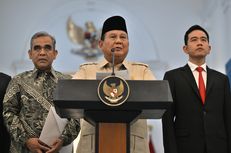
Therefore, the question of who is deserving of this position cannot be simply answered by who is closest to President Prabowo Subianto, safest for the coalition, or most beneficial for the power configuration.
A more pertinent question is: who has the capacity to strengthen national leadership?
Political compromise may yield short-term stability. However, stability built solely on proximity and distribution of influence does not necessarily produce a strong government.
The state requires more than mere loyalty. It needs competence, integrity, and the courage to voice differing views.
Political parties certainly play an important role in democracy. Cadre development and leadership recruitment are among their primary functions. However, political parties are not the only birthplace of national leadership capacity.
There are religious leaders who possess social legitimacy and the ability to build moral bridges. There are academics who are adept at deeply analyzing issues.
There are professionals with experience in managing large organizations. There are also community leaders and statesmen who dedicate their lives outside the electoral stage.
They are not automatically better than politicians. An academic title does not guarantee leadership capability.
Religious legitimacy does not inherently equate to governance capability. Similarly, a politician does not lose their eligibility simply because they belong to a party.
The issue is not about opposing party cadres to nonpartisan figures. The question that needs to be asked is whether the process of seeking leaders has provided sufficient space for all sources of capacity.
Democracy ought to expand choices, not narrow them. Political parties may serve as the main door to leadership recruitment, but that door must not become the only path to power.
Another factor to consider is the need for complementary leadership.
The president and vice president indeed work within one government. However, similar political orientations do not have to mean uniformity of experience, expertise, and perspective.
Indonesia faces increasingly complex issues. Global economic pressures, industrial transformation, food and energy security, regional disparities, technological developments, and geopolitical dynamics require broad governmental capacity.
In this context, the ideal vice president should not only be someone trusted by the president, but also someone who brings added strength to the government.
They must possess statecraft skills, managerial competence, integrity, social legitimacy, and the ability to bridge differences.
Political proximity may ease coordination. However, closeness should not substitute for capacity.
The vice president should be a partner capable of strengthening the president, not just a companion who maintains political comfort.
A healthy government requires harmony in objectives, yet still allows for differing views.
For loyalty to the state is sometimes best demonstrated through the courage to remind those in power when decisions made are no longer aligned with public interests.
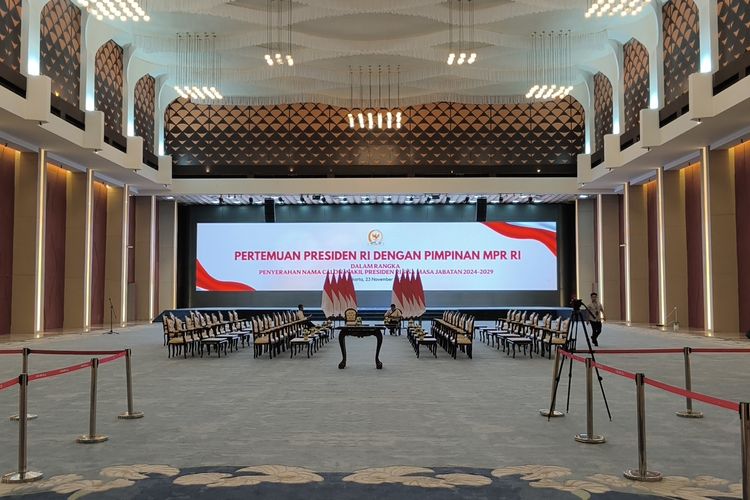
Article 8 paragraph (2) of the 1945 Constitution stipulates that the president proposes two vice presidential candidates to the MPR for selection. This mechanism represents the constitutional prerogative of the president and must be respected.
However, constitutional authority does not mean the process should be closed to public scrutiny. The president has the right to determine the proposed names, but the public still has the right to know the substantive considerations behind those choices.
The MPR also has a responsibility to exercise its selection authority earnestly, not just to endorse previously negotiated political decisions.
Transparency does not reduce presidential power. In fact, a clear explanation regarding the capacity, track record, integrity, and reasons for selecting candidates will strengthen the legitimacy of the process.
In the end, the constitution governs how this position is filled. However, the quality of the individuals who occupy it remains the political responsibility of decision-makers.
The lack of vice presidential candidates should be a moment for reflecting on the quality of our democracy.
Has Indonesia built an open leadership ecosystem or has it become increasingly accustomed to seeing power circulate among the same elite circles?
We do not lack capable individuals. They may not have party machinery, may not be at the center of government, and may not always appear in political news.
However, their absence in elite conversations does not mean they do not have something to offer the state.
We are not looking for a figure who must please everyone. We are looking for someone who can fulfill constitutional responsibilities with capacity and integrity, and understands that the vice president’s position does not belong to a party or coalition, but is a trust of the state.
The measure of success in filling this position cannot only be seen by how neatly the political configuration has been established. The measure is how far those choices strengthen governance and address the nation’s needs.
There is a significant difference between selecting someone to maintain a balance of power and choosing someone to safeguard the nation's future.
If the vice presidential candidacy pool consists only of names derived from the calculations of power circles, perhaps the procedures are still in line with the constitution.
However, we need to ask: has the state chosen from all the best possibilities it has, or only from those most comfortable for power holders?
A nation does not lack leaders simply because their names have yet to enter political conversation. What is more concerning is when our political imagination is no longer able to see them.