
In the TPPU Trial of Febrie, Norman Herin's Account Was Allegedly Used to Channel Money for Cafe De'Clan
-
News
-
14 minutes ago
This article was translated by AI. Read the original article on Kompas.com. See Original
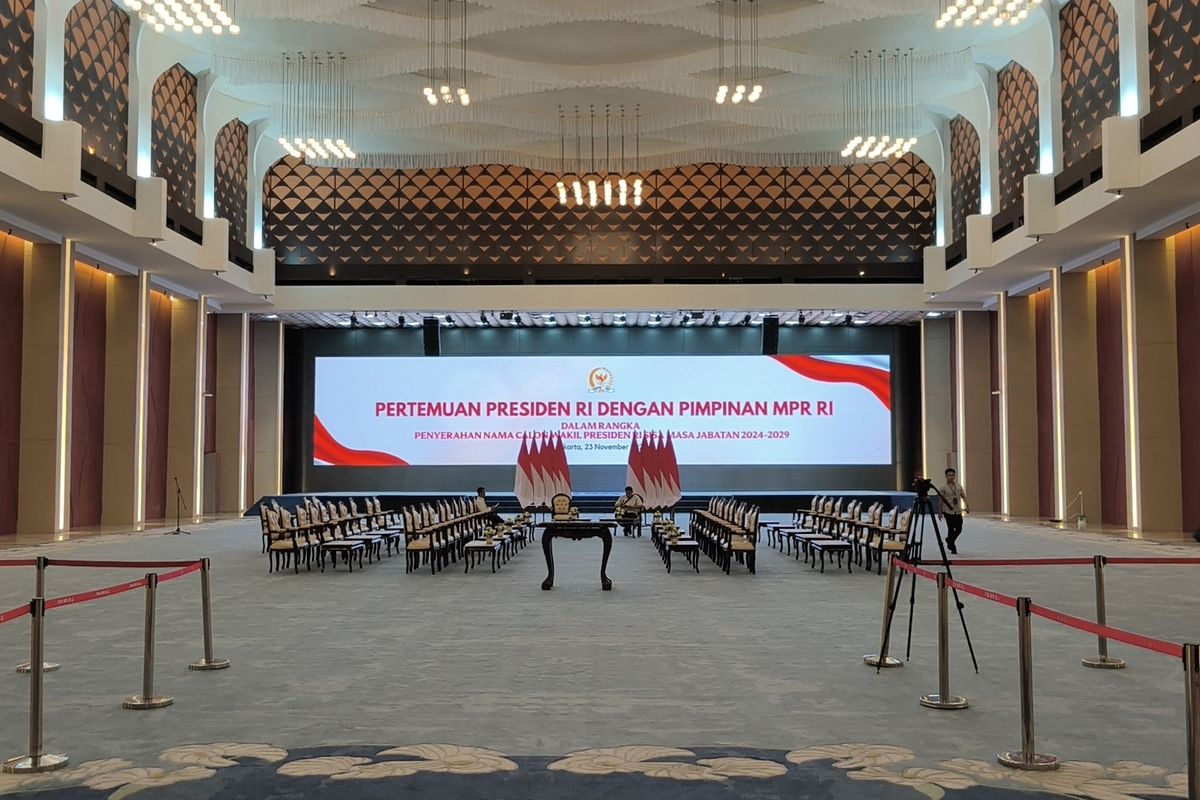
This difference is fundamental. Politics should serve as an instrument to achieve state objectives. Conversely, when state positions are primarily used to maintain elite balance, the state risks becoming a tool for political interests themselves.
The vice presidential position should not be understood merely as an additional seat in the executive structure. It is a constitutional office with responsibilities towards government continuity, assisting the president, and taking over presidential duties as stipulated by the constitution.
Therefore, the question of who is deserving of this position cannot be simply answered by who is closest to President Prabowo Subianto, safest for the coalition, or most beneficial for the power configuration.
A more pertinent question is: who has the capacity to strengthen national leadership?
Political compromise may yield short-term stability. However, stability built solely on proximity and distribution of influence does not necessarily produce a strong government.
The state requires more than mere loyalty. It needs competence, integrity, and the courage to voice differing views.
Political parties certainly play an important role in democracy. Cadre development and leadership recruitment are among their primary functions. However, political parties are not the only birthplace of national leadership capacity.
There are religious leaders who possess social legitimacy and the ability to build moral bridges. There are academics who are adept at deeply analyzing issues.
There are professionals with experience in managing large organizations. There are also community leaders and statesmen who dedicate their lives outside the electoral stage.
They are not automatically better than politicians. An academic title does not guarantee leadership capability.
Religious legitimacy does not inherently equate to governance capability. Similarly, a politician does not lose their eligibility simply because they belong to a party.
The issue is not about opposing party cadres to nonpartisan figures. The question that needs to be asked is whether the process of seeking leaders has provided sufficient space for all sources of capacity.
Democracy ought to expand choices, not narrow them. Political parties may serve as the main door to leadership recruitment, but that door must not become the only path to power.
Another factor to consider is the need for complementary leadership.
The president and vice president indeed work within one government. However, similar political orientations do not have to mean uniformity of experience, expertise, and perspective.
Indonesia faces increasingly complex issues. Global economic pressures, industrial transformation, food and energy security, regional disparities, technological developments, and geopolitical dynamics require broad governmental capacity.
In this context, the ideal vice president should not only be someone trusted by the president, but also someone who brings added strength to the government.
They must possess statecraft skills, managerial competence, integrity, social legitimacy, and the ability to bridge differences.
Political proximity may ease coordination. However, closeness should not substitute for capacity.