
Cafe De'Clan in Febrie Case Said to Have Turnover of Rp 300 Million Per Month, but Not Profitable
-
News
-
4 minutes ago
This article was translated by AI. Read the original article on Kompas.com. See Original
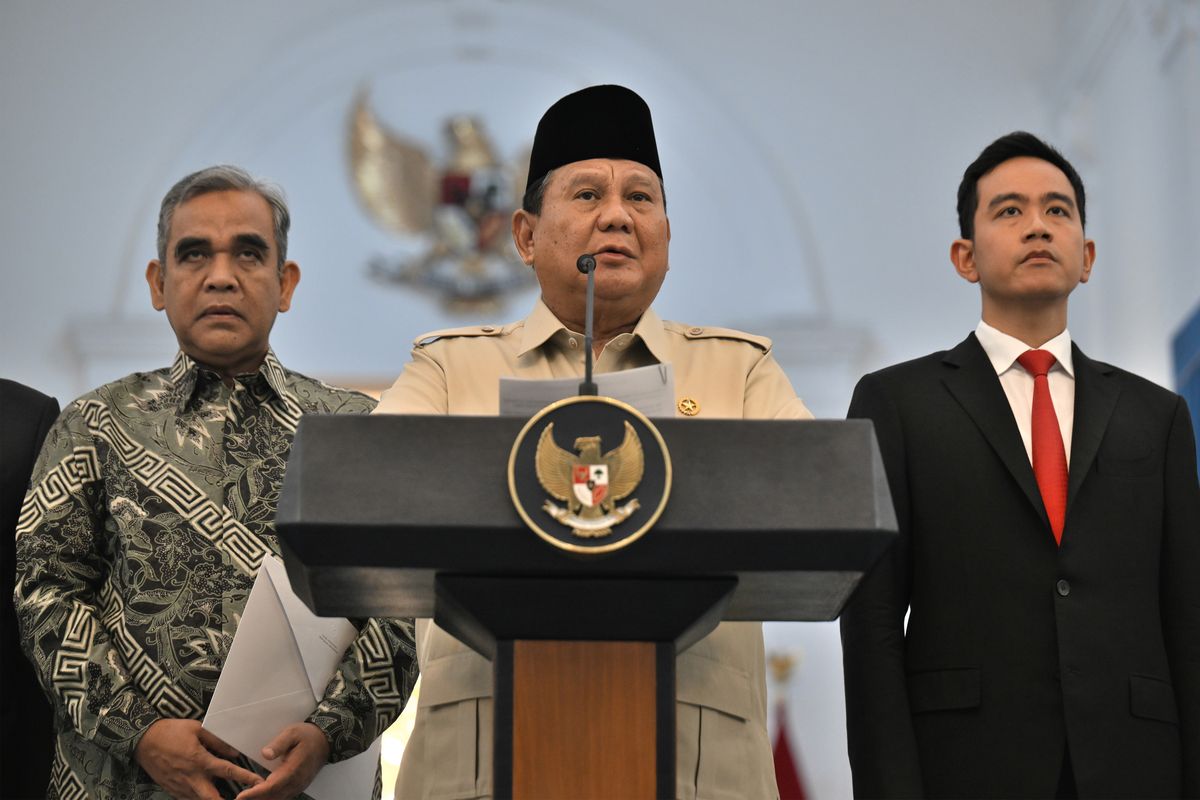
DECISION Gibran Rakabuming Raka's resignation from the position of Vice President of the Republic of Indonesia on November 12, 2026, presents a significant moment in Indonesia's governance journey.
This event is not merely the departure of a public official; it is a test for the consistency of the constitution, the maturity of democracy, and the institutionalization of the presidential system developed since the Reformation of 1998.
For the first time in the era of direct presidential and vice-presidential elections, Indonesia faces the challenge of filling the vice-presidential position during an ongoing government term.
This situation should not only be viewed from the perspective of who will replace Gibran. More importantly, it is about how the state ensures that this succession process occurs based on constitutional, democratic, transparent principles, and in the interest of the nation.
The vice-presidency is not merely a political position filled through power compromises; it is part of the institutional framework of the presidency that holds legitimacy and constitutional responsibility.
In this context, we must revisit the essence of the presidential system in Indonesia. Since the amendment of the 1945 Constitution, the president and vice president have been elected directly by the people as a pair, both receiving a political mandate through the same electoral process.
Consequently, the relationship between the president and vice president cannot be perceived merely as a superior-subordinate relationship; it is a singular unity of national leadership that gains legitimacy from the people.
However, the constitution also anticipates the possibility of a vice-presidential vacancy. Article 8, paragraph (2) of the 1945 Constitution states that if a vice-presidential vacancy occurs, the MPR (People's Consultative Assembly) must convene a session within 60 days to elect a vice president from two candidates proposed by the president.
This provision indicates that the constitution has provided a mechanism for the continuity of government.
The president has the authority to propose two names, while the MPR has the authority to choose one of them.
This means that filling the vice-presidential position is not an absolute power of the president but also not the MPR's prerogative to determine candidates outside the president's proposal. There is a division of authority that must be respected as part of the checks and balances principle.
Herein lies the fundamental issue. The replacement vice president does not receive a mandate through a direct election with the president, unlike the pair that wins the 2024 election.
Instead, they obtain legitimacy through a different constitutional mechanism. Therefore, the process of filling this position must be approached carefully to avoid legitimacy issues and tensions within the presidential system.
One of the biggest challenges in replacing the vice president is the potential strengthening of political calculations among party forces.
In a multiparty system, support for the government is often built through compromises and political negotiations. Coalitions become instruments to maintain governmental stability.
However, stability should not be interpreted as the distribution of positions based solely on electoral interests or the balance of elite power.
We need to avoid a situation where the vice presidential election resembles a political influence distribution rather than a national leadership selection.
Moreover, the vice president has a strategic function in assisting the president in governance, ensuring policy continuity, and representing the president in various state affairs.
This transition should become a momentum to enhance the quality of national leadership recruitment.
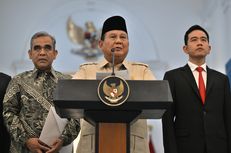
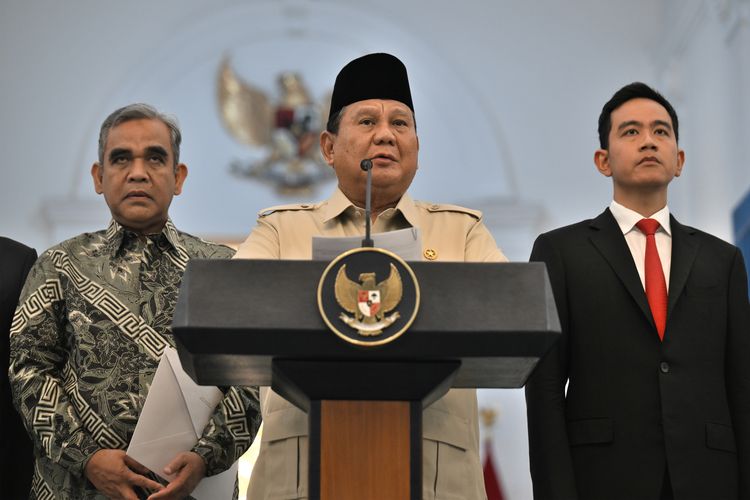
The two names proposed by President Prabowo to the MPR should reflect objective considerations, not simply the representation of party or specific group interests.
There are at least several substantive criteria that need attention. First, moral integrity and a track record in public life.
Second, understanding of the constitution and the ability to uphold the principles of the rule of law. Third, leadership capacity and experience in governance.
Fourth, the ability to coordinate with the president and all state institutions. Fifth, commitment to democracy, social justice, and national interest.
These criteria are important because the vice president is not merely a complement to the government structure but holds a constitutional mandate that can assume presidential functions should circumstances dictate, as outlined in Article 8, paragraph (1) of the 1945 Constitution.
Political Transition for Public Interests
The issue of vice presidential succession must also be placed within the broader framework of reflecting on Indonesia's democratic future.
The 1998 Reformation opened broader democratic space, strengthened people's sovereignty, and built mechanisms for power limitation.
However, our democratic journey still faces issues of political pragmatism, transactional politics, weak leadership cadre development, and the tendency towards the personalization of power.
The resignation of Gibran teaches us that the institutionalization of democracy cannot rely on figures or short-term political agreements.
The state must have strong mechanisms to ensure governance continuity while maintaining accountability of power.
Democracy should not only be measured by the success of conducting elections. It must also be assessed by the ability of state institutions to resolve political issues through legal and constitutional mechanisms.
In this context, the process of filling the vice-presidential position tests whether we have truly moved from procedural democracy to substantive democracy.
Therefore, transparency is crucial. The president needs to explain the substantive considerations in proposing two candidates.
The MPR must execute its authority responsibly, transparently, and not merely ratify political agreements that have been established beforehand.
The public also has the right to know the capacities, track records, and commitments of both candidates toward the national development agenda.
Additionally, this process must take into account the provisions of Article 46 of Law No. 17 of 2014 regarding the MPR, DPR, DPD, and DPRD as amended, which regulate the mechanism for vice presidential elections in the event of a vacancy.
Compliance with procedures and deadlines is not just an administrative matter but part of legal certainty and constitutional legitimacy.
Furthermore, this event should serve as a basis for evaluating the design of the presidential system in Indonesia.
The direct election of the president and vice president indeed provides strong democratic legitimacy. However, when one of the positions becomes vacant, the replacement mechanism via the MPR presents a different legitimacy configuration.
This difference does not imply that our constitutional mechanism is flawed. Rather, it shows that the constitution seeks to maintain governmental continuity without repeating the entire national election process.
However, this experience highlights the importance of clarifying the governance of vice presidential appointment, including aspects of nomination transparency, eligibility standards, selection mechanisms, and political accountability to the public.
In the future, lawmakers and the MPR need to evaluate various technical provisions for filling vice presidential positions to avoid legal uncertainties.
This evaluation must remain within the corridors of the 1945 Constitution and not diminish the constitutional powers of state institutions.
At the same time, political parties must reinforce their functions of cadre development and political education.
National leadership should not arise solely from popularity, familial ties, or the ability to build electoral coalitions. Leadership must be built through capacity, integrity, experience, and a track record of service to the community.
Herein lies the relevance of the agenda to restructure democracy, politics, and law in Indonesia. We need a democracy that can not only produce leaders but also ensure the quality of their leadership.
A politics that does not merely contend for power but also manages public interests. And a law that not only regulates society but also limits and supervises power.
Ultimately, the vice presidential transition must become a momentum to reaffirm that the continuity of the state cannot depend on individual interests, political families, or fleeting coalition configurations.
The interests of the constitution and the people must be prioritized above all these considerations. The president has a significant responsibility to propose two candidates that reflect national leadership needs.
The MPR has a constitutional obligation to choose objectively and responsibly.
Political parties must demonstrate maturity in maintaining governmental stability without compromising democratic principles.
Meanwhile, civil society and the public need to continue monitoring to ensure this process proceeds transparently and accountably.
We are not merely searching for someone to fill the empty vice-presidential seat. We are testing whether Indonesia's presidential system can operate maturely when faced with unusual political issues.
The change of positions is a political event, but maintaining the constitution is a state responsibility.
Therefore, whoever is eventually selected as vice president must understand that this position is not a political prize or a representation of a particular group's victory.
This position is a constitutional mandate to assist the president in governance and serve all the people of Indonesia.
Indonesia needs leadership that transcends elite interests. We must protect not just the continuity of power, but the sustainability of the nation and the future of generations to come.