
DKPP Holds Hearing on Alleged Ethical Violations in Gibran's Candidacy Today
-
News
-
9 minutes ago
This article was translated by AI. Read the original article on Kompas.com. See Original
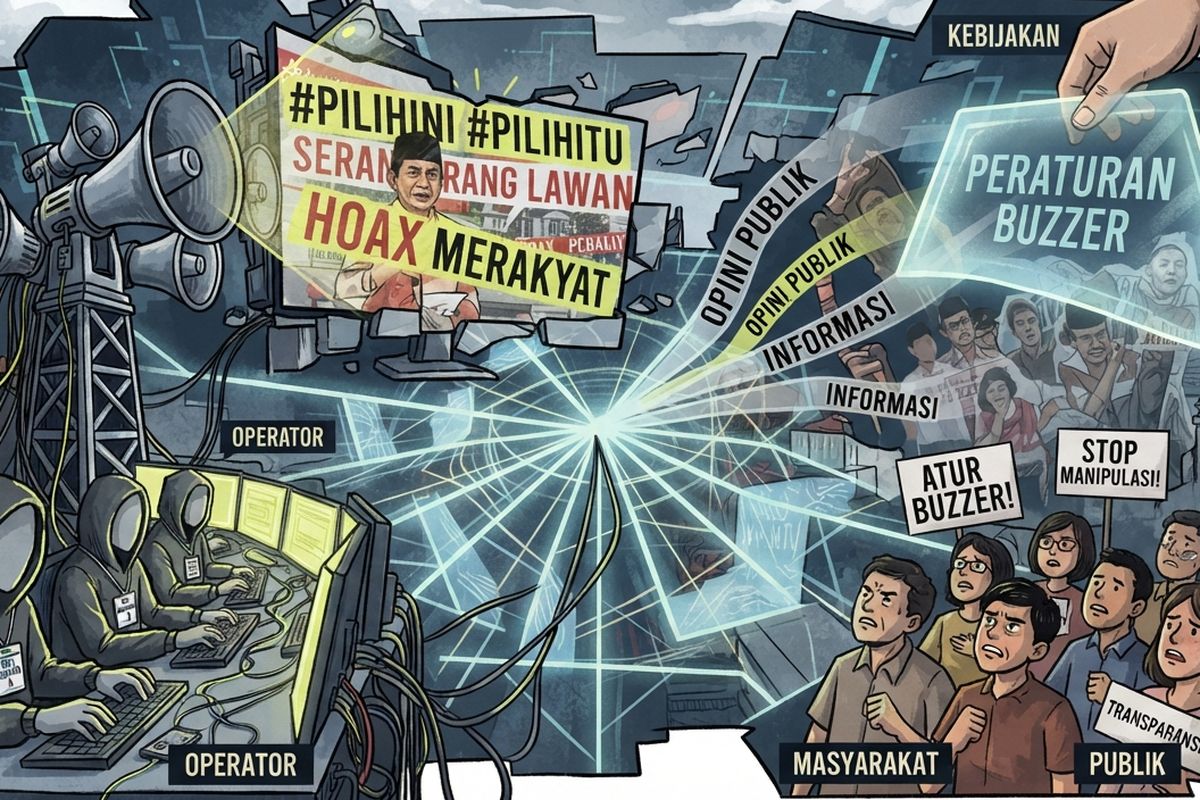
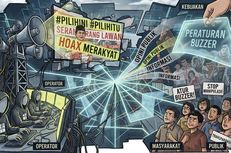
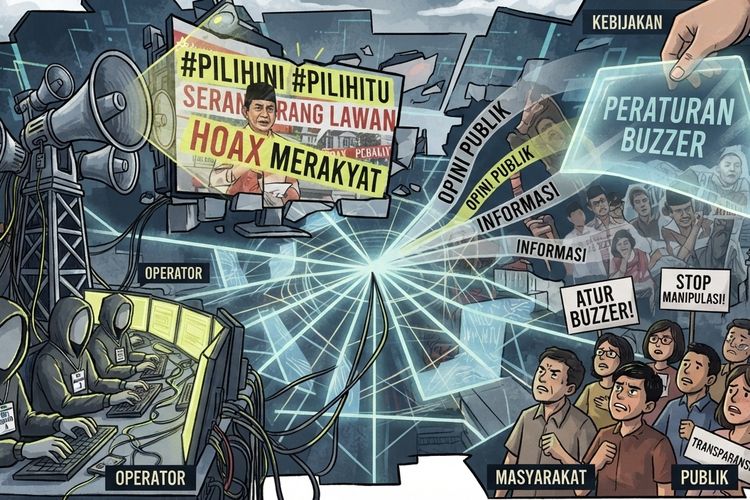
JAKARTA, KOMPAS.com - The presence of political buzzers on social media has come under scrutiny again after PDI Perjuangan (PDI-P) Chairperson Megawati Soekarnoputri proposed that the House of Representatives (DPR) create regulations to manage them.
However, amidst the need to prevent public opinion manipulation, questions arise about the boundaries of regulation to ensure that the freedom of expression is not threatened.
So, to what extent should buzzer activities be regulated, and how can we differentiate legitimate political expression from opinion manipulation?
Deputy Chair of the DPR's Commission I, Dave Laksono, supports the need for regulations to discipline the activities of buzzers that disseminate misleading information, create abnormal perceptions, and attack those with differing views.
"Such buzzer practices need to be taken seriously," Dave told Kompas.com on Friday (20/11/2026).
Dave noted that issues arise when buzzers use fake accounts, bots, misleading information, and secret coordination to influence public opinion and suppress dissenting opinions.
However, he reminded that expressing opinions and political support should be differentiated from manipulating public opinion.
"If rules are needed, they should be clearly defined, unambiguous, and still protect freedom of expression. The responsibility of digital platforms to prevent the use of fake accounts and manipulative activities must also be strengthened," said Dave.
He added that the digital space should remain a healthy arena for exchanging ideas and differing opinions.
Democracy requires support, criticism, and open public oversight.
Therefore, the rules established should be able to prevent information manipulation and digital intimidation without limiting the public's right to express their views.
Political communication observer from Esa Unggul University, M. Jamiluddin Ritonga, sees the presence of buzzers in the digital space as a double-edged sword because it has both positive and negative impacts on the quality of democracy.
"This phenomenon is likened to a double-edged sword with both positive and negative impacts on the quality of democracy," Jamiluddin told Kompas.com on Friday.
On the positive side, buzzers can accelerate information dissemination and help amplify government messages or programs to a wider audience.
In the context of social campaigns or elections, buzzer activities can also increase public participation and awareness of political issues that previously received little attention.
Additionally, the presence of buzzers can introduce opposing viewpoints on an issue, providing the public with alternative narratives amidst the overwhelming flow of information.
However, problems arise when such activities are used to obscure facts, spread disinformation, and create polarization through coordinated attacks against those with differing views.
Jamiluddin also highlighted the practice of public opinion manipulation or astroturfing.