

DKPP Holds Hearing on Alleged Ethical Violations in Gibran's Candidacy Today
-
News
-
19 minutes ago
This article was translated by AI. Read the original article on Kompas.com. See Original
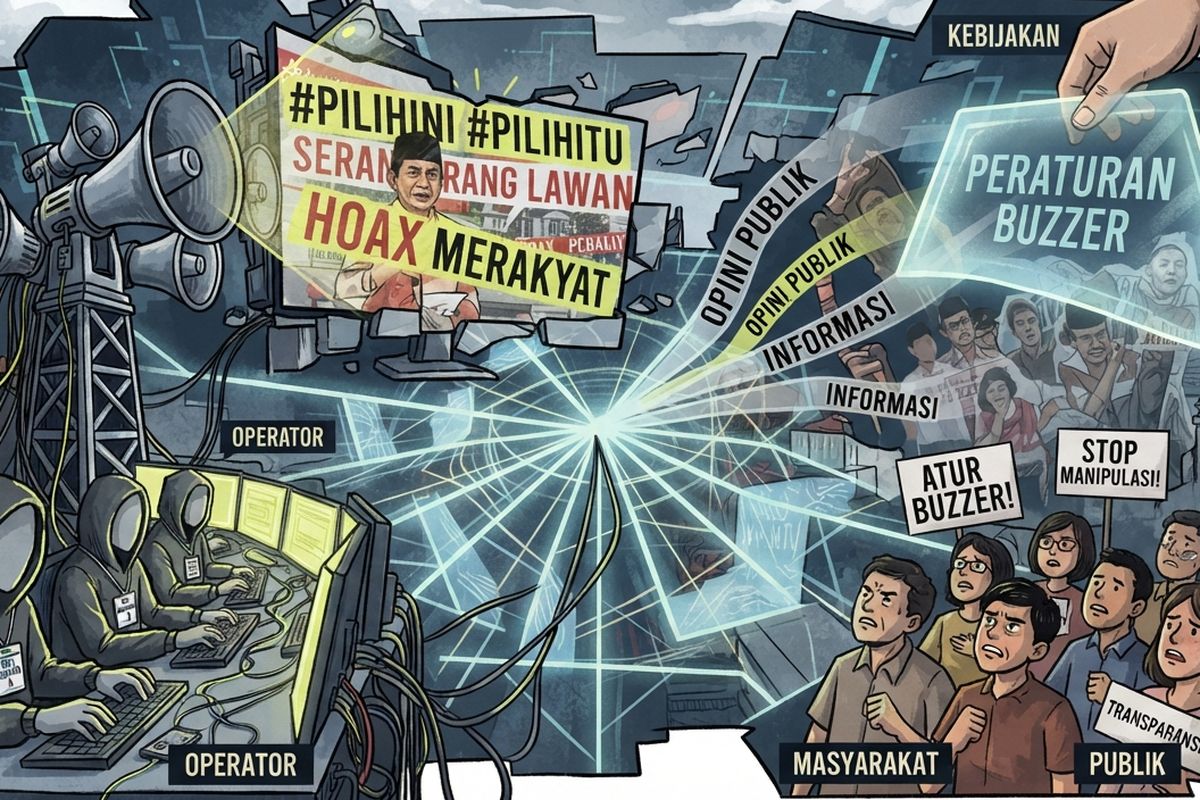
"Thus, regulations should be able to distinguish productive and transparent practices from manipulative ones, without stifling creativity and the digital economy," he continued.
Rulli pointed out that several countries have already implemented regulations on influencer activities and paid content without necessarily creating special laws concerning buzzers.
For instance, France has rules regarding influencer activities, particularly concerning transparency in paid content, promotional responsibility, and bans on promoting certain products.
Meanwhile, the United States, through the Federal Trade Commission (FTC) rules, emphasizes the obligation to disclose commercial relationships in promotional activities.
Similarly, the European Union regulates digital advertising transparency and platform responsibilities through the Digital Services Act (DSA).
According to Rulli, the experiences of these countries can serve as considerations for Indonesia in building regulations that ensure payment cooperation transparency, clarity of political funding sources, consumer protection, and prevention of public opinion manipulation.
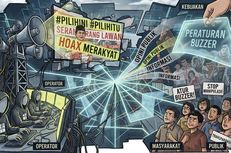
Another issue in regulating buzzers is identifying the boundary between organically grown political participation and activities that are deliberately organized to steer public opinion.
Not all support or criticism of political figures on social media can be classified as buzzer activities.
The public has the right to express support, disagreement, or criticism of public officials' policies and actions.
Ari Junaedi stated that organic political participation and organized activities can be distinguished by the communication patterns exhibited on social media.
He asserted that naturally emerging messages tend to have a natural and human-like delivery style, including the use of language that is not always perfect.
In contrast, organized and paid activities often exhibit overly uniform narratives, perfectly structured, and interaction patterns that do not align with ongoing conversations.
"Conversely, perfectly crafted narratives that tend to display disconnected dialogue can be identified as organized and paid opinions," said Ari.
He referred to structured opinion manipulation aimed at degrading political contenders as false political participation.
However, identifying buzzer activity is not sufficient to rely solely on language style or narrative uniformity.
Coordination patterns, funding sources, the use of fake accounts, and the involvement of sponsors also need attention in identifying opinion manipulation practices.
Rulli believes that transparency regarding funding sources and the producers of political content is a crucial aspect that needs to be regulated.
With this transparency, the public can discern whether a message represents a personal opinion, political support, or is part of a paid collaboration with specific interests.