
DKPP Holds Hearing on Alleged Ethical Violations in Gibran's Candidacy Today
-
News
-
19 minutes ago
This article was translated by AI. Read the original article on Kompas.com. See Original
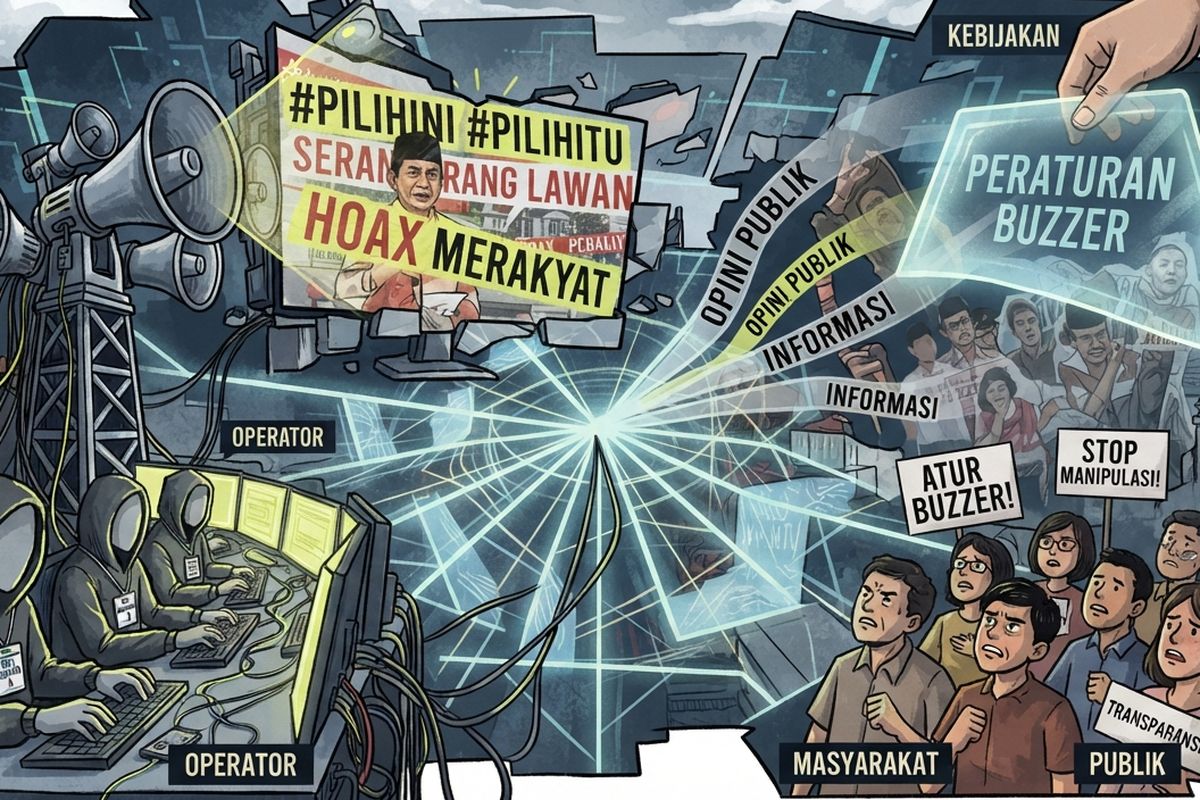
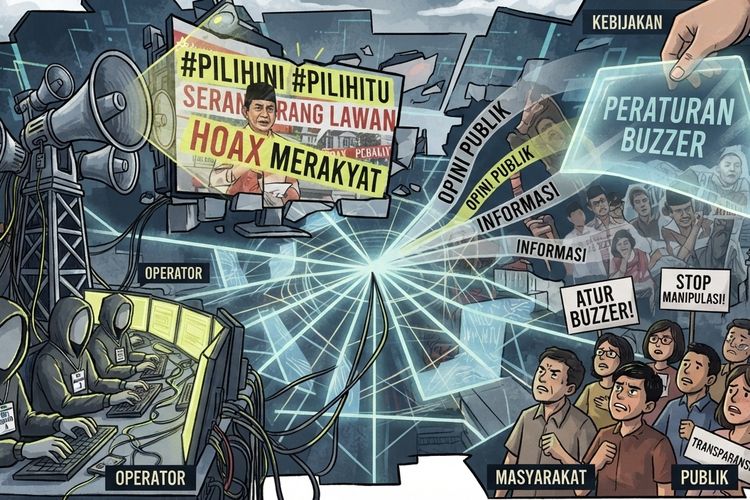
JAKARTA, KOMPAS.com - The presence of political buzzers on social media has come under scrutiny again after PDI Perjuangan (PDI-P) Chairperson Megawati Soekarnoputri proposed that the House of Representatives (DPR) create regulations to manage them.
However, amidst the need to prevent public opinion manipulation, questions arise about the boundaries of regulation to ensure that the freedom of expression is not threatened.
So, to what extent should buzzer activities be regulated, and how can we differentiate legitimate political expression from opinion manipulation?
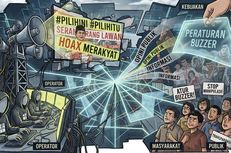
Deputy Chair of the DPR's Commission I, Dave Laksono, supports the need for regulations to discipline the activities of buzzers that disseminate misleading information, create abnormal perceptions, and attack those with differing views.
"Such buzzer practices need to be taken seriously," Dave told Kompas.com on Friday (20/11/2026).
Dave noted that issues arise when buzzers use fake accounts, bots, misleading information, and secret coordination to influence public opinion and suppress dissenting opinions.
However, he reminded that expressing opinions and political support should be differentiated from manipulating public opinion.
"If rules are needed, they should be clearly defined, unambiguous, and still protect freedom of expression. The responsibility of digital platforms to prevent the use of fake accounts and manipulative activities must also be strengthened," said Dave.
He added that the digital space should remain a healthy arena for exchanging ideas and differing opinions.
Democracy requires support, criticism, and open public oversight.
Therefore, the rules established should be able to prevent information manipulation and digital intimidation without limiting the public's right to express their views.
Political communication observer from Esa Unggul University, M. Jamiluddin Ritonga, sees the presence of buzzers in the digital space as a double-edged sword because it has both positive and negative impacts on the quality of democracy.
"This phenomenon is likened to a double-edged sword with both positive and negative impacts on the quality of democracy," Jamiluddin told Kompas.com on Friday.
On the positive side, buzzers can accelerate information dissemination and help amplify government messages or programs to a wider audience.
In the context of social campaigns or elections, buzzer activities can also increase public participation and awareness of political issues that previously received little attention.
Additionally, the presence of buzzers can introduce opposing viewpoints on an issue, providing the public with alternative narratives amidst the overwhelming flow of information.
However, problems arise when such activities are used to obscure facts, spread disinformation, and create polarization through coordinated attacks against those with differing views.
Jamiluddin also highlighted the practice of public opinion manipulation or astroturfing.
"Public opinion manipulation occurs when buzzers create an illusory majority opinion (astroturfing) as if a viewpoint is supported by most people, while it is actually driven artificially and for a fee," he explained.
This situation can make it difficult for people to distinguish organically grown opinions from narratives deliberately crafted for specific interests.
Moreover, mass attacks on government critics or specific groups can create a chilling effect, making people afraid to express their opinions.
Political communication expert and Director of the Nusakom Pratama Political Research Institute, Ari Junaedi, believes that strict regulation of buzzers will be challenging due to rapidly evolving communication and information technologies.
According to Ari, buzzers are often utilized by political contenders as part of their strategy to win competitions.
In practice, these activities often violate rules, ethics, and healthy competition principles.
"Given that buzzers often produce misinformation and deception for self-serving purposes, the potential for public discourse to be manipulated is significant, and public opinion can be easily swayed," Ari told Kompas.com on Friday.
Therefore, Ari believes regulation should primarily target candidates participating in elections, especially regarding the buzzer teams they recruit.
This way, regulation does not solely focus on individuals expressing opinions on social media, but also on those who use buzzers for political gain.
Digital communication expert Rulli Nasrulah cautioned that the DPR should be cautious about rushing to create a special law focused solely on regulating or restricting buzzers.
He stated that what is more urgent is to regulate funding transparency, sponsor identities, the use of fake accounts, public opinion manipulation, and the production of AI-based political content.
"We need to ensure this regulation does not become a tool to silence public criticism. The aim should be to protect the digital democratic space, not control freedom of expression," said Rulli to Kompas.com on Friday.
A medical doctor in media and cultural studies from Gadjah Mada University (UGM) and a senior researcher at Arus Survei Indonesia (ASI), he explained that Indonesia already has several legal frameworks governing content and activities on social media.
These include the ITE Law, the Personal Data Protection Law, the Consumer Protection Law, and various regulations related to the administration of electronic systems and elections.
Therefore, the DPR should first evaluate the effectiveness of existing regulations and identify legal gaps that have yet to be addressed.
According to Rulli, if new regulations are indeed necessary, they should not only target political buzzers.
Instead, they should encompass the entire digital communication ecosystem, including influencers, key opinion leaders (KOL), content creators, digital agencies, and those who act as sponsors.
"This is because they also have positive contributions, such as promoting small and medium enterprises (SMEs), local product marketing, tourism, and educating the public," he added.
"Thus, regulations should be able to distinguish productive and transparent practices from manipulative ones, without stifling creativity and the digital economy," he continued.
Rulli pointed out that several countries have already implemented regulations on influencer activities and paid content without necessarily creating special laws concerning buzzers.
For instance, France has rules regarding influencer activities, particularly concerning transparency in paid content, promotional responsibility, and bans on promoting certain products.
Meanwhile, the United States, through the Federal Trade Commission (FTC) rules, emphasizes the obligation to disclose commercial relationships in promotional activities.
Similarly, the European Union regulates digital advertising transparency and platform responsibilities through the Digital Services Act (DSA).
According to Rulli, the experiences of these countries can serve as considerations for Indonesia in building regulations that ensure payment cooperation transparency, clarity of political funding sources, consumer protection, and prevention of public opinion manipulation.
Another issue in regulating buzzers is identifying the boundary between organically grown political participation and activities that are deliberately organized to steer public opinion.
Not all support or criticism of political figures on social media can be classified as buzzer activities.
The public has the right to express support, disagreement, or criticism of public officials' policies and actions.
Ari Junaedi stated that organic political participation and organized activities can be distinguished by the communication patterns exhibited on social media.
He asserted that naturally emerging messages tend to have a natural and human-like delivery style, including the use of language that is not always perfect.
In contrast, organized and paid activities often exhibit overly uniform narratives, perfectly structured, and interaction patterns that do not align with ongoing conversations.
"Conversely, perfectly crafted narratives that tend to display disconnected dialogue can be identified as organized and paid opinions," said Ari.
He referred to structured opinion manipulation aimed at degrading political contenders as false political participation.
However, identifying buzzer activity is not sufficient to rely solely on language style or narrative uniformity.
Coordination patterns, funding sources, the use of fake accounts, and the involvement of sponsors also need attention in identifying opinion manipulation practices.
Rulli believes that transparency regarding funding sources and the producers of political content is a crucial aspect that needs to be regulated.
With this transparency, the public can discern whether a message represents a personal opinion, political support, or is part of a paid collaboration with specific interests.